

Keiki Blog – parenting & early learning insights
Discover engaging parenting tips, child development insights, and creative learning ideas to support your child’s growth through every stage – curated with care by Keiki

Working Memory Games for Kids That Actually Build the Skill
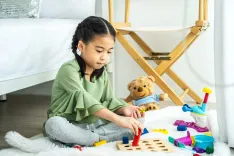
Concentration games for kids – developing attention through fun activities

Best Memory Games: Ideas by Age and Helpful Tips
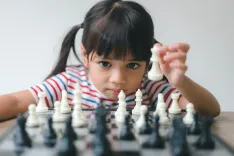
Effective Brain Games for Child Development: Tips and Ideas
Memory & Focus Games for Kids: Training Attention Through Play
Memory and attention are what kids use to follow directions, learn new words, and finish a task. They get better with practice, and games are an easy way to practice. This section covers memory games, working memory games, concentration games, brain games, and executive functioning activities.
Easy games to start with
You can train memory with games you probably have at home.
- Matching card games like Memory
- What's missing? Put five toys on a tray, cover them, remove one, and ask what's gone.
- Simon Says with multi-step directions
- Pattern copying with blocks or beads
- Kim's Game: look at objects for a minute, then list them
Make it harder step by step
Once a game feels easy, raise the challenge a little at a time. Here's how.
- Start with three items or steps.
- Add one more after your kid succeeds twice.
- Add a short delay before they answer.
- Mix in distractions, like quiet music.
- Go back to an easier level if they're getting frustrated.
What to expect
It helps to know what's realistic at each age.
- Toddlers: one-step directions.
- Ages 4 to 5: two or three steps.
- Age 6: longer sequences and more games with rules.
Sessions of 5 to 10 minutes work best, and a brain break helps when focus fades.
Memory practice on Keiki World
Keiki's memory and matching games help kids ages 2 to 6+ practice focus in short rounds, which suits kids who lose interest fast.
People often ask
A common rule of thumb is about 2 to 3 minutes per year of age, so 10 to 15 minutes for a 5-year-old. It varies a lot.
The ability to hold information in mind and use it for a short time, like remembering a two-step instruction.
They make practice fun and help kids build strategies like repeating or grouping items. Results vary from kid to kid.
If your kid has big trouble focusing across home, school, and play, or is very impulsive, talk to your pediatrician.