

Keiki Blog – parenting & early learning insights
Discover engaging parenting tips, child development insights, and creative learning ideas to support your child’s growth through every stage – curated with care by Keiki
Turn puzzles into proud moments


52 Fun Brain Teasers for Kids (With Answers)
26 Critical Thinking Activities for Kids: From Toddlers to School Age
26 Engineering Games for Kids – Ideas for Developing an Engineering Mindset

Guide to STEM activities for preschoolers
16+ Problem Solving Activities for Kids (Fun & Easy)
Strategy Games for Kids: Ideas and Tips for Child Development

Mystery Games for Kids: Every Mystery is a Development Tool

13 Spy Games for Kids – Develop Attention and Logic Through Favorite Plots

Children's Coding Games: Building Logic and Creativity for the Future

23 Best Board Games for Kids

100+ Riddles for Kids: Great Ways to Spend Time Together
Logic & Puzzles for Kids: Games That Make Kids Think
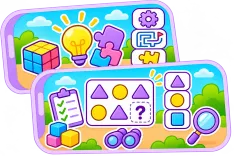
Logic is the skill of working things out step by step. Kids build it through puzzles, riddles, and strategy games long before it shows up in math class. This section covers problem-solving, critical thinking, brain teasers, strategy games, board games, mystery games, coding games, and engineering.
Puzzle types to try
Logic comes in many forms. Here are the main types, from easy to harder.
- Jigsaw puzzles and shape sorters for toddlers
- Patterns: red, blue, red, blue, what's next?
- Riddles and brain teasers
- Detective and spy games
- Board games with simple strategy
- Coding games, like giving a robot directions
How to help without giving the answer
It's tempting to jump in when kids get stuck. This five-step approach helps them learn from it.
- Let your kid try first, even if it takes a while.
- Ask "what have you tried?"
- Give a small hint, like "look at the corners."
- Praise how hard they tried, whatever the answer turns out to be.
- Come back to it later if they're frustrated.
Why it's worth it
Puzzles are fun, but they also build skills that last.
- Kids learn to try again after a wrong guess.
- They get better at planning ahead.
- They practice explaining their thinking.
Puzzle practice on Keiki World
Keiki has logic puzzles, matching games, and brain challenges for kids ages 2 to 6+. Kids can repeat them until the pattern clicks.
People often ask
Working things out step by step: spotting patterns, comparing options, and predicting what happens next.
Jigsaws with 4 to 12 big pieces, shape sorters, and simple pattern games.
Give a small hint first, not the answer. Let your kid try again before you step in.
Yes. They teach planning, turn-taking, and thinking a few moves ahead.