

Keiki Blog – parenting & early learning insights
Discover engaging parenting tips, child development insights, and creative learning ideas to support your child’s growth through every stage – curated with care by Keiki
Turn counting into a game

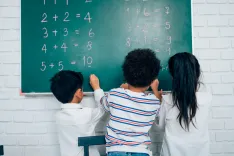
What Do First Graders Learn in Math?

Multiplication Math Games: Learning Multiplication with Kids

Teaching kids financial literacy and understanding money: tips and games on the topic

25 Best Interactive Dice Games For Kids of Different Ages

The Best 2nd Grade Math Games to Help Your Kids Excel

Math Card Games: Educational and Engaging Pastimes

15 Math Games for Kindergarten

30 Math Activities for Preschoolers That Turn Everyday Play Into Early Learning

When Do Kids Learn Numbers? Gaining Math Skills for Successful Development
Numbers & Counting for Kids: From First Counting to Simple Math
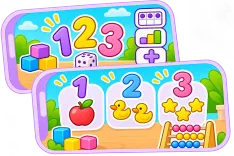
Counting is the first step toward math, and most kids learn it through games and daily life. This section covers learning numbers, math games for preschool, kindergarten, 1st grade, and 2nd grade, dice and card games, money games, and multiplication games.
How counting usually grows
Counting develops in stages, and each one builds on the last.
- Reciting numbers, like singing 1, 2, 3.
- Counting objects one by one, touching each.
- Knowing how many are in a group without recounting.
- Recognizing written numbers.
- Adding and subtracting small numbers.
- Skip counting and early multiplication.
Games to try
Math games work best when they feel like games. These are easy to start with.
- Dice games: roll and count the dots.
- Card games: War, Go Fish, and Memory with number cards.
- Money games: sort coins and play store.
- Everyday counting: stairs, grapes, toy cars.
- Multiplication games for older kids.
Counting targets by age
It helps to know what's realistic. Here's a rough guide.
- Toddlers: count to 3 or 5 with real objects.
- Preschoolers: count to 10, then 20.
- Kindergarten: simple adding and subtracting.
Number practice on Keiki World
Keiki's number games help kids ages 2 to 6+ count, compare, and add in short rounds. Printable math worksheets are there for kids who like pencils.
People often ask
Many kids recite numbers by ages 2 to 3 and count objects accurately by ages 4 to 5.
Count everyday things: stairs, snacks, toys, and cars. Counting with real objects works better than counting alone.
Counting to 20 or more, recognizing numbers, and adding and subtracting small numbers with objects.
Switch to games, keep sessions short, and praise effort. Dice and card games feel like play.