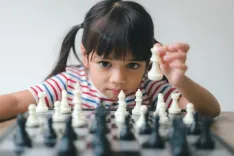
Concentration games for kids – developing attention through fun activities

Concentration games help kids practice sustained attention in a fun format. These activities support focus, working memory, and calm persistence with short challenges that are easy to repeat and adjust by age.
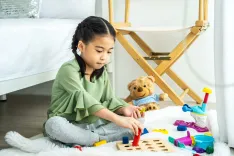
Concentration games for kids to improve focus and attention
In the modern world full of distractions, the ability to concentrate becomes one of the most valuable skills. We adults often notice that we struggle to focus on a single task, let alone children! But the good news is that concentration is not an innate talent but a skill that can and should be developed. And games are the most effective and fun way to do this.
This article will show how, using simple ideas, you can create fascinating concentration games for kids that strengthen attention, memory, and perseverance, and also help you understand what might prevent a child from focusing. And we are also against demonizing apps that supposedly prevent children from concentrating and reduce attention span. This is only partly true because there are apps that actually improve focus and develop useful skills in a playful form. We will talk about them in this article.
Why are concentration games so important?
Kids concentration games are not just a way to keep a child busy. They are a real training ground for their brain. They help form important cognitive skills that will be useful throughout life.
- Brain development and neural connections. Concentration is directly related to the development of the prefrontal cortex – the part of the brain responsible for planning, thinking, and attention. When a child focuses on a task, they strengthen neural connections in this area, making their brain more efficient.
- Improvement of academic performance. The ability to concentrate is the foundation of any learning. A child who can listen carefully to the teacher, avoid distractions during lessons, and stay focused on assignments learns new material faster and achieves better results.
- Development of self-regulation and emotional control. Concentration games teach patience. When a child needs to wait their turn or deal with a task, they learn to manage impulses. This helps them become calmer and less prone to outbursts of anger or frustration.
- Improvement of problem-solving skills. The ability not to get distracted from a task allows a child to see the whole problem, break it into parts, and find logical solutions. The longer a child can hold attention, the more complex tasks they can solve.
- Formation of mindfulness and the ability to be “here and now”. When a child is fully engaged in the game, they learn to be in the moment. This is an important skill in the modern world, helping fight distraction and enjoy what they are doing.
Help your child
grow with Keiki
We’ll help you turn everyday screen time
into real learning progress.
Games for developing concentration
We offer specific ideas that you can easily use at home. Attention games for kids should require focus on details, memory, and following instructions, stimulating mental activity and improving visual attention.
Memory games for kids: memory – the key to success
These games train visual and auditory memory, which is the foundation of attention. If a child can remember and develop this skill, learning reading, writing, math, and many other school subjects becomes easier.
Memory or find the pair
A classic and well-known game with paired cards. Lay the cards face down, and the child must flip two at a time, trying to find matching pairs. This game requires remembering the positions of each card. By the way, in Keiki you can also find interactive flash cards that can be used for these purposes.
What has changed?
Lay out several objects on the table and ask the child to examine them carefully. Then ask them to close their eyes and remove one object. When they open their eyes, they must guess which one is missing.
Chain of words
The first player names a word, and the second repeats it and adds their own. For example: “Cat”, “Cat and dog”, “Cat, dog and car”. The game continues until someone makes a mistake. Such easy concentration games for toddlers can also be played with more complex rules, for example, to create a short story out of the chain of words.
Guess the object by description
Describe an object in the room in detail without naming it. For example: “It is small, red, round, and you can roll it”. The child must guess what it is.
Find the differences
Print two similar pictures and look for all the differences. This task is great for attention to small details. In Keiki you will find worksheets that include various tasks, including sorting and finding differences.

Games for developing attention to details
These visual attention games teach children to notice small things that often go unnoticed.
I see
A classic game where you choose an object in the room and say: “I see something red”. The child must find this object. To make the game more difficult, you can describe the shape or material of the item.
Find by description
Give your child a list of items they need to find in the room (for example, “something round, something red, something soft”). This helps focus on specific characteristics.
Secret drawing
Draw something very small on a large sheet of paper (for example, a tiny bird on a tree branch) and ask the child to find it.
Take apart and put together
Carefully disassemble something simple (for example, a small construction set of 5–7 parts) and ask the child to put it back together.
Who is out of place in the room?
Describe what each family member did in the morning but insert an incorrect detail, and the child must find it. For example: “Dad drank tea, mom read the newspaper, and I brushed my teeth with a red toothbrush”. This works well as screen-free activities for concentration when you have no props at hand at all.
Auditory focus activities
These games train the ability to listen carefully, which is the key to successful learning.
Simon says
A well-known game where you need to follow only those commands that start with “Simon says”. It trains auditory attention and self-control.
What is that sound?
Close your eyes and try to guess the source of the sound (running water, phone ringing, clock ticking).
Tell a story
Turn on an audio fairy tale and ask the child to retell what they heard. They will have to pay close attention to the details.
Whisper
Whisper words or phrases to the child, and they must repeat them. This develops the ability to concentrate on quiet sounds.
Listen and do
Give a sequence of instructions (“Take the blue pencil, put it on the chair, and then bring it to me”) and make sure the child follows them in the correct order.
Build real skills through fun, educational games for your child
Try KeikiCauses of poor concentration: what may distract a child?
Sometimes the issue is not lack of training but other factors. Understanding these causes helps create ideal conditions for developing attention. How to improve a kid's focus? First, make sure the child is not lacking sleep. A child's brain needs rest to process information and recover. If a child does not get enough sleep, their brain cannot function fully, leading to distractibility, irritability, and concentration problems. Make sure the child has a stable rest routine.
Before adding concentration games for preschoolers or even tasks for younger kids to your routine, evaluate their diet. It directly affects brain function. Large amounts of sugar and processed foods can cause sudden spikes in energy, which are then followed by drops. This makes focusing difficult. Include more protein, healthy fats, and complex carbohydrates in the diet, which provide stable energy for the brain.
A common issue is the overload of gadgets and information. Constant exposure to bright screens, rapid transitions, and instant notifications trains the brain to expect constant stimulation. As a result, when a child faces a slow, more stable task, it becomes hard to maintain attention. Limit screen time and offer alternative activities.
And do not forget about the lack of physical activity. The brain, just like the body, needs movement. Physical exercise improves blood circulation, enriches the brain with oxygen, and helps relieve tension. Anxiety, stress, fear, or family problems can also cause distractibility. When the brain is occupied with worries, it simply has no resources for concentration. It is important to create a trusting and calm atmosphere at home so the child feels safe.
When should you see a specialist?
Many parents worry that inattentiveness and distractibility may indicate more serious problems. Here are some tips to help you understand when to consult a specialist:
- Normal behavior. Slight concentration difficulties are absolutely normal for children, especially preschoolers. Their brain is still developing, and it is difficult for them to stay still. At this age, 5–10 minutes of focus is already great. If you start using puzzles for kids concentration or introduce memory tasks, remember breaks and proportional load.
- Warning signs. Pay attention if concentration problems are constant and interfere with everyday life. For example, the child cannot sit still during meals or cannot follow a simple request. The key indicator is if the child cannot focus even on things they enjoy (for example, a favorite game).
- ADHD symptoms. Attention deficit hyperactivity disorder (ADHD) is a condition that only a specialist can diagnose. If you notice that the child is not only inattentive but also constantly hyperactive, impulsive, cannot wait for their turn, and often behaves thoughtlessly, visit a pediatric neurologist or psychologist. This is not a sentence, just a developmental trait. There are even specific concentration exercises for kids with adhd for such children.
Related Games in Keiki App







How to use educational apps with concentration games?
The Keiki app can complement physical games perfectly. For example, after active play, offer the child a calm and slow session with the tablet, turning on online concentration games for kids. This helps solidify skills and prepare the child for rest. Keiki offers many interesting and useful games:
- Hide and seek. A great example of a game for developing attention and perseverance. It seems like the child is just playing, but they are actually learning to notice even small details.
- Find and identify numbers. A rather complex task in which children develop concentration and attention while also learning numbers. This helps them quickly master counting and then move on to more complex tasks.
- Fun puzzles. Who said puzzles can only be played offline? Puzzles for kids concentration in Keiki never get lost or run out. And they are suitable even for the youngest children.
Concentration games for kids are your chance to both entertain the child and teach them patience, attentiveness, and gently develop their memory and analytical skills. They help the child become more focused, attentive, and ready for learning. Turn learning into a fun adventure, and the Keiki app will help you with this.