40 Thanksgiving Activity Ideas for Kids: Games, Crafts, and Gratitude Fun by Age

The turkey needs another forty minutes. Three cousins are overtired. Somebody just knocked the gravy boat off the counter rehearsing a cartwheel. That’s why thanksgiving activities for kids matter just as much as the menu does. A good lineup of thanksgiving day activities for kids buys you kitchen time, a few minutes of quiet, and maybe even a kid who’s thinking about gratitude instead of counting down to dessert.
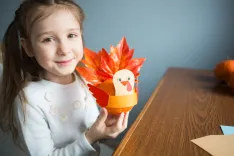
Hosting fifteen people, or just your own crew at home? Either way, there’s a fun thanksgiving activity for kids in here that fits your Thursday, not a Pinterest board: toddler play, preschool crafts, thanksgiving activities for kindergarteners, games, hands-on crafts, and gratitude ideas for the table.
Why Thanksgiving Activities for Kids Matter
Thanksgiving activities for kids matter for more than filling time before dinner’s ready. A few of these are doing more underneath the fun than you’d guess.
Gratitude turns from an idea into something a kid can practice. Telling a 4-year-old to “be grateful” doesn’t mean much on its own. Naming one good thing out loud, drawing it, or adding a leaf to a gratitude tree gives them something to actually do. Like any habit, it sticks better with repetition than with one lecture over turkey.
The crafts build hand and finger strength, not just keep hands busy. Cutting out a turkey’s feathers, weaving a paper placemat, or threading yarn through a leaf garland all use the same small-muscle coordination kids need for handwriting later. A 2025 study of preschoolers found that kids with stronger fine motor skills also read better, and did even better at math (Li et al., 2025). That coffee-filter turkey is doing more than you’d think.
Kids get their own job on a day that’s mostly run by adults. Setting the table, folding napkins, or being in charge of the “feelings jar” gives them something to contribute, instead of being herded from room to room.
There’s a tradition gap most families don’t realize is open. Only 29% of US adults say their family goes around the table to share what they’re thankful for (YouGov, 2025). That’s lower than you’d guess. A simple gratitude activity isn’t competing with twenty years of family ritual, it’s filling a spot nobody’s claimed yet.
Twenty focused minutes is twenty minutes you get back. A turkey scavenger hunt that holds a kid’s attention means twenty minutes to finish the pie crust without a running commentary.

Help your child
grow with Keiki
We’ll help you turn everyday screen time
into real learning progress.
Thanksgiving Activities for Toddlers (Ages 1-3)
Toddlers won’t sit through instructions, and everything ends up in their mouth sooner or later. These six don’t fight that; they’re built around it.
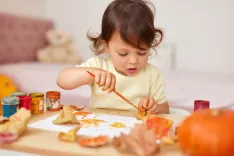
- Turkey Handprint Painting. Paint your toddler’s palm and fingers and press it onto paper to make a turkey body and tail feathers. Messy, but that’s the point at this age, and you’ll want to keep this one.
- Harvest Sensory Bin. Fill a shallow bin with dried corn kernels, mini pumpkins, and pinecones, then hand over a scoop. A toddler can pour corn from one cup to another for twenty minutes straight and somehow never get bored.
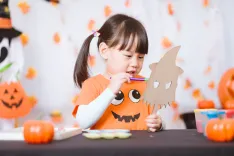
- Feed the Turkey. Cut a big mouth into a paper plate turkey and let your toddler “feed” it pom-poms or dried corn. No special skill needed, just a satisfying plunk every time one goes in.
- Thanksgiving Board Book Time. Five quiet minutes with a board book about turkeys or fall counts as an activity too, especially on a day this loud.
- Leaf Pile Jump. Rake a pile of leaves and let your toddler jump in, over and over, because they’ll ask for “one more time” about fifty times.
- Tear-and-Paste Thankful Collage. Let your toddler tear pages from an old magazine and paste the scraps onto construction paper. They don’t need to understand “thankful” yet; the tearing and sticking is good practice on its own.
Thanksgiving Activities for Preschoolers (Ages 3-5)
Preschoolers can follow a short sequence of steps, and they’re starting to understand gratitude, even if “thankful for Paw Patrol” is where most of them land first.
- Gratitude Tree. Stick a bare branch in a vase and have your preschooler decorate paper leaves with something they’re thankful for, then hang them on the branch. It grows over the week before Thanksgiving, so the idea has time to sink in instead of being a one-off.
- Turkey Feather Color Match. Cut felt or paper feathers in different colors and have your preschooler match them to the right spot on a turkey outline.
- Fall Playdough Mats. Print or draw simple turkey and pumpkin outlines and let your preschooler build the shapes out of playdough. There’s nothing to clean up but the playdough itself.
- Cornucopia Sorting. Give your preschooler a paper cornucopia cutout and mini plastic fruits and vegetables to sort by color or size before “filling” the horn.
- Pilgrim Hat and Headband Craft. A black paper hat with a buckle, or a paper headband with construction-paper feathers, simple enough that preschoolers can wear them straight into pretend play about the first Thanksgiving.
- Turkey Bowling. Line up plastic cups painted like turkeys and roll a ball to knock them down. It’s just bowling, and somehow it’s a hit every single time.
Thanksgiving Activities for Kindergarteners (Ages 5-6)
Kindergarteners can handle more structure, a bit of history, and classroom-sized groups without melting down. That makes this age group a good fit for both home and school.
- Thanksgiving I Spy Mat. A printed mat packed with small Thanksgiving images that kids scan to find a target list. Keeps a group quietly occupied longer than you’d expect.
- Grateful Alphabet. Go through the alphabet as a class or family, naming something you’re thankful for that starts with each letter. It gets noticeably harder, and funnier, around the letter Q.
- Turkey Word Hunt. A simple word search using sight words or Thanksgiving vocabulary, sized to a kindergartener’s reading level.
- Turkey Math Count and Graph. Count out feathers, kernels of corn, or mini pumpkins, then graph the results on a simple bar chart.
- Mayflower Route Map. Kids trace the Mayflower’s route from England to Plymouth with a crayon or a piece of yarn on a simplified map, a first look at the history behind the holiday.
- Thanksgiving Readers’ Theater. A short script about the first Thanksgiving that kids read aloud with assigned parts. No memorizing required, just reading out loud in front of the group.
- Class Thankful Chain. Each kid writes one thing they’re thankful for on a paper strip, and the strips link into a chain that decorates the classroom or dining room.
Fun Thanksgiving Games for Kids
Need kids games for thanksgiving that burn off energy instead of building something? This is your section. They work for mixed-age groups and need almost no setup.
- Turkey Tag. Regular tag, except whoever’s “it” has to gobble the entire time they’re chasing. Somehow that makes it twice as funny.
- Pin the Feather on the Turkey. The classic blindfolded pin-the-tail game, reskinned with a turkey and paper feathers. All you need is paper, tape, and a printed turkey outline.
- Thanksgiving Bingo. Print bingo cards with Thanksgiving pictures instead of numbers and call them out. A good pick for mixed ages or a quieter gathering.
- Cranberry Bean Bag Toss. Set up a basket or bucket and let kids toss bean bags in from a marked line. Move the line closer or farther to match the age group.
- Gobble Relay Race. Teams waddle a short course with a balloon held between their knees, gobbling the whole way. Built for a backyard full of cousins who need to move.
- Turkey Says. Simon Says, Thanksgiving edition: only commands starting with “Turkey says” count.
- Mashed Potato Scoop Relay. Teams race to carry a marshmallow across the yard on a spoon without dropping it, a seasonal twist on the classic egg-and-spoon race.
Thanksgiving Crafts for Kids (Fine Motor Fun)
These crafts double as fine motor practice, the same hands-on skills linked to stronger reading and math down the line.
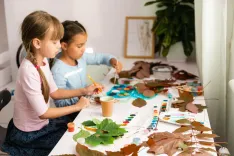
- Handprint Turkey. Trace and cut a handprint, add a face and feet, and let your kid decorate the “feathers” however they want. A classic for a reason.
- Coffee Filter Turkey. Color a coffee filter with washable markers, spritz it with water so the colors bleed together, then shape it into a tail once it dries. Looks like real art, even from a 4-year-old.
- Pinecone Turkey. Glue construction-paper feathers, googly eyes, and a small paper beak onto a pinecone, a nice follow-up to a walk outside.
- Thankful Leaf Garland. Punch holes in paper leaves and thread them onto yarn to build a garland. The threading motion is close to the lacing exercises occupational therapists use to build pincer grip.
- Turkey Feather Clothespin Count. Clip numbered clothespins onto matching dots around a paper turkey’s tail. The pinching motion alone builds hand strength.
- Woven Paper Placemat. Cut slits in construction paper and weave strips of a contrasting color over and under through them. Harder for small hands, and a placemat they’ll actually want to use.
- Paper Plate Cornucopia. Fold a paper plate into a cone and glue on paper fruits and vegetables spilling out the top. Good for kids past the handprint turkey stage but not ready for scissors-heavy weaving yet.
Help your child thrive with playful learning
Turn screen time into real growth with Keiki's educational games.
Try KeikiThanksgiving Gratitude Activities
These work for the fifteen minutes before anyone’s allowed to eat, or right at the table once everyone’s seated.
- Gratitude Jar. Set out a jar and slips of paper before guests arrive, and have everyone, kids included, write or draw one thing they’re thankful for to drop in. Read a few out loud at the table.
- Thankful Tablecloth. Use a paper tablecloth and washable markers so kids and adults can write or draw what they’re thankful for right on the table covering.
- Thanksgiving Conversation Cards. A stack of question cards (“What’s your favorite Thanksgiving food?”) to pass around the table, which takes the pressure off one big “what are you thankful for” moment.
- Thanksgiving Mad Libs. A holiday-themed Mad Libs sheet gets a table of mixed ages laughing together while dinner settles.
- “Thankful For” Place Cards. Instead of just a name, have each guest’s place card include one thing they’re grateful for, written by a kid old enough to help set the table.
- Pre-Dinner Kitchen Helper Tasks. Stirring a bowl, tearing lettuce, folding napkins: simple jobs that are useful, not busywork, and they keep kids in the kitchen instead of underfoot elsewhere.
- Thanksgiving Charades. After the plates are cleared, a quick round of charades using Thanksgiving words keeps the table, kids and adults both, together a little longer.
Keiki for the In-Between Moments
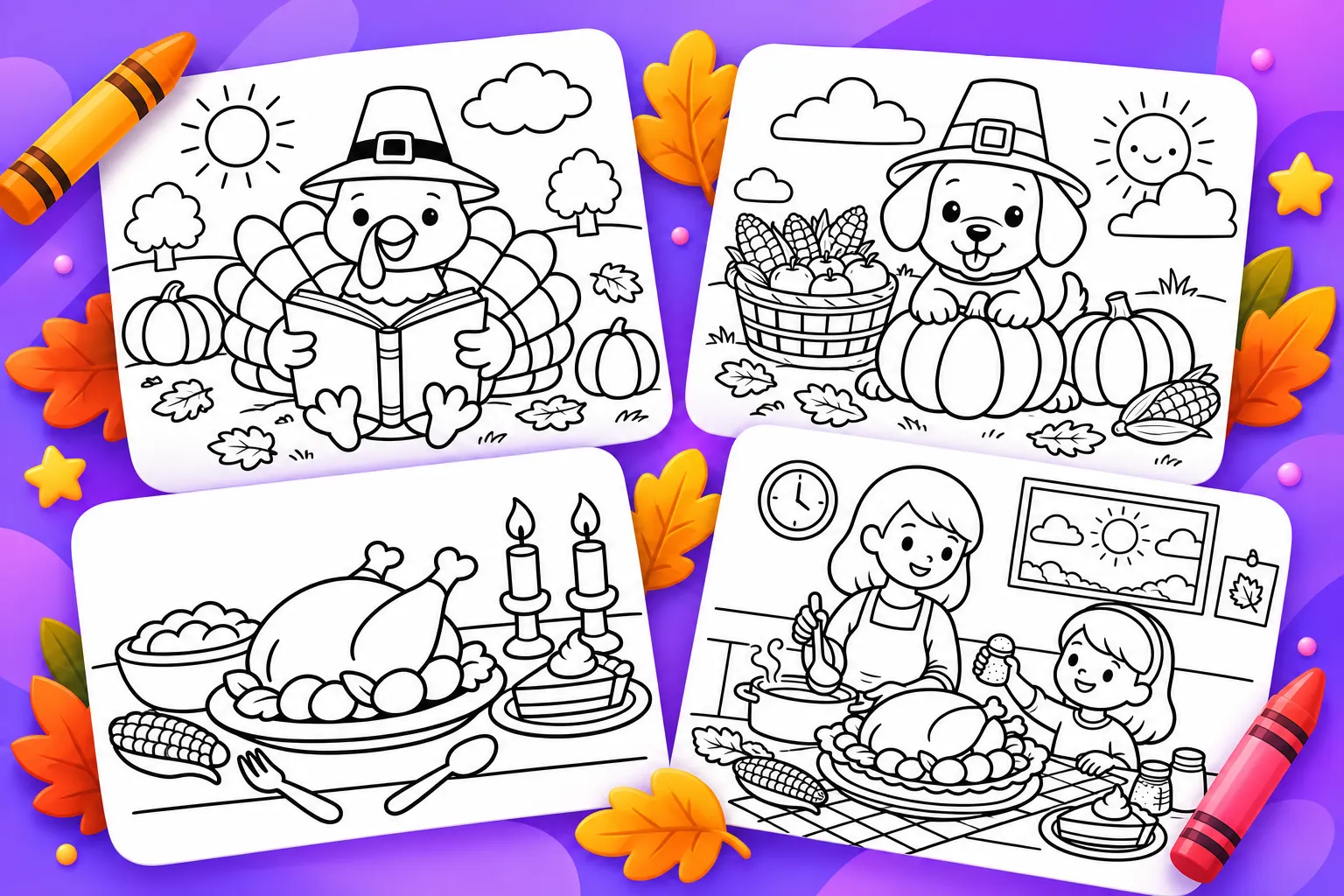
Keiki’s website has a free collection of Thanksgiving coloring pages: turkeys, pumpkins, and full Thanksgiving dinner scenes, sized for kids ages 2 to 5. Download and print them as PDFs for the classic crayon-and-kitchen-table version, no login or extra equipment needed. Print a few before a long car ride and your kid has a stack of pages ready to go without needing a screen at all. Keiki’s own coloring page even suggests turning it into a gratitude exercise: name one thing your kid is thankful for with each feather or food item they color in, which pairs naturally with the gratitude activities earlier in this guide.
Tips for Making Thanksgiving Activities Work
A few small habits make the difference between an activity that buys you twenty quiet minutes and one that ends in tears before the turkey’s even out of the oven.
- Match the activity to the time you have. A five-minute sensory bin is the wrong call if you need forty-five minutes to finish dinner. A long craft is the wrong call if you just need a quick distraction before guests arrive.
- Pack a “waiting bag” for travel or a host’s house. A small bag with a board book, a coloring page, and a small fidget toy saves you from improvising in someone else’s living room.
- Let toddlers’ crafts be more glue than turkey. The process matters more than the finished product at this age. Resist the urge to “fix” it.
- Build in at least one quiet option. Big family gatherings get loud fast, especially for younger or more sensitive kids. A quiet corner with a book gives them somewhere to reset.
- Don’t force the gratitude part. If your kid isn’t in the mood to say what they’re thankful for out loud, let them write it, draw it, or skip it that year. Modeling gratitude yourself does more than insisting a 4-year-old perform it on cue.
- Keep a screen-time backup ready, guilt-free. A short, calm screen session on a day this chaotic isn’t a failure. It’s just one more tool in the same toolbox as the coloring pages and the sensory bin.