20 Empathy Activities – Keeping Children’s Kindness Alive

We all tend to idealize children a little. That is how parental love works, how family affection works, and how any adult’s sympathy for a little child works. That is why the shock feels even stronger when situations arise where this idyllic picture begins to crack.
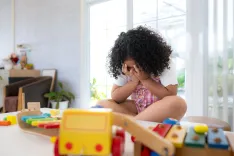
Laughter when a plastic car crashes into a younger brother’s head. Indifference at the sight of a meowing kitten. Not understanding that mom is sick and cannot actively play right now. In reality, adults need very few reasons to start clutching their hearts and catching themselves in panicked thoughts.
This is because adults have well-developed empathy and sympathy, and generally understand what they are and why they matter. A young child's mind is still developing; it is not yet flexible enough and does not have enough capacity to process huge amounts of information, draw conclusions, develop ethical norms, and begin to sympathize. And this does not make a child bad or cruel! On the contrary, children are like a blank slate, and they can react to everything very sharply and intensely.
At the same time, their brain is physiologically tuned to meet their own needs – this is a basic survival instinct. The ability to put oneself in another person's shoes is not downloaded into a child's brain by default. Fortunately, empathy can be trained. Empathy activities for kids can help with this.
What Is Empathy and Why Does It Matter for Kids?
Many people confuse empathy with simple pity or politeness. Saying "sorry" after stepping on someone's foot is social etiquette. But understanding that a person is hurt and upset right now, and sincerely wanting to help them – that is empathy. Psychologists identify two types of empathy that children need to master:
- Affective empathy. The ability to physically respond to the emotions of others. For example, when a baby starts crying after hearing another child cry at the clinic.
- Cognitive empathy. The ability to intellectually take another person's perspective. "I understand why my friend is angry, because I took his toy."
Why are empathy building activities for kids so important? Because empathy is the foundation of all social-emotional development. It directly affects the development of emotional intelligence, reduces aggression in kindergarten, at home, and at school, and is the main driver of genuine kindness. Children who know how to empathize become leaders everyone wants to be friends with.
Help your child
grow with Keiki
We’ll help you turn everyday screen time
into real learning progress.
Empathy Activities for Toddlers (Ages 1–3)
Toddlers live in the "here and now." For them, other people's emotions often look like strange noise. That is why empathy activities for children at this age should be visual, physical, and simple.
The Emotion Mirror
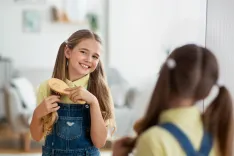
Toddlers learn about the world through modeling. Sit opposite your child or in front of a large mirror. Ask them to copy you: show a big smile, frown, make a scared face, pout your lips. Be sure to name what is happening: "Look, I'm frowning, I'm angry! And now I'm smiling, I'm happy!" This way, you take the first steps together toward recognizing facial expressions.
Teddy Bear Boo-Boos
Take a favorite teddy bear and act out a little scene: the bear "falls" off the couch and cries. Give your child a children's bandage or a piece of paper tape and suggest: "Oh, teddy is hurt so much! Let's comfort him, stroke him, and put on a bandage." This empathy activity for kids forms a physical caring response toward someone who is hurt.
Happy or Sad Sorting
Print out or cut from old magazines faces of people expressing different feelings: sadness, tears, laughter, anger. Take two baskets: attach a smiling face to one and a sad face to the other. Let your toddler sort the cards into the baskets. This is basic training in cognitive emotion recognition.
Reading Faces in Books
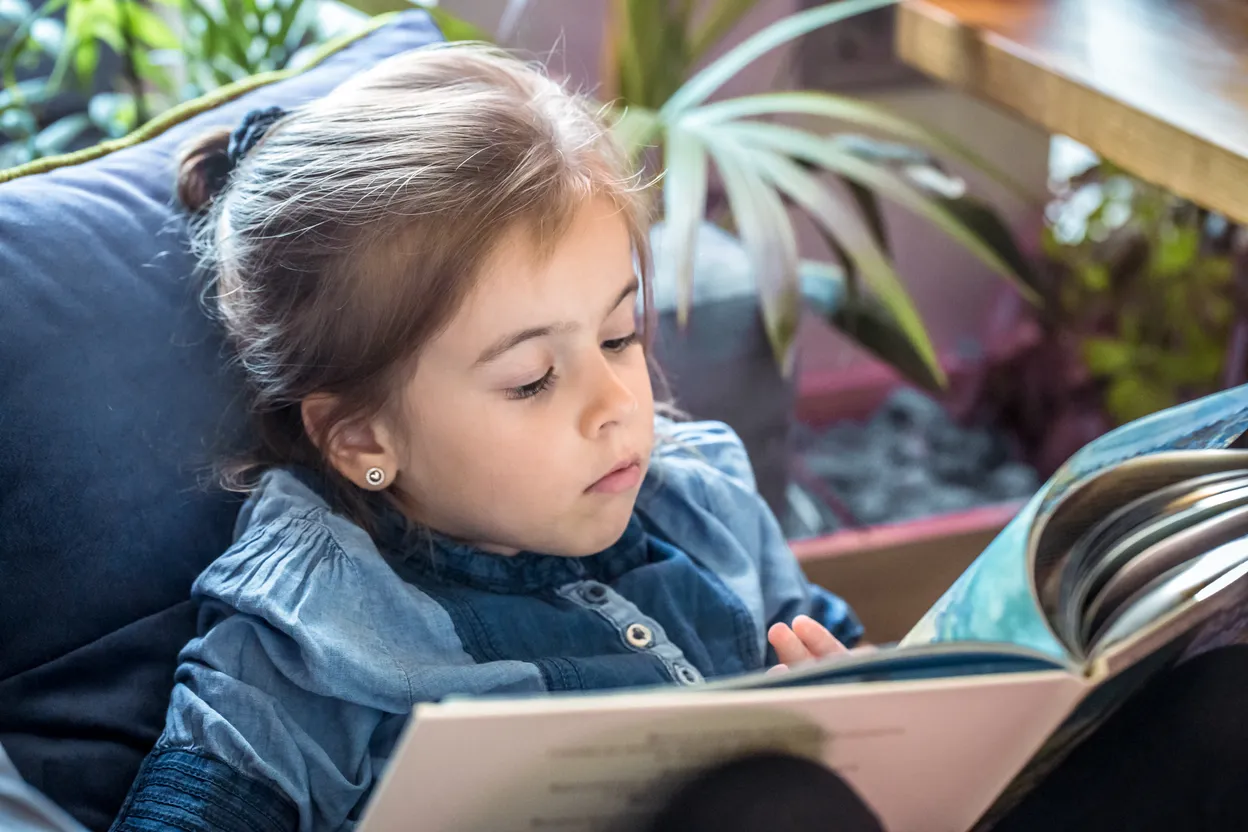
When reading before bedtime, stop focusing only on the plot. Pause and look closely at the pictures. Look at the characters in the story. What emotions do they have? Why are they sad or happy? This is the best way to connect an emotion with the context of a situation.
The "I Notice" Game
This is a practice for parents that teaches children. Start commenting aloud on the states of other people or animals during a walk. "I notice that the girl is crying because she dropped her ice cream. She must feel very upset." You are literally giving your child a verbal template for empathy.
Gentle Touch Practice
If your toddler hits you or the cat, intercept their hand and gently show them how to stroke instead. Accompany this with words: "Gentle hands. We stroke softly. The cat likes it when we stroke gently."
Empathy Activities for Preschoolers (Ages 3–5)
Preschoolers already understand that they are separate individuals and that other people may have desires that do not match their own. At this age, empathy activities for preschoolers become more complex and role-based.
Emotion Charades
If you are looking for a fun empathy game for kids, this option can definitely entertain children. It also does not get boring for a long time. Write or draw different emotions on cards: joy, surprise, fear, anger, hurt. Players take turns drawing a card and must show the emotion without words, using only their face and body. The others guess.
The "How Would You Feel If..." Game
A great game for the car or a queue. You give your child hypothetical scenarios: "How would you feel if your Lego tower broke?" "And how would you feel if someone gave you a huge balloon?" These scenarios teach the brain to try the situation on itself.
Puppet Role-Play
Use role-play with hand puppets. Act out a conflict: one puppet takes the ball from another. Ask your child: "How can we help them make peace? What should this puppet say?" Children are much more willing to solve other people's problems than their own.
Empathy Glasses
Make funny lens-free glasses from cardboard and chenille wire. Tell your child these are magical "empathy glasses." Whoever puts them on begins to see the world through another person's eyes. Wearing them, the child must describe a situation not from their own side. "When I'm wearing the glasses, I see that my little brother is crying because I took his toy."
Emotion Masks
Take disposable paper plates and draw faces with different emotions on them. Glue popsicle sticks to the back. When a preschooler cannot explain in words why they are upset, for example after kindergarten, suggest that they simply choose the right mask and hold it up to their face.
Caring for a Plant
Give your child their own flower in a pot. Explain that the flower cannot say when it is thirsty, so we need to be attentive and check the soil with our finger. Caring for a silent plant is a compassion trainer.
Story Rewrite
Read a familiar fairy tale, for example "The Three Little Pigs," but suggest that your child retell it from the point of view of... the wolf! "What if the wolf just wanted to warm up and came to visit, but the pigs would not let him in?" This helps move away from worn-out patterns and learn to look at a situation from all sides.
Empathy Games for Kids Ages 5+
Children aged 5–6 and older are preparing for school, where social dynamics become very complex. They need empathy games for children that teach them how to interact in a group and notice those who need help.
The Shoe Swap
Remember the phrase "walk a mile in someone else's shoes"? Let's do it literally! Invite your child to put on mom's or dad's huge shoes and try walking in them, while you put their slippers on your toes. During the process, talk about what it feels like to be someone else, with different problems and concerns.
Kindness and Empathy Bingo
A great choice if you are creating your own selection of empathy activities for kindergarten. Draw a bingo grid where each square contains a task: "Say a compliment to a friend," "Help set the table," "Go up to someone who is playing alone," "Say thank you to the janitor." When the child completes a task, they cross out the square. Complete a line – get a prize.
Emotion Pictionary
This is similar to charades, but here the emotion must be drawn on a board or sheet of paper in one minute so that others can guess it. How do you draw jealousy? How do you draw loneliness? This makes children think in metaphors.
The "Fix the Conflict" Game
Describe a typical schoolyard or playground argument to your child. For example: "Two boys want to use the same swing and are already starting to shout at each other. You are standing nearby. What can you say or do to help them come to an agreement?" This helps move empathy from the level of feelings to the level of practical actions.
The Compassion Board
Hang a magnetic board at home. Every time you see news that an earthquake has happened somewhere, or you find out that a neighbor's dog is sick, attach a note or picture to the board. In the evening, gather as a family and discuss how you can support these people: put together a package, draw a card, or simply think of them kindly.
Silent Interviews
Children split into pairs. One child must tell the other a story about how their day went using only gestures and facial expressions, without making a single sound. The second child must carefully "listen" with their eyes and then retell the story aloud. This fantastically develops the ability to read nonverbal signals.
The Wrinkled Heart
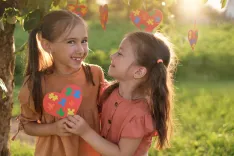
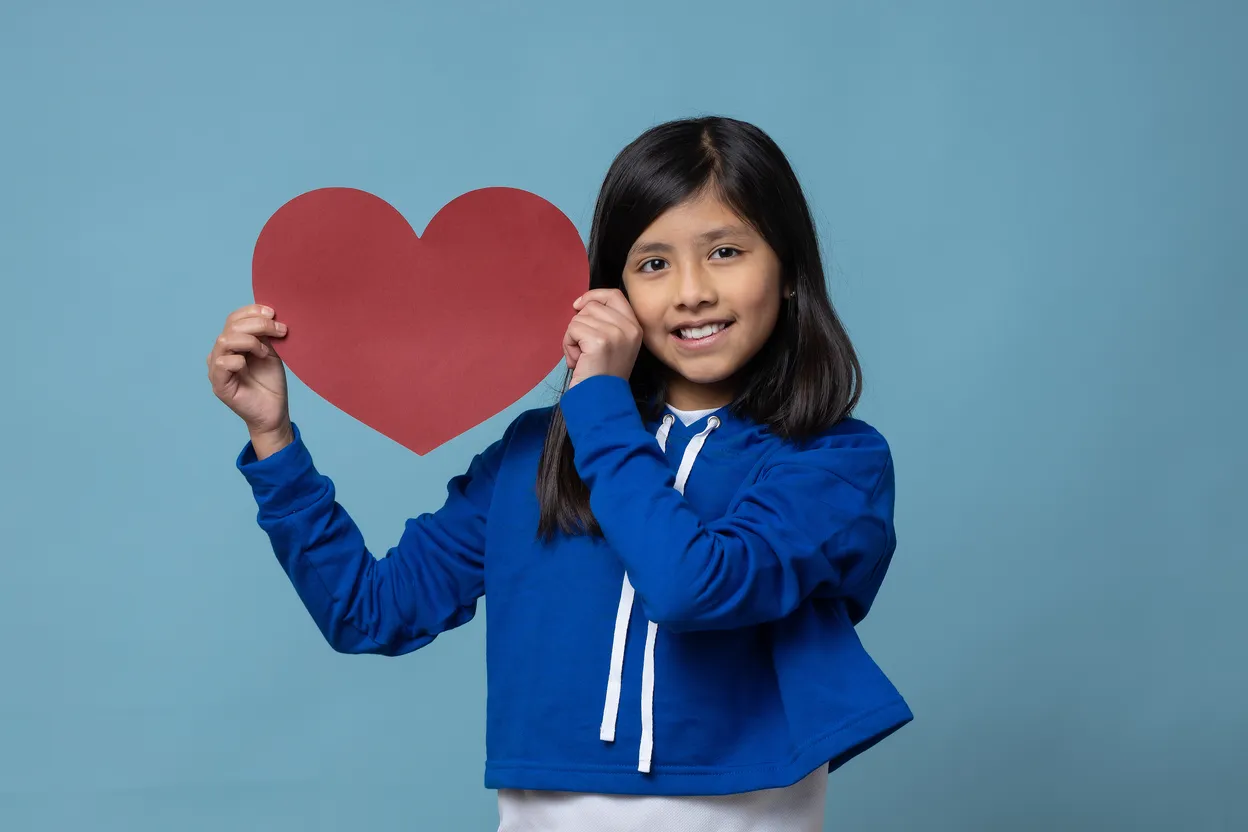
Cut a large smooth heart out of red paper. Tell the children a story about someone being called names or not being included in a game. With every hurtful word in the story, make a fold in the paper heart until it turns into a crumpled ball. Then apologize and begin smoothing the heart out. Show that even when we apologize, scars on the heart still remain.
Emotional Literacy – Helping Kids Name What They Feel
You cannot understand other people's emotions if you do not understand your own. Emotional literacy is the vocabulary of feelings that parents need to give their child.
Children often use only three phrases: "I feel good," "I feel bad," and "I'm angry." But the human spectrum is much wider! If you are looking for empathy games for kids, start by expanding their vocabulary.
When a child screams because they cannot put a puzzle together, do not say: "Stop being angry." Say: "I see that you are frustrated and disappointed because the piece does not fit." When they do not want to go to kindergarten, ask: "Do you feel lonely? Are you anxious?"
By giving children complex words to describe their inner storms, you give them a tool for managing those storms. The richer a child's emotional vocabulary is, the faster they can use these words to understand their friend's state.
Grow Your Child's Heart with Keiki
We often criticize gadgets for teaching children not to communicate face to face. But technology can also be an ally in developing social-emotional intelligence when used correctly. After an emotionally intense day, a child often needs a calm, low-stimulation environment to reset.
Keiki is a great fit for this. The app was created with the latest discoveries in early development in mind, to gently and comprehensively help a child develop according to age. And this is not only about learning the alphabet or numbers; many tasks in Keiki help develop empathy, directly or indirectly. For example, there is a "Social skills" game that teaches children to be more sensitive to others and follow rules of behavior in society. You will also find coloring pages with stories that are excellent for strengthening empathy. Even in counting games, you will find attention to detail – for example, inclusive characters with prosthetics, which teach respect and attentiveness.
Help your child thrive with playful learning
Turn screen time into real growth with Keiki's educational games.
Try KeikiConclusion
Empathy is not magic that only a chosen few are born with. It is a skill forged in everyday little things. In how you react to a broken cup, how you discuss the characters of an evening story, and which empathy games for kids you choose for shared leisure time.
Use our ideas, heal teddy bears, expand emotional vocabulary. And one day, you will see your child growing empathetic and kind toward others.