What Do Kids Learn in Preschool? A Complete Guide

The first day of preschool is a huge milestone for both the child and the parents. From that moment on, life is literally divided into "before" and "after," and a big, exciting new stage in your little one's life begins. It's completely natural to feel a mix of excitement and mild anxiety. And it's even more natural that, in the days leading up to this milestone, parents increasingly ask themselves: "What do kids learn in preschool?" For some parents, preschool education seems like just a more expensive form of childcare, where kids simply play all day.
In reality, a quality preschool program is so much more than play. It's a foundation that ensures the child's all-around development. At this age, a child's brain has a plasticity adults can only dream of, absorbing information and forming neural connections at a remarkable speed. Research from the HighScope Perry Preschool Project confirms that children who attended preschool programs show better academic and social outcomes in the long run. This complete guide will walk you through what should a child learn in preschool, which foundational skills are developed there, and what this process actually looks like in practice.
Key Takeaways
- Preschool builds a foundation for cognitive, emotional, social, and physical development, not just childcare.
- Play-based learning is the core method, turning everyday play into language, math, and problem-solving practice.
- Children work on early literacy — phonemic awareness, print concepts, and letter recognition — rather than fluent reading.
- Early math focuses on counting, shapes, sorting, and patterns, building math thinking over rote calculation.
- Fine motor skills and gross motor skills are both trained daily to prepare the hand for writing and the body for coordination.
- Social and emotional skills like cooperation, empathy, and self-regulation are considered the biggest predictor of school success.
- Creative arts and simple science activities nurture imagination and curiosity alongside academic skills.
- A predictable daily routine — circle time, learning centers, outdoor play — is itself part of kindergarten preparation.
What Do Kids Learn in Preschool
When we talk about what children learn in preschool, we should also keep in mind that the modern approach to early childhood education is far removed from traditional school lessons with kids sitting at desks. Instead, it uses a comprehensive approach that covers the cognitive, emotional, social, and physical domains.
The foundation of most modern programs is play-based learning. For a preschooler, play isn't just leisure — it's their way of exploring the world, experimenting with ideas, and absorbing new concepts. Skilled educators structure the play environment to channel children's curiosity in the right direction. The answer to "what is taught in preschool?" isn't a list of facts; it's the development of abilities. Children learn how to learn: how to ask questions, solve problems, cooperate, and think critically.
Help your child
grow with Keiki
We’ll help you turn everyday screen time
into real learning progress.
Language and Early Literacy Skills
Speech development is one of the most noticeable aspects of preschool education. The answer to "what do children learn in preschool?" includes the ability to clearly express one's thoughts and understand others. In preschool, children are immersed in a rich language environment.
Language skills
Children learn to listen and understand spoken language, and to follow multi-step instructions. They expand their vocabulary, learn to use more complex sentences, and describe their feelings and experiences. This happens through ongoing conversations with teachers and peers, retelling stories, and taking part in role-play.
Early literacy
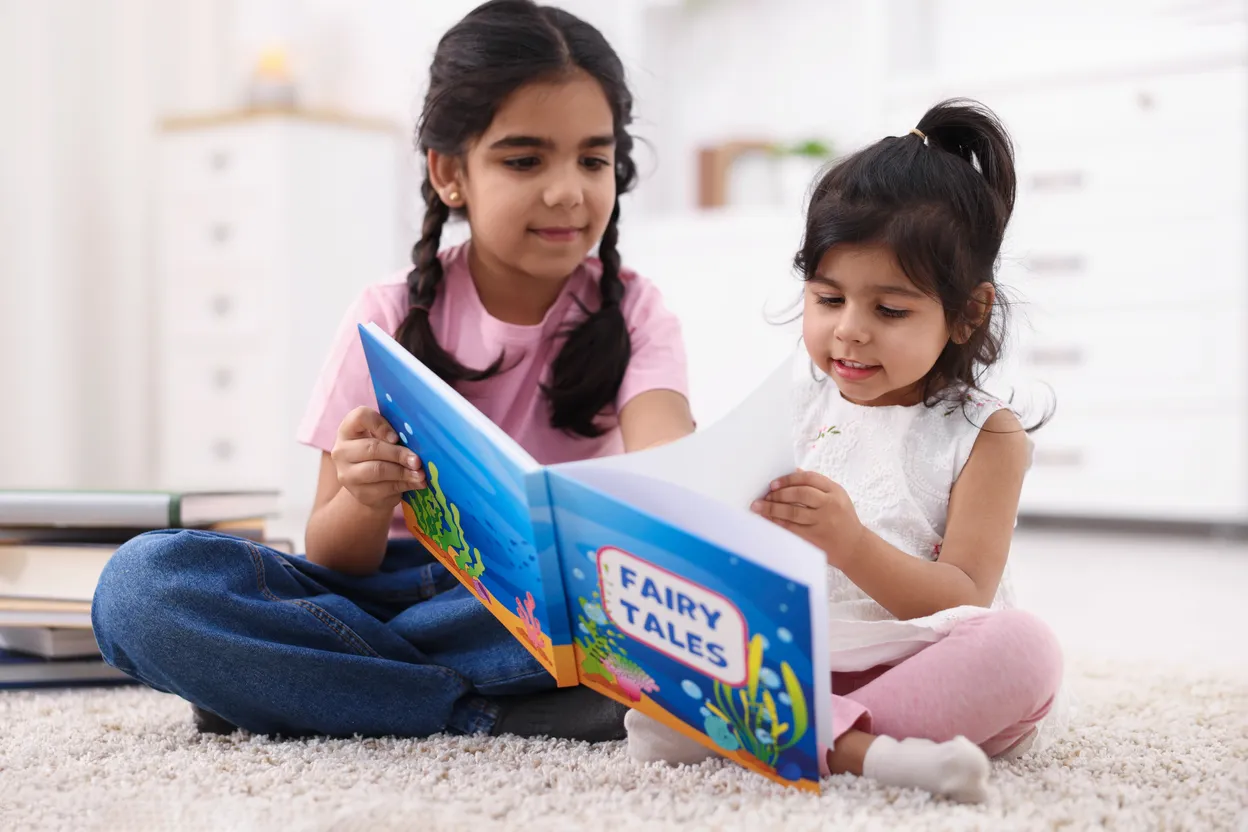
Preschool isn't meant to teach a child to read fluently, although some children may start to, but it does lay an important foundation — early literacy. This includes:
- phonemic awareness — the ability to hear and distinguish sounds within words;
- print concepts — understanding that we read from left to right and top to bottom, and that text carries meaning;
- letter recognition — teachers use playful methods to help children remember the shapes and names of letters, often linking them to the sounds they make;
- interest in books — reading aloud is a mandatory part of the day, which instills a love of literature and develops imagination.
Developing these things to learn in preschool is key to successfully learning to read and write in elementary school.
Early Math and Cognitive Skills
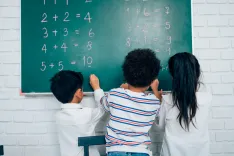
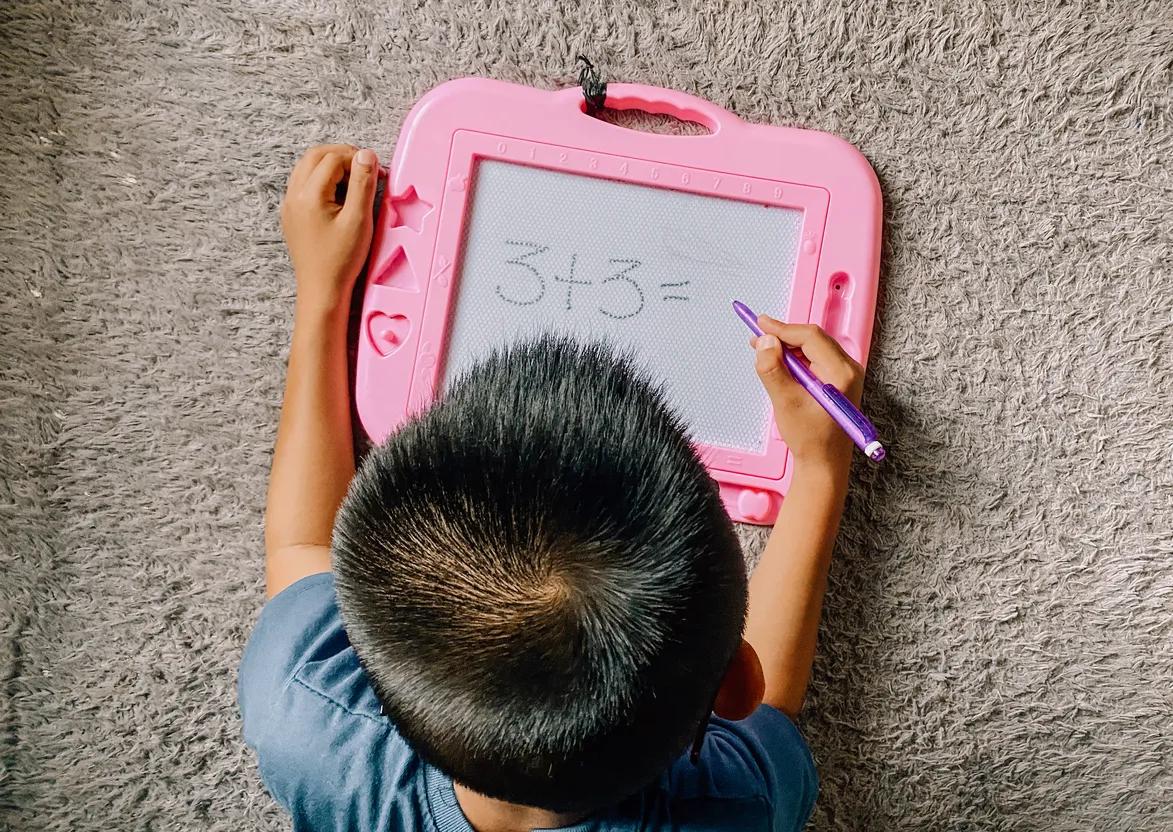
Preschool math is far from solving equations, and it's not even about subtraction or other basic operations. Here, the emphasis is primarily on mathematical thinking and understanding fundamental concepts. This area of learning plays an important role in the child's overall cognitive development. Math skills learned in preschool are woven into everyday play. Here's what does preschool teach in the area of math and cognitive skills:
- Counting and numbers. Children learn not just to name numbers in order, but to understand the "one-to-one" concept (matching one number to one object when counting). They learn to recognize written numerals.
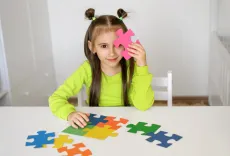
- Shapes and geometry. Recognizing, naming, and comparing basic geometric shapes (circle, square, triangle, rectangle).
- Classification and sorting. The ability to group objects by a given attribute (color, size, shape).
- Patterns and sequences. Recognizing, creating, and continuing simple patterns.
- Measurement. Comparing objects by length, weight, or volume (bigger/smaller, longer/shorter, heavier/lighter).
Cognitive skills
Teachers encourage curiosity and develop problem-solving skills. Children learn to make predictions, observe the results of experiments, and draw simple conclusions. This is an important step in overall kindergarten preparation, shaping mental flexibility.
Physical Development: Fine and Gross Motor Skills
Preschool education places a lot of emphasis on physical development, which falls into two main categories. Without developing these skills, it's essentially impossible to master writing and coordination successfully.
Gross motor skills
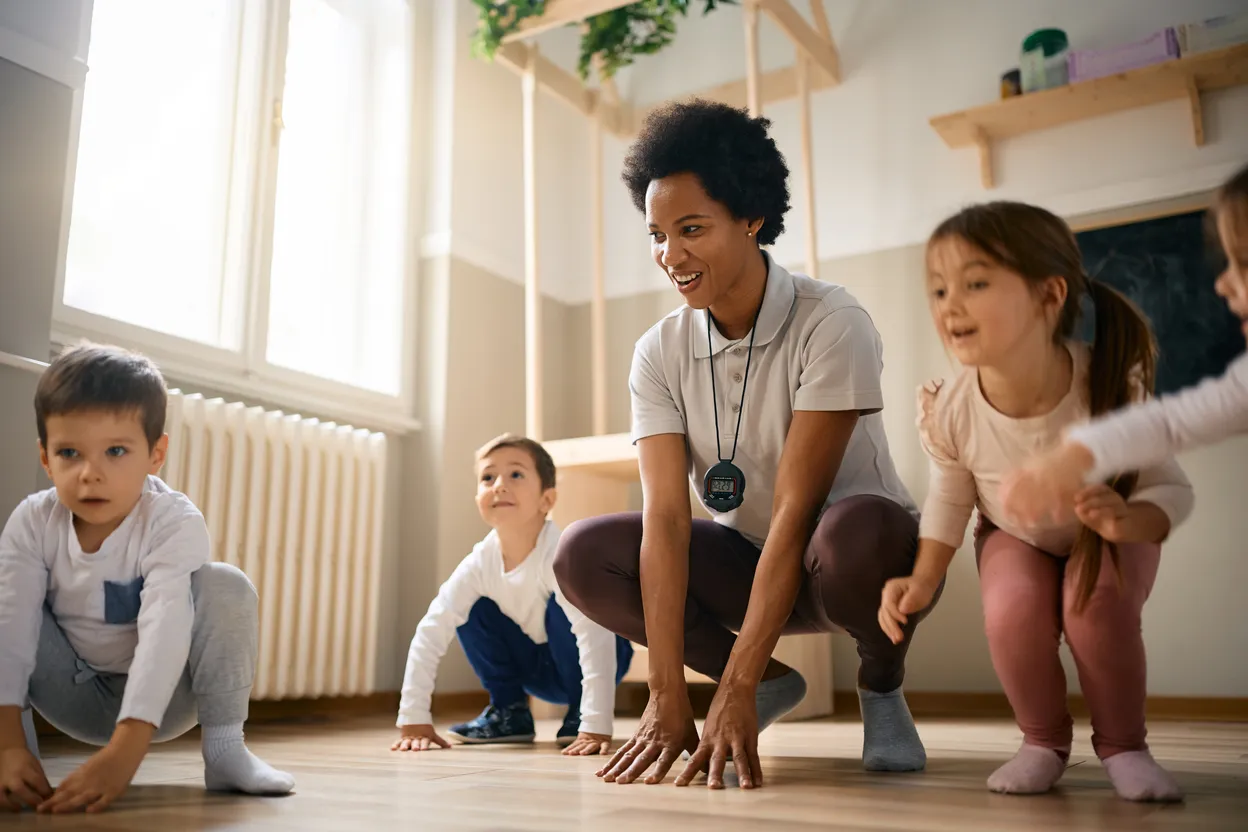
This is the development of the body's large muscles, responsible for balance, coordination, and strength. The answer to "what should a child learn in preschool?" includes physical confidence. Through active games outdoors and indoors, children learn to:
- run, jump (on one and two feet), and hop;
- throw, catch, and kick a ball;
- climb on playground structures;
- hold their balance and coordinate their movements.
Fine motor skills
This is the development of the small muscles of the hands and fingers, which matter for future school readiness, especially for writing. What do kids learn in preschool to prepare their hand for writing?
- Drawing and writing. Children learn to hold crayons, markers, and pencils correctly, draw lines and shapes, and may even attempt to write their name.
- Using tools. The skill of using safety scissors (cutting along a straight line, then a curved one).
- Manipulating small objects. Playing with construction sets (LEGO and similar toys), stringing beads, molding clay or kinetic sand, and buttoning or zipping.
Social and Emotional Skills
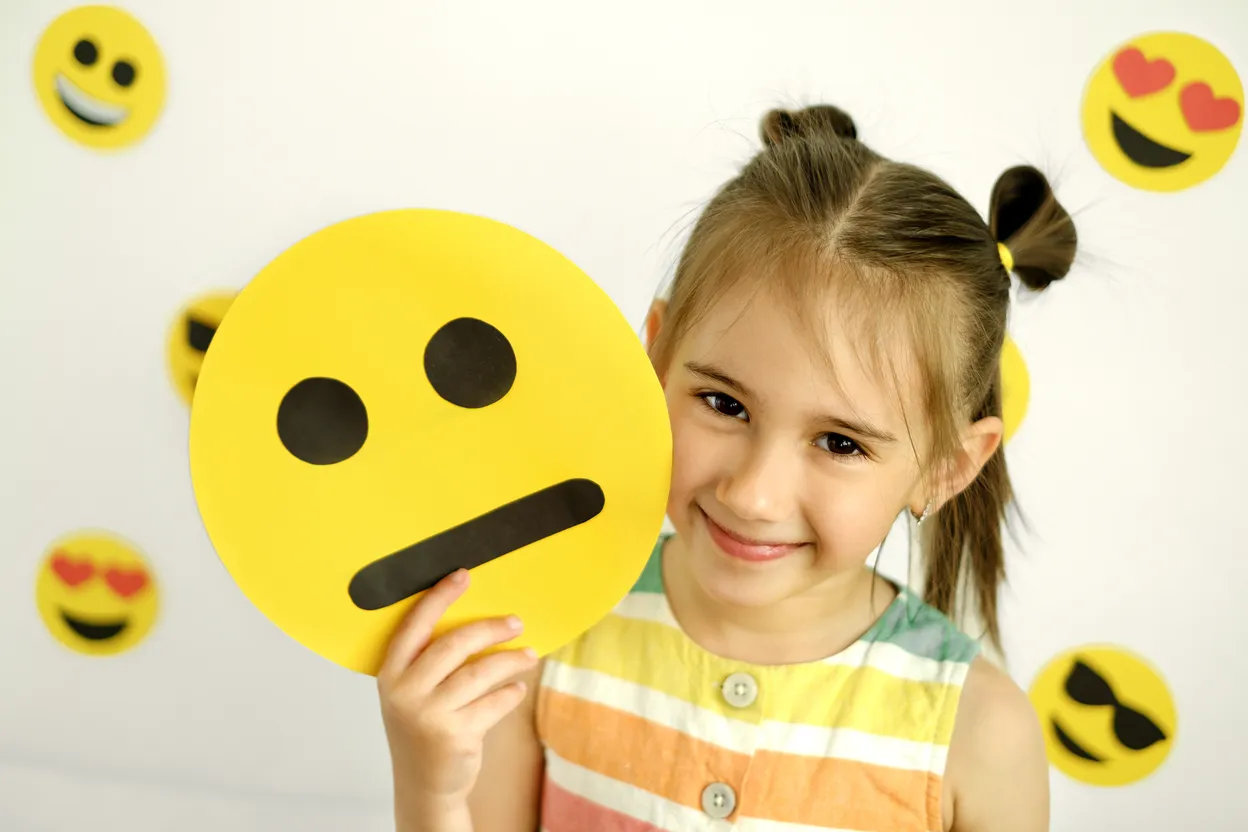
Elementary school teachers note that social and emotional skills are the most important factor for a successful start to school — even more important than knowing the alphabet. Kindergarten preparation is, above all, emotional maturity. Preschool gives a child a safe space to practice these skills among peers.
Social skills
- cooperation — children learn to share toys, wait their turn, and work as a team toward a common goal, such as building a tall tower;
- empathy — the ability to recognize other children's feelings and respond to them with compassion;
- conflict resolution — preschoolers argue often. Under a teacher's guidance, they learn to use words instead of their fists, negotiate, and find compromises.
Emotional skills
- self-regulation — one of the most important aspects of overall development. Children learn to manage their emotions, and impulse control emerges;
- independence and confidence — children learn to dress themselves, put away their toys, make choices, and feel proud of their achievements. They develop positive self-esteem;
- adaptation — the ability to cope with separation from parents and adjust to new rules and the group's routine.
These skills shape a child's personality and help them become a successful member of society.
Creativity and Science
Preschool education isn't just about pouring a pile of facts into a child's head. It actively encourages imagination and fosters an interest in science.
Creative arts
In this area, what does preschool teach is freedom of self-expression. Creative arts are introduced through:
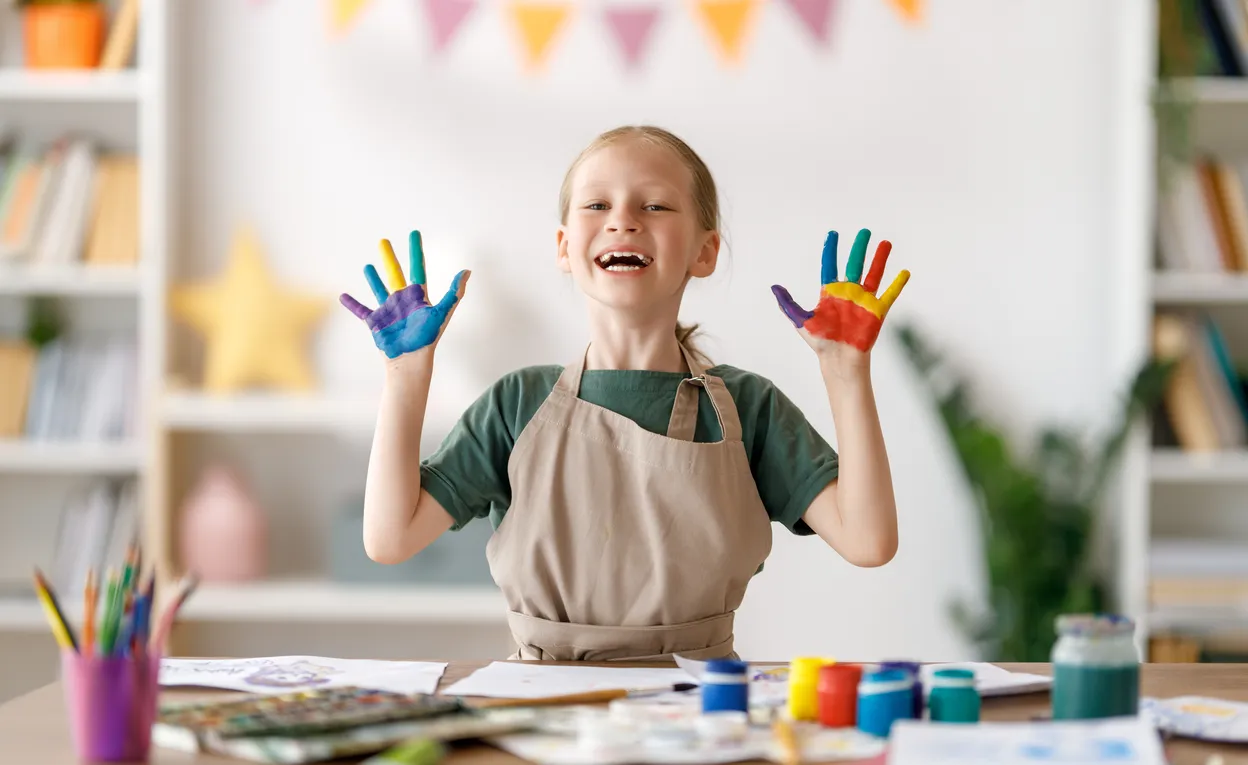
- visual art — painting with paints, crayons, and pencils, modeling clay, and making collages, always with an emphasis on process rather than result;
- music and movement — singing songs, playing simple musical instruments, dancing, and rhythm activities;
- dramatic play — role-play as "shop," "hospital," or "space," where children try on different roles, developing speech and social skills.
Science
Science at preschool age is based on observation and experimentation. Children explore the world around them:
- observing the weather and the seasons;
- studying plants and animals (planting seeds, observing insects);
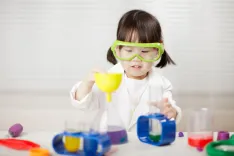
- simple physical experiments (properties of water: sink/float, mixing colors, magnets).
What do you learn in preschool alongside your little one? You develop critical thinking, and curiosity too.
A Day in the Life: What Preschool Learning Actually Looks Like
To better understand what is taught in preschool in practice, let's look at the structure of a typical day. Although every center has its own schedule, most programs follow a predictable routine, which gives children a sense of security.
A typical routine:
- Arrival and free play. Children arrive, greet the teacher, and choose an activity of interest in the play areas (blocks, drawing, books).
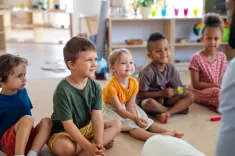
- Circle time. This is important time for the whole group. The teacher greets the children, they discuss the calendar and the weather, plan the day, sing songs, and listen to a story. It's a great way to build language skills and a sense of community.
- Learning centers/group activities. Children split into small groups and move from one learning center to another. This is time for structured play-based learning, where they work on early math, early literacy, or creative projects under the teacher's guidance.
- Outdoor play. Essential time for actively developing gross motor skills.
- Snack/lunch. Time to develop self-care, hygiene, and social conversation skills.
- Quiet time/rest. Time to recharge.
- Free play and pickup.
This whole routine is, in itself, already part of the learning process — it instills time-management skills, adaptation to rules, and a sense of responsibility in children.
Build Preschool Skills Through Play With Keiki
We live in a time when gadgets get demonized, yet giving up technology altogether isn't always the right call. What matters most is the quality of the content. If you want to further reinforce the skills your child is gaining during preschool learning, the Keiki app can be your reliable helper.
We developed it together with early childhood development experts and child psychologists, so Keiki gently and engagingly gives children all the content they need. At the same time, there's no risk of overstimulation or overexcitement, and there's not even any advertising inside. What it does have are games that matter so much for developing a preschooler's skills — for example, handwriting practice games, which, unlike other screen-time activities, reinforce a child's first attempts at handwriting from preschool and school workbooks. There are also memory-training tasks.
While you rest, your child can spend that time productively, playing educational games that target key skills with precision. Using Keiki is a fun, modern way to support your child's overall kindergarten preparation at home.
Build real skills through fun, educational games for your child
Try KeikiPreschool Prep — A Time for Gentle Growth
Preschool education isn't just a period of preparation for "real" school. It's a stage of childhood in its own right, full of the joy of discovery, first friendships, and active learning. A quality preschool program doesn't force academic knowledge — it creates conditions in which the child naturally develops through play, exploration, and communication.
Children learn to talk, count, manage their emotions, cooperate, create, and think for themselves. Understanding what do kids learn in preschool lets parents feel confident that they're giving their child a solid start toward a happy and successful future. Your support — reading books at home, playing together, and choosing quality educational tools (both offline and online) — will amplify the positive effects of preschool education.