What Should My Child Know Before Kindergarten

The first steps toward school are a momentous occasion — an event that changes the lives of both children and parents. As summer draws to a close and store shelves fill with school supplies, this sense of grandeur often turns into anxiety and nervousness for many families. It’s a perfectly normal question for parents to ask: What should kids know before kindergarten? But the answer might surprise you.
Table of contents
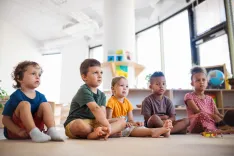
From experts’ social media posts or books, adults often get the impression that four- and five-year-olds should be reading books fluently by chapters and solving complex math problems. But kindergarten readiness is much more complex. Preparing for school involves a balance of cognitive development, physical coordination, and emotional regulation. In this article, we’ll explore what kids need to know for kindergarten, shifting the focus slightly from academic standards to more fundamental skills that will truly help them adapt successfully.
Key Takeaways
- Kindergarten readiness isn't about reading chapters or doing math — it's a mix of social, emotional, physical, and cognitive skills that all matter equally.
- Social-emotional skills top the list — a child who can share, take turns, and bounce back from disappointment will thrive far more than one who can recite the alphabet but falls apart when things don't go their way.
- Communication comes before academics — if a child can't express their needs or follow a two-step instruction, school will feel overwhelming no matter how many letters they know.
- Independence in daily tasks is massively underrated — being able to use the restroom alone, open a lunchbox, and manage a jacket frees up mental energy for actual learning.
- No child will check every box on day one, and that's fine — kindergarten exists precisely to build these skills, not to test whether kids already have them all.
What Should a Kindergartener Know?
When we ask the question “What should a kindergartener know?”, we are not considering specific skills in isolation from the bigger picture. According to research on early childhood education conducted by the American Academy of Pediatrics (AAP), preschool teachers and educators generally consider social stability and communication skills to be far more important factors than early cognitive achievements. A child who is considered “ready to learn” and prepared for the school environment is one who can adapt to new daily routines, manage their behavior, and interact positively with peers.
Nevertheless, a balanced foundation is essential. Modern pedagogy recognizes that school readiness is a multidimensional puzzle. If you’re looking for information on what a kindergarten student should know, these skills are typically divided into five main areas:
- social-emotional;
- language and communication;
- early literacy;
- early math; and physical motor skills.
Research shows that students who have mastered these skills are more likely to achieve high academic performance by third grade.
Help your child
grow with Keiki
We’ll help you turn everyday screen time
into real learning progress.
Social and Emotional Skills
Parents who focus too much on flashcards and phonics often overlook the fact that social-emotional skills are the true foundation of early education. A large-scale 20-year study published in the American Journal of Public Health confirmed this link. Researchers found that a high level of social competence in preschool — such as the ability to share, cooperate, and solve problems with peers — determines a child’s future success in pursuing higher education and building a career.
If a child cannot navigate the social dynamics of the classroom, they will have difficulty absorbing the academic material. On the list of things a kindergartener should know, the ability to cooperate with other children ranks among the top priorities:
- willingness to share toys;
- taking turns during group activities;
- participating in group games without constant conflict.
Emotional regulation is also important. Does your child know how to cope with disappointment if they aren’t allowed to lead a game? Can they switch from playtime to class time without throwing a major tantrum? Teachers don’t expect perfect behavior — preschoolers are still young and will naturally experience strong emotions — but demonstrating a basic ability to calm themselves down and cope with minor disappointments gives them a huge advantage.
Empathy also begins to flourish at this age. Understanding other people’s feelings and showing basic compassion when a classmate is upset are important components of a healthy classroom community. Emotional stability has a much greater impact on a child’s long-term academic skills than any amount of rote learning.

Language and Communication Skills
Strong communication skills serve as a bridge between a child’s inner world and their surroundings. When considering what your child should know before kindergarten, expressive and receptive language skills take center stage. Expressive speech means that your child can articulate their needs, thoughts, and feelings. They should be able to speak in complete sentences of five to six words, ask questions about the world around them, and tell a simple story coherently.
On the other hand, receptive language is just as important, and listening skills play a key role here. Working in a group depends on the ability to understand instructions by ear. Can your child follow a two- or three-step instruction? For example: “Please put away the blocks, wash your hands, and sit on the rug.” Good listening skills also mean that a child can listen to a short story without constantly interrupting and answer questions about what they’ve just heard. If a child has trouble saying they need to use the bathroom or that they’re not feeling well, school will become a form of punishment for them.
Early Literacy and Reading Readiness
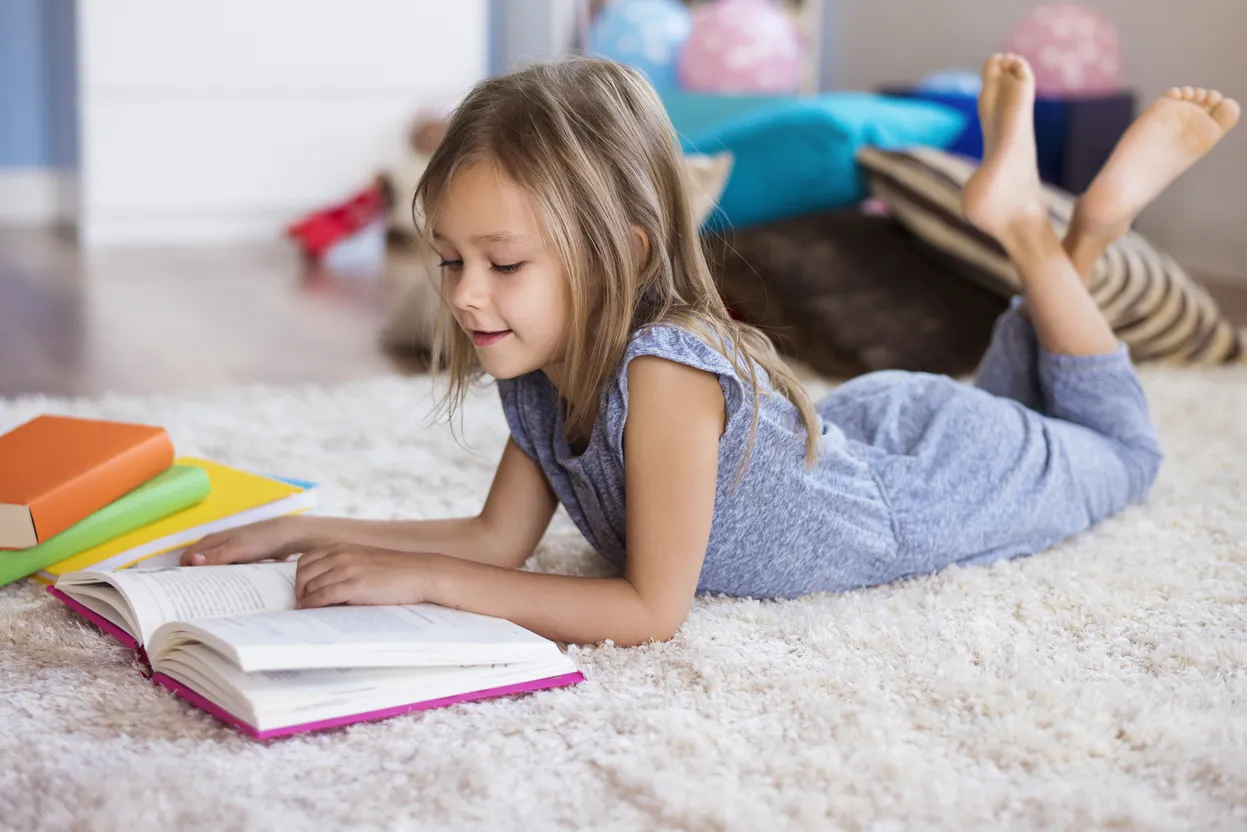
There is a fairly common misconception that children should be able to read fluently even before their first day of school. In reality, early literacy is just the foundation. Among the basic things to know before kindergarten, early letter recognition stands out. Ideally, a child should be able to recognize most of the letters of the alphabet, especially those that make up their own name. Understanding the difference between uppercase and lowercase letters is a bonus, but recognizing the shapes and names of letters is the main goal.
In addition to letter recognition, an important skill for preparing to read is an awareness of printed text. This means understanding that text conveys meaning, that we read from left to right and top to bottom, and knowing how to hold a book with the right side facing up. Phonological awareness — which includes recognizing rhyming words and identifying the initial sounds of familiar words — is also a key predictor of future reading success. Finally, writing one’s own name — even if the letters are a little crooked or too big — is a classic indicator of school readiness.
Early Math Skills
When we talk about early math, we’re not referring to complex workbooks with addition or subtraction. Instead, we’re assessing a sense of number and spatial awareness. Basic counting remains a key requirement; a child should generally be able to count aloud to 10 or 20. But even more important than mechanical counting is an understanding of one-to-one correspondence. This means that if you place five blocks on a table, the child will be able to point to each block individually, counting “one, two, three, four, five,” and will understand that the last number named represents the total number of objects in the group.
Other important skills include recognizing basic shapes (circle, square, triangle, rectangle) and understanding sorting and patterns. Can your child sort a pile of buttons by color or size? Can they recognize a simple ABAB pattern (for example, red, blue, red, blue)? Understanding basic relative concepts, such as more/less, many/few, and above/below, also falls under this category.
Fine and Gross Motor Skills
Physical development is divided into two categories: gross motor skills and fine motor skills. Both are essential for a child to get through the school day normally. Gross motor skills allow a child to play safely on the playground, run, jump, hop on one foot, and catch a large ball. They are also responsible for core muscle strength, which, surprisingly, is necessary for sitting upright at a desk or on the floor for long periods of time without slouching or falling over.
On the other hand, fine motor skills involve the hands and fingers and directly affect a child’s ability to participate in classroom activities. Holding a pencil correctly is an important developmental milestone. Fine motor skills also include using safety scissors to cut along straight or curved lines, gluing pieces onto paper, building with small blocks, and sculpting with modeling clay.
Self-Help and Independence Skills
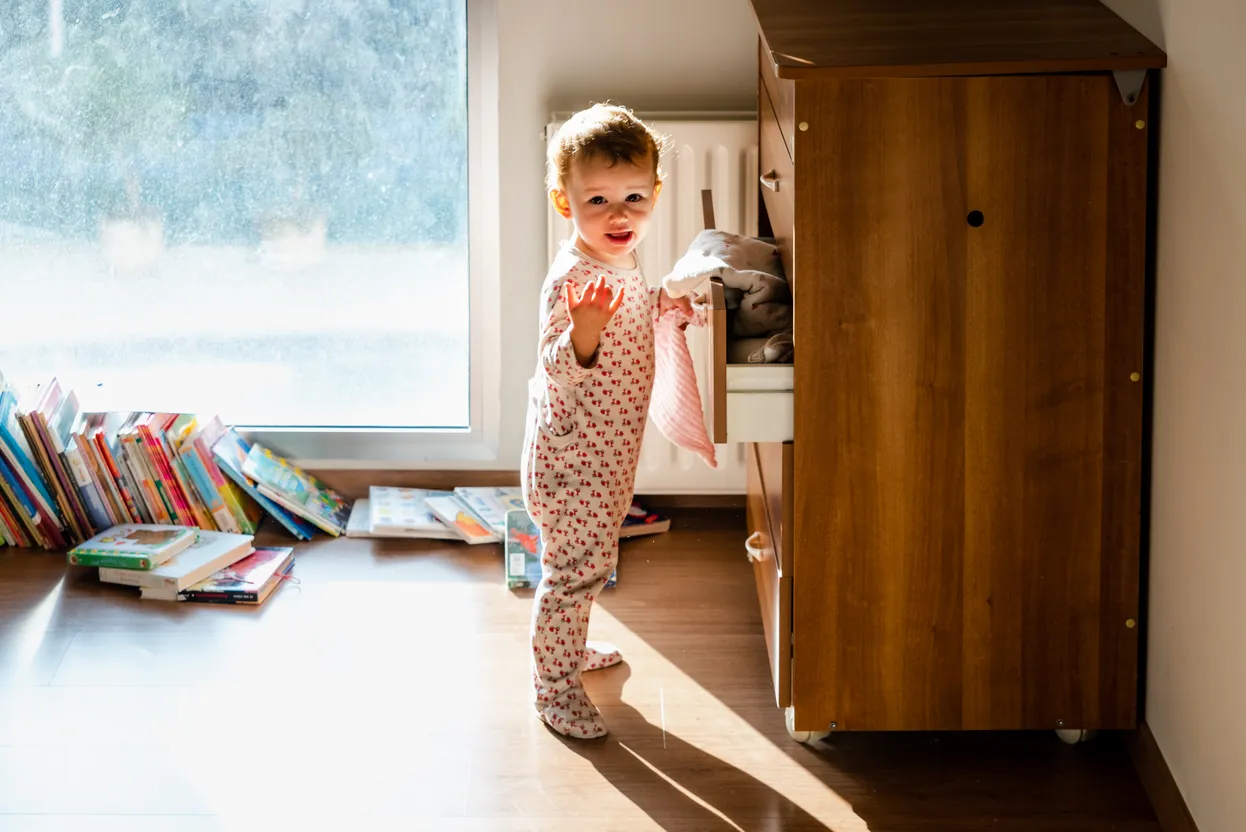
Perhaps the most underrated category of preparation is self-help skills and overall independence. Imagine a classroom with one teacher and twenty-two five-year-olds. The teacher physically cannot button every jacket or open every snack package. Therefore, fostering independence in everyday tasks is one of the most helpful things you can do for your child and his or her future teacher.
In most schools, using the restroom independently is a given. A child must be able to use the restroom, wipe themselves, flush the toilet, and wash their hands without adult assistance. Self-help skills also include the ability to:
- dress themselves (put on a jacket, pull on pants);
- put on their shoes (we recommend shoes with Velcro straps if the child cannot yet tie shoelaces);
- manage their own lunchbox.
Can they open a juice box? Can they remove the lid from a lunch container? Will they be able to pack their backpack at the end of the day? Mastering these everyday tasks builds a child’s confidence and allows them to focus their mental energy on learning and playing, rather than on the stress of a stuck zipper.
Kindergarten Readiness Checklist
To help you assess your child’s progress, we’ve put together a detailed kindergarten checklist. Remember that every child develops at their own pace; no child will be able to perfectly check off every item on this list on their very first day of school. However, this checklist serves as a guide for the months leading up to the start of school.
Social and Emotional Development:
- Says goodbye to parents or caregivers without undue anxiety.
- Interacts appropriately with peers (shares, waits for their turn).
- Demonstrates basic empathy and understanding of other people’s feelings.
- Can sit quietly and concentrate for 10–15 minutes.
- Follows classroom rules and routines.
- Demonstrates the ability to regulate emotions (recovers quickly from minor disappointments).
Language and Communication:
- Speaks clearly enough to be understood by people outside the family.
- Follows multi-step verbal instructions.
- Expresses needs and feelings with words rather than physical actions (does not fight).
- Can retell a simple story or a recent event in a logical sequence.
- Asks questions to obtain information.
Early Literacy and Cognitive Skills:
- Recognizes their name when written.
- Can write their name (using both uppercase and lowercase letters is a plus).
- Demonstrates basic letter recognition.
- Understands how to hold a book correctly and turn the pages from left to right.
- Identifies rhyming words (e.g., bat/cat).
- Shows curiosity and a desire to learn new things.
Math and Logic:
- Demonstrates basic counting skills (counts aloud to 10 or 20).
- Understands one-to-one correspondence for objects (up to 10).
- Names primary colors (red, blue, green, yellow, etc.).
- Recognizes basic geometric shapes (circle, square, triangle).
- Can sort objects by a specific characteristic (color, size, shape).
- Understands words indicating direction (up, down, under, over, next to).
Physical and Motor Skills:
- Holds a pencil or chalk correctly using a pincer grip.
- Uses scissors safely to cut along simple lines.
- Can run, jump, and hop on one foot.
- Can throw and catch a large ball.
Independence and Self-Care:
- Uses the restroom independently (including using toilet paper and washing hands).
- Manages their own clothing (zips up jackets, buttons pants).
- Opens lunch containers and handles snacks with minimal assistance.
- Takes responsibility for their belongings (puts their backpack in their locker).
How to Build These Skills with Keiki
Understanding the necessary developmental milestones is only half the battle; the real work lies in helping your child master these skills. The best way to teach young children is through play, and that’s where Keiki truly shines. Developed by experts in early childhood development, our app turns screen time into a productive play experience where it’s so easy to master all these skills.
For example, Keiki offers games for learning numbers and counting. Math is usually what scares kids the most, but even that can be learned through play. Your little one won’t even notice how much fun it is to learn numbers and simple operations with them. Games for learning to read work in exactly the same way. Various interactive activities literally guide your child step by step through the essential skills they need to master, including syllable-by-syllable reading.
For parents worried about school readiness, Keiki offers a safe, ad-free environment filled with interactive games that target the very skills listed in our checklist. By incorporating the app into your child’s daily routine, you’ll provide them with a fun and stress-free way to gain the valuable knowledge they’ll need to start the new school year with confidence and joy.
Build real skills through fun, educational games for your child
Try KeikiConclusion
Preparing for the start of school doesn’t have to be a source of anxiety for your family. With a clear understanding of what kids should know before kindergarten, you can support your child’s growth by taking small steps toward big goals. Remember that kindergarten readiness isn’t a race to see who can read the fastest or solve the most difficult math problems. It’s about fostering a well-rounded individual who is socially adaptable, emotionally stable, physically coordinated, and curious about the world.