CVC Activities for Kindergarten: 20 Easy Ways to Practice Reading at Home

If your kindergartner came home with words like cat, sun and pig, these 20 activities will help you practice them at home. Each one comes with what you need and how to play, step by step. Most take ten minutes or less and use mostly stuff you already have.
Key Takeaways
- CVC words are usually the first words kids learn to sound out on their own.
- Start with short-a words that begin with a sound you can hold, like mat and sun.
- A few minutes of practice every day works well for kindergartners.
- Keiki World's reading games give your child sound practice on days when you can't sit down together.
What CVC Words Are and How Kindergartners Learn Them
CVC words are three-sound words that go consonant, vowel, consonant: c-a-t, d-o-g, s-u-n. Each letter makes its usual sound, so your child can read the word by saying the three sounds and blending them together. That's why CVC words are usually the first words kids read on their own.
Kindergartners are expected to hear each sound in a CVC word. The Common Core kindergarten standard RF.K.2d expects kids to pick out and say the first, middle and last sound in three-sound CVC words (California Department of Education, ELA standards).
Your child needs to know most letter sounds before starting CVC words. If letters are still new, start with our guide on when kids learn their ABCs. In this article, a letter between slashes means its sound: /k/ is the sound at the start of cat, not the letter name "see."
Most kids learn CVC words in this order:
- Short-a words and words that start with a sound you can hold, like /m/, /s/ and /f/ in mat, sat and fan.
- Blending a first sound with a word ending, like /m/ + /at/, before blending three separate sounds.
- Words that start with short sounds you can't hold, like /t/, /b/ and /g/ in top, bus and gum.
How Keiki World Helps With CVC Practice
Keiki World helps on the days you can't sit down and practice together. Your child plays a short reading game on their own, and the game says the sounds out loud, so they hear them said clearly while you cook or answer emails.
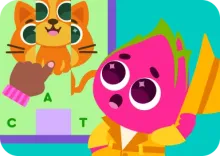
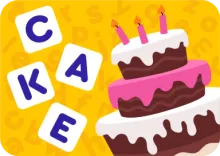
The Keiki World reading games work as CVC games for kindergarten because they follow the same order as the activities in this article: letter sounds first, then blending, then building words. For example, in Spell the Word your child drags letters into order to make a short word and hears each sound as the letter drops in.
A simple way to use Keiki World next to the activities below:
- On busy days, let your child play one or two games. Sessions are short, so it stays a few minutes of screen time.
- On calmer days, pick a hands-on activity from this list instead.
- At dinner, ask your child to read you one word they made in the game. It shows you what they're working on.
- If your child likes paper practice, print a few Keiki World worksheets for the table.
Practice CVC Words With These Games



Hands-On CVC Word Activities for Blending
These activities practice blending: hearing three separate sounds and turning them into one word. Play one or two at a time and stop while your child still wants to keep going.
1. Slide the Sounds
Slide the Sounds shows your child that the three sounds in a word belong together.
You need: paper and a marker.
- Write a CVC word, like sun, in big letters.
- Draw a dot under each letter and an arrow under the whole word, pointing right.
- Your child touches each dot and says its sound: /s/, /u/, /n/.
- Then they slide a finger along the arrow and say the sounds again, faster, until they hear the word.
- Do 4 or 5 words, then switch to a new set the next day.
2. Robot Talk
Robot Talk practices blending by ear, so it works even before your child can read letters.
You need: nothing.
- Say a CVC word in a robot voice, one sound at a time: /p/ /i/ /g/.
- Your child says the whole word in a normal voice: pig.
- After a few words, swap. Your child says a word in robot voice and you guess it.
If your child gets stuck, say the sounds a little faster and closer together.
3. Mystery Bag
Mystery Bag connects sounds to real objects your child can hold.
You need: a bag or pillowcase and 4 to 6 small things with CVC names that feel different, like a cup, a pen, a toy cat, a lid and a plastic bug.
- Put the objects in the bag without your child seeing.
- Say the sounds of one object: /k/ /u/ /p/.
- Your child blends the sounds, says the word and reaches in to find it.
- If they pull out the right one, they keep it. If it's the wrong one, it goes back in. Keep going until the bag is empty.
4. Tap and Blend
Tap and Blend helps kids keep track of how many sounds they've said, and it gives fidgety hands a job.
You need: a few CVC words written on paper.
- Show your child a word, like hat.
- For each sound, they tap one finger to their thumb: pointer for /h/, middle for /a/, ring for /t/.
- Then they slide their thumb across all three fingers and say the whole word.

Help your child
grow with Keiki
We’ll help you turn everyday screen time
into real learning progress.
5. Word Family Flip
Word Family Flip lets your child read a lot of words fast, because only the first sound changes.
You need: index cards or paper squares and a marker.
- Write at on one card.
- Write single letters on small cards: m, s, c, h, b, r.
- Your child puts a letter card in front of at and reads the new word: mat, sat, cat.
- When at feels easy, try other endings like in, op or ug.
6. Read and Match
Read and Match checks that your child is reading the word, not guessing from the first letter.
You need: 3 toys or pictures and word cards for each one.
- Line up the toys or pictures on the table.
- Hand your child one word card at a time.
- They read the card and put it on the matching item.
- Once that's easy, use words that look alike, like cat, cap and hat, so they have to read all three letters.
CVC Activities for Building and Spelling Words
Spelling means breaking a word into sounds and finding a letter for each one. None of these activities need a worksheet. For more writing ideas, see our writing games for kids.
7. Fridge Magnet Words
Fridge Magnet Words turns cooking time into spelling practice.
You need: magnetic letters.
- Put 5 or 6 letters on the fridge, including one vowel. For example: c, a, t, m, p, s.
- Say a word you can make with them, like map.
- Your child says the sounds and finds a letter for each one.
- Change the letters every few days so you get new words.
8. Change One Sound
Change One Sound teaches kids to listen for where a sound changes: at the start, in the middle or at the end.
You need: magnetic letters or letter cards: c, a, t, h, o, p and m.
- Build cat together.
- Ask your child to make it say hat. They swap one letter.
- Keep going: hat to hot, hot to hop, hop to mop.
Middle sounds are the hardest, so if your child gets stuck, say the old word and the new word slowly, one after the other.
9. Sound Boxes
Sound Boxes help your child hear each sound in a word before writing it.
You need: paper, a pencil and 3 coins or buttons.
- Draw three boxes in a row.
- Say a word, like dog.
- Your child says each sound and pushes a coin into a box for each one: /d/, /o/, /g/.
- Once they can count the sounds, they write a letter in each box instead of using coins.
10. Salt Tray Writing
Salt Tray Writing works well for kids who don't like holding a pencil.
You need: a baking tray and some salt, flour or sugar.
- Pour a thin layer of salt onto the tray.
- Say a word.
- Your child writes it with one finger, saying each sound as they write the letter.
- Shake the tray gently to erase it and say the next word.
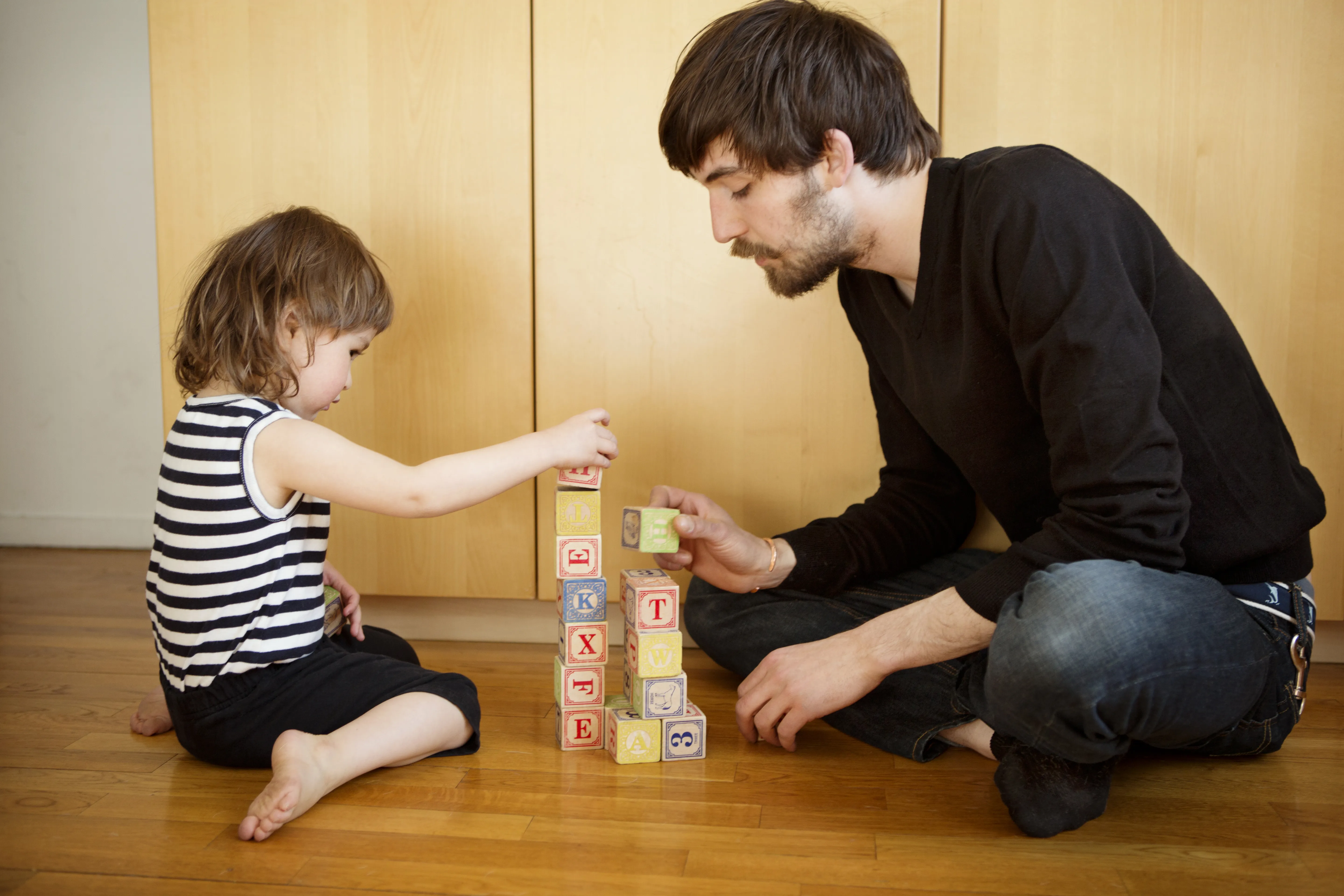
11. Block Towers
Block Towers lets your child build words, then knock them down.
You need: building blocks, painter's tape and a marker.
- Put a piece of tape on each block and write one letter on it. Make a few vowel blocks.
- Say a word. Your child finds the three blocks and stacks them with the first sound on top, so the word reads top to bottom.
- They read the word out loud, knock the tower down and build the next word.
Active CVC Kindergarten Games
These games are good for kids who find it hard to sit still after school. Your child moves around and reads at the same time.
12. Hop and Read
In Hop and Read, your child reads each word before hopping to the next one.
You need: paper, a marker and tape.
- Write one CVC word on each sheet of paper.
- Tape 6 to 10 sheets to the floor in a path, about one hop apart.
- Your child reads the word they're standing on, then hops to the next one.
- If they get a word wrong, they stay put and try again.
- End the path somewhere fun, like the couch or a small snack.
13. Flashlight Words
Flashlight Words is reading practice in the dark, so it feels more like a game than a word list.
You need: a flashlight, word cards and tape.
- Tape word cards on the walls of a room.
- Turn off the lights or close the curtains.
- Your child shines the flashlight on a card and reads it.
- If they read it right, they take the card. See how many they can collect.
14. Swat the Word
Swat the Word practices finding a word your child hears, which is a different skill from reading it.
You need: a clean fly swatter and 6 to 8 word cards.
- Spread the cards face up on the table or floor.
- Say one of the words.
- Your child finds it and swats it.
- After a few rounds, swap roles. Your child calls out the words and you swat.
15. Real or Silly
Real or Silly makes your child sound out every letter, because made-up words can't be guessed.
You need: word cards with real words and made-up words, like zop, mig and teb.
- Mix the cards together.
- Your child reads one card out loud.
- They decide if it's a real word or a silly word and toss it into the right pile.
- Check the piles together at the end.
16. Word Treasure Hunt
In Word Treasure Hunt, each word your child reads tells them where to go next.
You need: 5 or 6 word cards and a small prize.
- Pick CVC words for things around your home, like bed, rug, tub and pot.
- Hand your child a card that says bed. At the bed, leave a card that says rug. At the rug, leave a card that says tub, and so on.
- Your child reads each card and goes to that thing to find the next one.
- Put the prize at the thing named on the last card.

Quick Reading Ideas for Busy Days
Each idea here is a two-minute CVC word activity you can do in the car, in the bath or at dinner, with no prep.
17. Sound Spy in the Car
Sound Spy is I Spy with sounds instead of letters.
- Pick something you can both see with a CVC name, like a bus, a dog or a van.
- Say: I spy a /b/ /u/ /s/.
- Your child blends the sounds, says the word and looks for it.
- Take turns so your child gets to say words in sounds too.
18. Bath Time Letters
Bath Time Letters adds reading to a bath your child is already taking.
You need: foam letters or bath crayons.
- Wet foam letters stick to the side of the tub. Put up three letters that make a word.
- Your child reads the word.
- Change one letter to make a new word, like pig to pin.
With bath crayons, write the word on the tub wall and wipe off one letter to change it.
19. Pass the C-U-P
Pass the C-U-P is blending practice at the dinner table.
- Ask for something on the table in sounds: Can you pass the /k/ /u/ /p/?
- Your child blends the sounds and passes it.
- Try a few more, like /j/ /a/ /m/ or /p/ /a/ /n/.
20. Word of the Day Door
Word of the Day Door gives your child one word to read every time they walk into their room.
You need: sticky notes and a marker.
- Write one CVC word on a sticky note and put it on your child's bedroom door.
- Your child reads it every time they go in or out.
- Change the word every morning. Keep the old notes in a pile so your child can see how many words they've learned.
When Your Child Gets Stuck on Blending
Many kids go through a stage where they say every sound right and then guess a different word. They say /k/ /a/ /t/ and then say dog. This is normal, and these changes usually help:
- Check how you say the sounds. Say /m/, not muh, and /t/, not tuh. Extra uh sounds turn cat into cuh-a-tuh, which is hard to blend.
- Use words that start with a sound you can hold, like mat, sun and fan. Your child can keep saying the first sound until the vowel joins it.
- Blend two parts first. Say /s/ + /at/ and let your child put them together before trying three separate sounds.
- Use words with a picture or object nearby, so your child can check if they got it right.
- Keep it short. Five minutes that end well are better than fifteen that end in tears.
If your child still can't hear the separate sounds in spoken words after a few weeks of regular practice, talk to their teacher. Hearing sounds comes before reading them, and the teacher can check if that step needs more time.
Help your child thrive with playful learning
Turn screen time into real growth with Keiki's educational games.
Try Keiki