35 Indoor toddler activities – everything you need to know

We all know how beneficial it is to go outside with children and come up with dozens of outdoor activity ideas for them. But that is only the ideal picture, and it can be hard to achieve. Just imagine how every plan falls apart when there is pouring rain outside, an icy wind, or maybe you are simply feeling a little unwell and do not have the energy for a two-hour walk in the park. And then you are stuck within four walls. In the same room with you is a toddler – a creature whose energy output is comparable to a small nuclear power plant. But it is within your power to channel that energy into a peaceful and useful direction.

A day at home is not a sentence, but a reason to let your imagination run free with indoor toddler activities. We have collected a large list of different activities and games that can keep your little one engaged throughout the day. You will not need long preparation or expensive supporting materials. We use what is already in your kitchen cabinet, laundry basket, and toolbox.
Why indoor play matters
Before we move on to the list of indoor activities for toddlers, let’s understand why playing at home is not just a way to “kill time,” but a truly important stage in your child’s development. There are several reasons for this:
- Comprehensive development through play. For toddlers, play is everything. It is work, development, and the main way to explore and learn about the world. Every cup thrown on the floor, every torn sheet of paper – it is research.
- Motor development. Even in the limited space of an apartment, children can develop both gross motor skills, such as running, jumping, and balancing, and fine motor skills, such as grasping small objects. Developing dexterity and the body is no less important than developing the brain.
- Sensory input. Little ones learn about the world through textures, smells, temperature, and sounds. Quality toddler activities at home always include elements of sensory play.
- Cognitive leap. When figuring out which shape fits into which slot, the child builds new neural connections responsible for logic and spatial thinking.
- Curiosity and exploration. A safe home environment where everything can be touched and studied helps children develop fearlessness toward new tasks.
- Independent play. Yes, it is hard for toddlers to play alone. But properly organized activities teach them to focus on one task without your constant involvement. This is that very skill of calm play that all parents dream about.
Help your child
grow with Keiki
We’ll help you turn everyday screen time
into real learning progress.
35 activities for toddlers at home
We have divided these home activities for toddlers into convenient categories – from active play to calm activities for moments when a child needs to settle down and feel grounded. You can use them throughout the day, combine them, and add new details and conditions to your liking.
Pillow mountain
Gather all the pillows, sofa bolsters, rolled-up blankets, and throws into one giant pile in the middle of the room. This activity meets the need for gross motor play and crawling. Let your little one climb to the top, roll down, and hide under the pillows. It is a safe way to release energy that is bubbling over.
The tape maze
Take painter’s tape, which does not leave marks on the floor, and stick it down as a long winding line or maze across the apartment. The child’s task is to walk along the line like a tightrope walker, without stepping off. Your little one will be able to challenge their balance and coordination.
Laundry basket push
Toddlers love what is called heavy work – it calms their nervous system. Put heavy toys in a plastic laundry basket, or a cat if it agrees, and ask the child to push it from room to room. Toddler activities at home like this tire them out physically better than any run.
Balloon volleyball
Inflate an ordinary balloon. The task is to tap it up with hands and not let it fall to the floor. Unlike a ball, a balloon falls slowly, giving a toddler time to coordinate movements and hit it. This trains hand-eye coordination.
Obstacle course
Create a route: climb over a chair, crawl under the coffee table, jump into a hoop, go around a teddy bear. This kind of exploration of the home space teaches the child motor planning and following multi-step instructions.
Bubble wrap stomp
If you have bubble wrap left over from a delivery, tape it to the floor with painter’s tape. Turn on cheerful music and invite the child to stomp, jump, and dance on it. The sound of popping bubbles and the tactile sensations underfoot are a pleasant and, most importantly, varied sensory experience.
Magic carpet ride
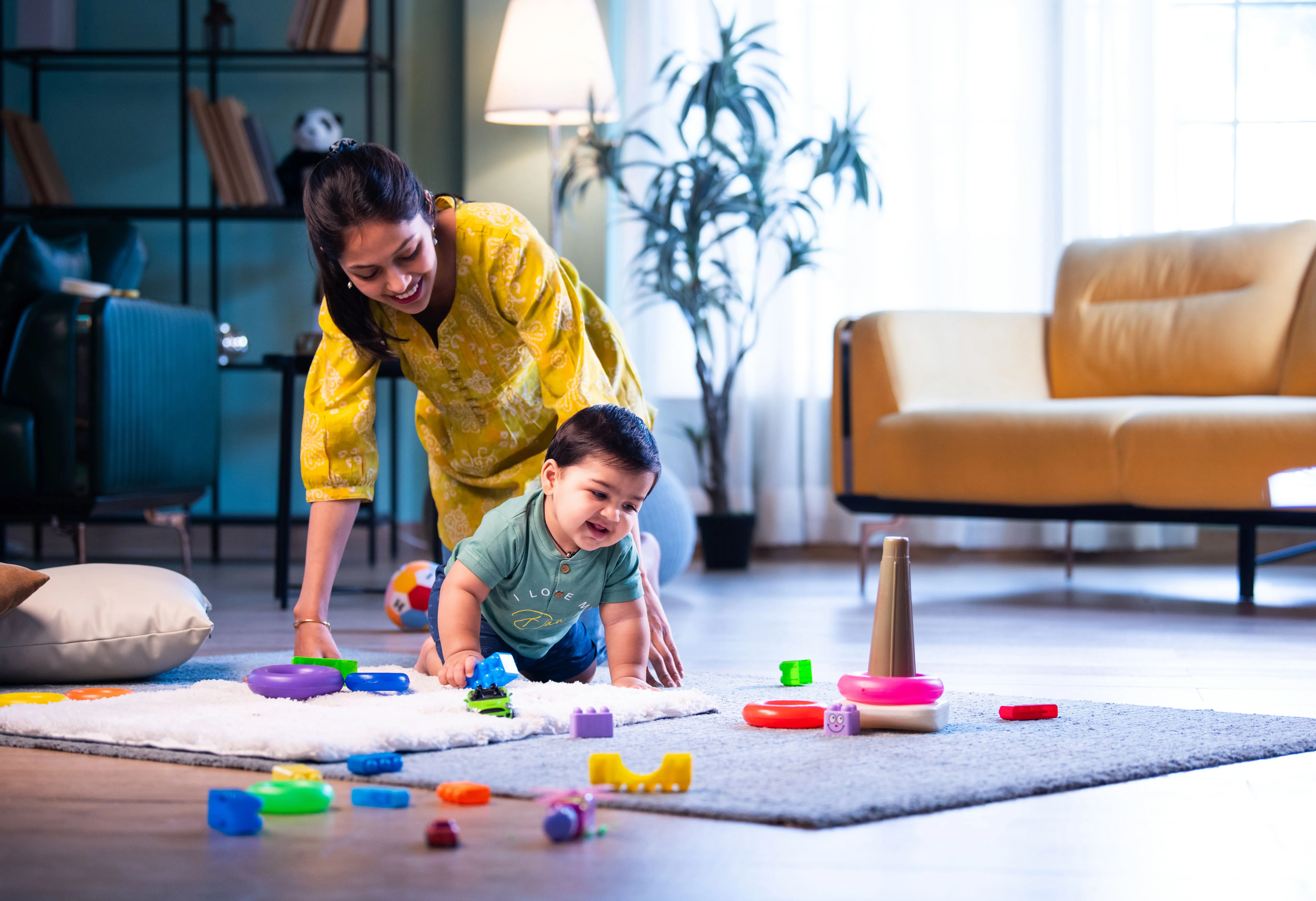
Sit your little one on a thick blanket or slippery throw on a smooth floor, such as laminate or linoleum, and carefully pull them around the apartment by the corner of the blanket. The child will have to engage their core muscles to keep balance on turns. At the same time, it is an example of fun indoor activities for toddlers that they will ask to repeat again and again.
Playdough bakery
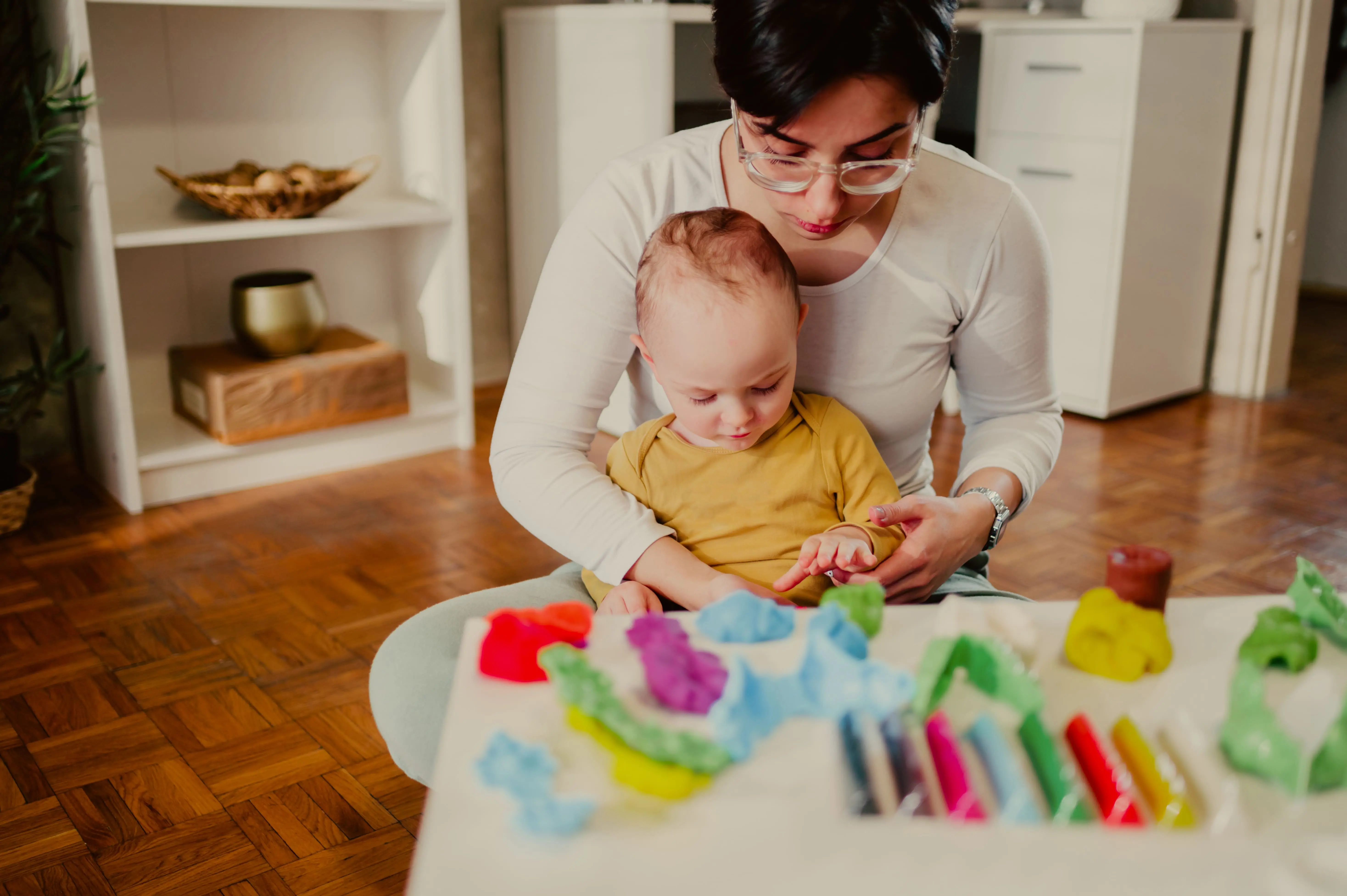
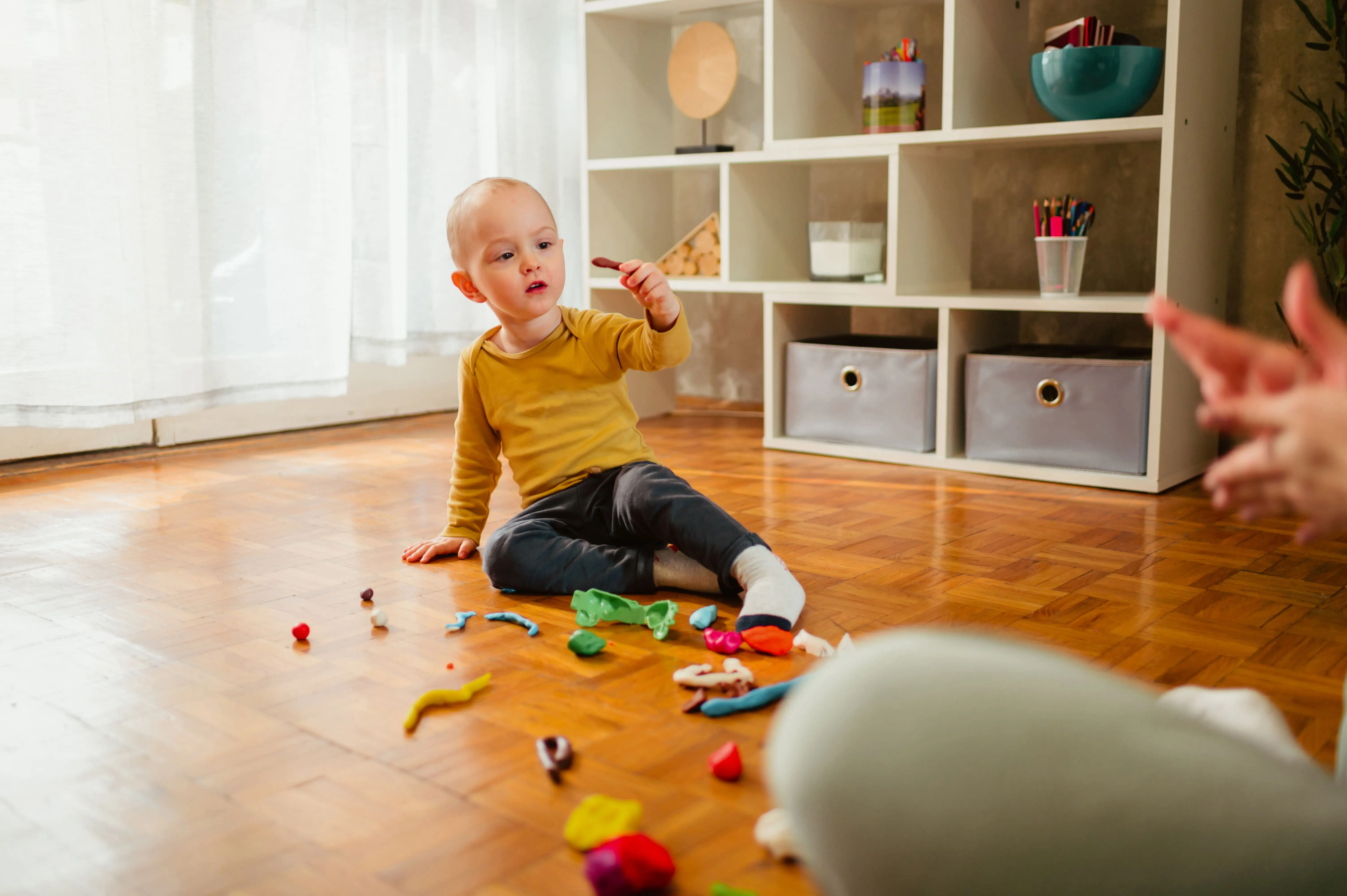
Playdough is the king of quiet games. Take out modeling clay or play dough and give the child real kitchen tools: a rolling pin, cookie cutters, and a safe plastic knife. Modeling with dough not only calms, but also strengthens the muscles of the hand.
Rice bin excavation
Pour a couple of kilograms of inexpensive rice or semolina into a deep plastic container. Hide small dinosaur figures, cars, or coins inside. Give the child spoons, brushes, and tongs. This is a classic sensory bin that can keep a toddler busy for 40 minutes.
Water pouring station
Toddlers are obsessed with pouring liquids. Spread a large towel on the floor. Place two basins there: one with water and one empty. Give the little one a sponge. The task is to dip the sponge into the water, carry it to the second basin, and squeeze it out. This teaches practical life skills and focuses attention.
Sink or float?
Fill a container with water. Gather different objects: a metal spoon, a plastic block, an apple, a wooden stick. Before dropping an object into the water, ask: “Does it sink or float?” This is pure science and a stimulating experiment that develops critical thinking.
Shaving cream window painting
Squeeze ordinary shaving cream onto a balcony glass door or a large window. Let the child spread it with their hands, draw patterns with their fingers, and leave palm prints. The foam washes off easily with water, and the level of children’s delight is simply off the charts.
Ice cube rescue
Freeze small plastic animal toys or beads in ice cube trays. Put these ice cubes in a bowl and give the child a pipette or a syringe without a needle filled with warm water. Let them drip water onto the ice and rescue the toys. It is ideal training for the pincer grasp and curiosity.
Cloud dough
Mix 8 parts flour and 1 part vegetable oil or baby oil. You will get a silky mass that molds like wet sand but crumbles when pressed. This texture is extremely pleasant for the hands and completely safe, even if the little one decides to taste it.
Animal wash
Place all the plastic toys that have “gotten dirty” into a basin with warm soapy water. Give the child an old toothbrush and a sponge. Children love imitating adults when cleaning, and washing toys is a great routine combined with play.
Pasta threading
Take long dry spaghetti and stick it vertically into a piece of playdough on the table. Give the child pasta with a hole in the middle, such as penne or rigatoni. Their task is to thread the pasta onto the spaghetti. This is an ideal example of at home activities for toddlers that develop fine motor skills.
Pom-pom whisk rescue
Take an ordinary kitchen whisk and tightly fill it with colorful soft pom-poms or large buttons. The child has to pull the pom-poms out between the wires of the whisk with their fingers. It sounds simple, but for toddler hands, it is a serious challenge.
Colander and pipe cleaners
Turn a colander upside down. Give the child a pack of chenille, or fuzzy, pipe cleaners. Let them insert the pipe cleaners into the holes of the colander. In the end, you will get a funny alien. This game requires deep focus and concentration.
Muffin tin sorting
Sorting is a basic mathematical skill. You can practice it with matching games in Keiki, or you can come up with different tasks at home. Take a muffin tin. Place a piece of paper of a specific color at the bottom of each cup. Give the child a handful of buttons, pom-poms, or Lego pieces and ask them to sort them into the cups by color.
Sock matching
Do you have a basket of clean laundry? Great, let the toddler work! Dump a pile of socks onto the bed and ask them to find matching pairs. Finding visual matches is one of the most important cognitive tasks, and children of this age handle it easily.
Tupperware tower
Take all the plastic food containers without lids out of the cabinet. Invite the child to do some building. Building a tower from slippery plastic containers of different sizes is much harder than using perfectly even wooden blocks. It trains balance and logic.
Cardboard box fort
Never throw away large boxes from household appliances. A box is the best toy in the world. Cut a door and a window into it. Give the child markers so they can color the walls from the inside. Throw a blanket inside. The child will have their own personal, safe hideaway.
Sticky wall
Buy a roll of transparent self-adhesive film. Cut off a large piece and attach it to a wall or glass with the sticky side facing outward, securing the edges with tape. Give the little one light objects: pieces of napkins, feathers, paper shapes. Let them stick them on and peel them back off.
Aluminum foil toy wrapping
Toddlers love the process of unwrapping gifts more than the gifts themselves. Wrap 10 small toys, such as cars or animal figures, in food-grade aluminum foil. Put them in a basket. Unwrapping the rustling foil stimulates receptors and fine motor skills.
DIY post office
Cut a slot in an old shoebox. Cut letters of different sizes from thick cardboard. Let the little one push the cards through the slot. This is a classic Montessori-style exercise that develops hand-eye coordination.

Color hunt
Say to the child: “Quick, find me three RED objects in the room!” Let them run and bring a red pillow, a red block, and a red sock. If you are looking for activities for toddlers at home that provide a good cognitive challenge and train reaction speed, this kind of hunt will suit you.
Magnet play on a baking sheet
If you are afraid to let your child use magnets on the refrigerator, give them a metal baking sheet and large, safe fridge magnets. The baking sheet can be taken to the sofa or the carpet.
Living room bowling
Arrange empty plastic water bottles or paper cups in a triangle. Give the child a soft ball. The task is to knock down all the improvised pins with one throw. It teaches them to calculate the strength and direction of a throw.
Flashlight shadow puppets
Turn off the light and close the curtains. Take a powerful flashlight and point it at a blank wall. Show flying birds and barking dogs with your hands. Give the flashlight to the child – let them explore how toys cast huge shadows. The magic of light and shadow fascinates little ones and prepares them for sleep.
Paper tearing station
Children sometimes need to destroy something. Give the little one old magazines or advertising newspapers and let them tear them into small pieces. This is a powerful anti-stress activity that also teaches the fingers the correct pinch grip, as the hands move in opposite directions.
Pushing pom-poms through a bottle
Take an empty plastic water bottle. The child’s task is to push soft colorful pom-poms through the narrow neck. Pushing requires effort, which gives feedback to the finger muscles.
DIY shape puzzle
Place several large objects on a big sheet of paper: a block, a toy car, safe scissors, a ring from a stacking toy. Trace their outlines with a marker. Put the objects aside. The child’s task is to find which object matches which outline on the paper. A brilliant handmade puzzle.
Living room picnic
Change the setting! Sometimes lunch at the kitchen table causes a tantrum and unwillingness to follow the same instructions. Spread a blanket right in the middle of the living room, lay out sandwiches and sliced fruit, and arrange a real picnic with favorite teddy bears. A change in routine works like a reset button for a fussy mood.
Freeze dance
Turn on a favorite children’s song and start dancing together with the child. Suddenly pause the music and shout: “Freeze!” You both have to freeze in funny poses. This game is a kind of training tool for developing inhibitory control – the brain’s ability to stop an impulse in time.
Reading nook
Every person needs quiet. Set up a soft nest of pillows in a corner of the room or under the table and put several favorite board books there. When you see that the child is overwhelmed by impressions, invite them to climb into this nook. This is an ideal practice for self-regulation and independent calm play.
How Keiki turns play into structured learning
Let’s be realistic: no matter how creative you are, after the tenth tower you have built and a kilogram of rice scattered across the kitchen, your resources run out. And that is normal. There are moments when games to play with toddlers at home should give way to something more structured, so the parent can simply exhale and the little one can switch activities to avoid overload.
The Keiki app was created exactly for moments like these. Screen time is often demonized, but a quality product differs from mindlessly watching endless cartoons. Keiki takes the same concepts we used in the real world – sorting, building, learning colors and shapes – and transfers them into a safe interactive environment. The app has a lot of content designed for children aged 1 to 3:
- memory-training games – cards, object searches, and different quests develop different types of memory, because memory is necessary for a little one to remember new information and grow harmoniously;
- coloring pages – the best time to introduce creativity into home leisure begins at 2–3 years old, when a child is just getting acquainted with colors and shapes;
- puzzles – Keiki has many different puzzles by age, from simple picture assembly to the first searches for letters and logic tasks.
The app has no screaming colors or irritating songs. It calms rather than overstimulates the nervous system. Thanks to its intuitive interface and absence of ads, the little one can play independently. It is an ideal tool for balancing an active day and smoothly bringing the child into a calm state before daytime or nighttime sleep.
Build real skills through fun, educational games for your child
Try KeikiConclusion
Being stuck at home with a toddler is a test of endurance. But it is also an amazing opportunity to see the world through their eyes. What seems to an adult like just a basin of water or trash underfoot appears to a little one as an ocean and treasure.
Do not try to complete all 35 items from our list of indoor toddler activities in one day. Choose two or three activities. Let your home be a little messy, allow pillows to lie on the floor, and let foam drawings decorate your windows. Childhood flies by incredibly fast, and one day you will miss this delightful chaos.
Use these ideas, combine them, trust quality apps like Keiki, and remember: perfect parents do not exist. But you are exactly the parent your child needs right now.