10+ Volleyball games for kids – Agility, Strength, and Quick Thinking

Real volleyball — a hard ball, a regulation net, six players per side — is a lot to throw at a kid who's never touched one. Honestly, your kid doesn't need any of that to get started. Volleyball games for kids swap the ball for a balloon, lower the net to arm height (or skip the net entirely), and turn "learn the rules" into "just play," which is exactly how most kids actually pick up a new sport — not by being lectured on rotation order before they've even hit anything.
Key Takeaways
- Volleyball games for kids replace a hard ball and full net with balloons, beach balls, and lowered barriers, which keeps the game safe and genuinely fun instead of frustrating.
- Volleyball games for kids of all ages work best when you match the equipment to the age, not the rules — a four-year-old and a ten-year-old can play the exact same game with a lighter ball and a lower target.
- You don't need a court or a net to start — a rope, a clothesline, or even a strip of painter's tape on the floor works for most of these games.
- Solo volleyball games for kids let your child practice ball control on their own, which is basically a lifesaver on the days there's no sibling or friend around to play with.
Why Volleyball Games Are Great for Kids
Volleyball games are great for kids because they build hand-eye coordination, motor planning, and teamwork through fast, repeated, low-pressure reps — not through drills that feel like practice. Every bump, catch, or toss asks your kid to track a moving object and react to it, which is exactly the kind of coordination work that's hard to fake with a worksheet, no matter how many cute stickers are on it.
There's also a simple physical-activity case for these games. The CDC recommends that children and adolescents ages 6-17 get 60 minutes or more of moderate-to-vigorous physical activity every day, and let's be honest — a game your kid actually wants to keep playing is a much easier way to hit that number than announcing "time to go be active" and hoping for the best. Volleyball games for kids check that box while teaching something real at the same time: reading where a ball is headed, calling for a catch, and waiting for a turn are all skills that carry over well past the game itself.
Beyond the physical side, these games are genuinely safe for beginners. Swap a real volleyball for a balloon or beach ball, and you lose the stinging forearms, the fear of the ball, and any reason your four-year-old can't play right alongside your eight-year-old. That safety net — literally and figuratively — is what makes this such an easy sport to introduce early, long before anyone's ready for an actual gym class serve to the face.
Help your child
grow with Keiki
We’ll help you turn everyday screen time
into real learning progress.
Volleyball Games for Kids and Beginners
These 5 beginner volleyball games for kids work in a gym, a classroom, or any open indoor space, and they're built around forgiving equipment — balloons and lightweight balls — so your kid never feels behind before they've even started.
Balloon Keepy-Uppy
Inflate a balloon and challenge your kid to keep it off the ground using any part of their body — hands, head, knees, even elbows if they're feeling creative. The balloon's slow, floaty descent gives young beginners plenty of time to react, which makes this one of the best volleyball games for kids as young as 3 or 4 who are just learning to track a moving object without bursting into tears when they miss. Once your kid's got the hang of it, add a second balloon or a second player to raise the stakes.
The Floor Is Water
Set up a net, rope, or even a line of chairs down the middle of the room, split into two teams, and toss a soft ball back and forth over the barrier — the "floor is water," so nobody's allowed to let the ball touch the ground on their side. Younger kids can catch the ball before throwing it back; older kids can be asked to bump or set it instead. It's an easy, low-stress way to introduce the basic rhythm of volleyball — send it over, don't let it drop — without dragging your kid through any of the real rules yet.
Catch, Toss, and Freeze
Stand in a circle and pass a soft ball around using an overhead throwing motion, like a mini serve. After each throw, that player has to freeze in place until the ball comes back around to them. Miss a catch, and the whole group does three jumps together before play continues — which, fair warning, your kid will start trying to miss on purpose once they realize jumping is the fun part. This game quietly builds overhead throwing mechanics, the same motion kids will eventually use to serve, while keeping everyone moving and laughing.
Over the Mountain
Split into two groups on either side of a low barrier (a rope, a bench, or a stack of cushions) and give each side several beach balls at once — five or six works well. Set a two-minute timer and have both teams toss every ball they can back over the barrier before time runs out; whichever side has fewer balls on their side when the timer goes off wins. The chaos of multiple balls flying at once is basically the whole point, and it forces your kid to track more than one moving target instead of locking onto just one.
Dead Bug Volley
Have your kid lie on their back, knees bent like a "dead bug," and keep a balloon aloft using only their hands and feet — no sitting up allowed. It sounds ridiculous, and it is, but it's a sneaky core-strengthening game disguised as a volleyball activity, and the balloon's slow drift means even a first-timer can keep it going for a while. This one's a favorite for winding down at the end of a more active session, mostly because everyone ends up giggling on the floor anyway.
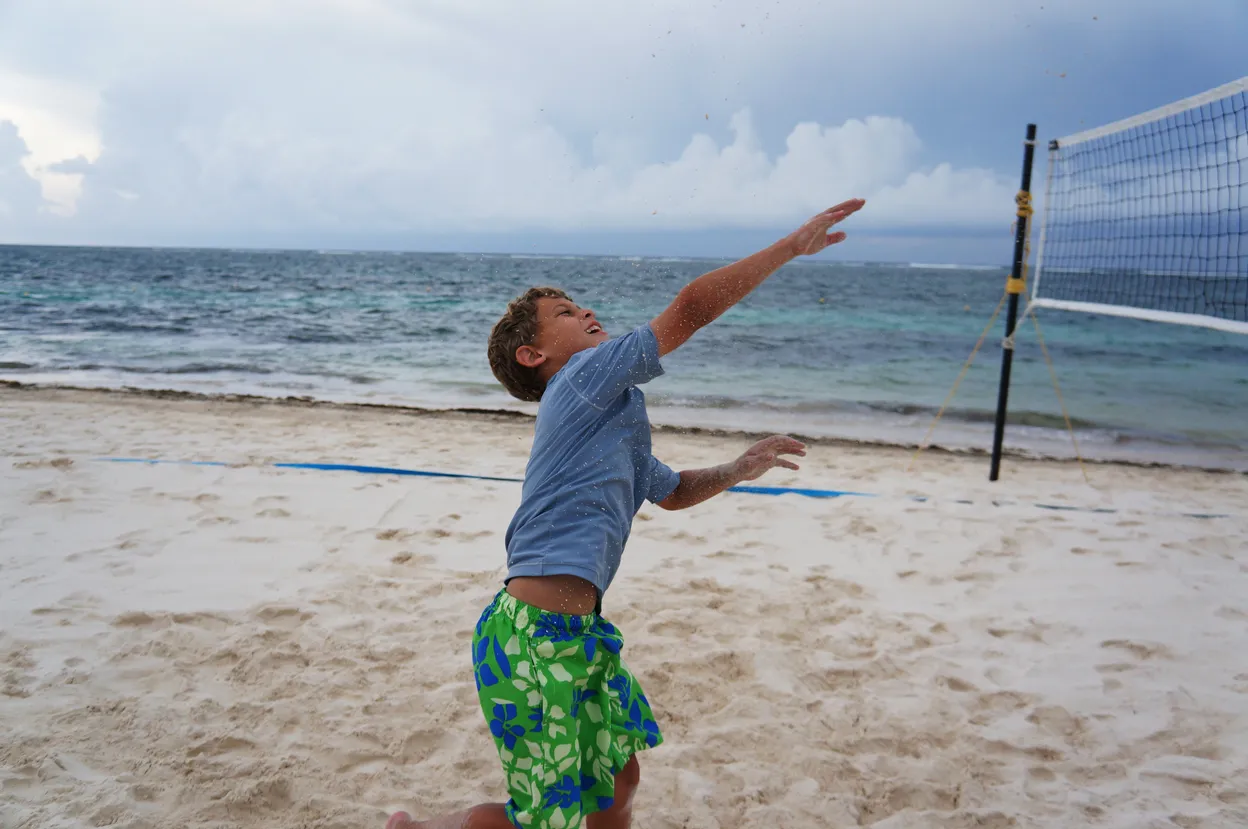
Volleyball Games to Play in the Backyard or at Home
These 5 volleyball games for kids at home need nothing more than a backyard, a hallway, or a living room, plus a handful of things you already own and probably weren't using for anything important.
Blanket Toss
Grab a beach towel or small blanket, have two kids each hold two corners, and use it to launch a ball into the air — the goal is for a second blanket team to catch it in their own blanket before it hits the ground. This one takes real coordination between the two blanket-holders, which makes it a surprisingly good teamwork game disguised as something you'd do at a birthday party.
Wall Target Practice
Tape a few squares or a bullseye pattern onto an outside wall or fence at different heights, stand your kid back a few steps, and take turns throwing or bumping a ball at the targets for points. It's a simple way to build serving and passing accuracy without needing a second player at all — perfect for the afternoons when you're supervising from a lawn chair with a coffee rather than actively playing. Move the target higher or farther away as your kid's aim improves.
Laundry Basket Catch
One player throws a soft ball while the other tries to catch it in a laundry basket held out in front of them, then the two switch roles after every few throws. This is one of the gentlest volleyball games for kids who are still a little nervous about a ball coming straight at them, since the basket does the actual catching instead of their hands.
Backyard Towel Net
String a clothesline between two trees or posts and hang a few towels over it so they block the view to the other side, then toss a beach ball over blindly, calling out before each throw. Not being able to see the other team coming adds a genuinely new layer of anticipation and listening that a regular net game doesn't have — and honestly, it's a great excuse to finally use that clothesline for something other than drying towels.
Sofa Cushion Bump
Pull the cushions off the couch (your kid will consider this the best part of the whole game), have them kneel facing each other, and practice bumping a balloon back and forth using a flat forearm platform — the classic volleyball "bump" motion. Kneeling keeps the focus entirely on arm position instead of footwork, which makes this one of the easiest ways to teach the actual bump technique before your kid ever steps onto a real court.

Solo Volleyball Games for One Kid
Not every day has a sibling, friend, or parent free to play, so these 3 solo volleyball games for kids let your child build real ball-control skills entirely on their own — no negotiating over whose turn it is required.
Bump It Up Countdown
Have your kid bump a balloon or lightweight ball to themselves, counting each hit out loud, and challenge them to beat their own best streak from the day before. Write the running record on a sticky note by the door so they can watch the number climb over a week — it turns a solo drill into a personal challenge instead of a chore, and it's genuinely satisfying for a kid to watch their own number creep up night after night.
Wall Rally
Stand your kid a few feet from a wall (inside against a blank stretch, or outside against a fence or garage door) and have them bump or set a soft ball against it over and over, trying to keep a rally going without catching it. The wall gives instant, consistent feedback — a bad hit sends the ball somewhere unpredictable, a good hit comes back easy to play again — which makes this one of the fastest ways for your kid to self-correct their form without a coach hovering over them.
Around the World Self-Set
Set out four or five markers (cones, cups, or just rolled-up socks) in a loose circle, and have your kid set a balloon into the air, take a step to the next marker, and set it again before it drops — working their way all the way around the circle without letting the balloon touch the ground. It combines footwork with ball control in a way a stationary drill can't, and it's an easy way to fill ten minutes of backyard time when you genuinely just need five quiet minutes to yourself.
Volleyball Games for School, Camp, and Group Play
These 2 volleyball games for kids are built for a bigger group — a classroom, a camp cabin, or a birthday party — and both are designed so nobody sits out for long, which, let's be honest, is the number one thing that ruins a group game for a kid.
King of the Court, Everyone Plays
Set up several short courts side by side (a hallway or gym works well) and play quick 1-2 minute mini-rallies; the winning side moves up a court, the losing side moves down, and the group rotates after every single round instead of eliminating anyone. This spin on the classic "king of the court" format keeps every kid in constant motion — nobody spends the afternoon sulking on a bench waiting for a turn, which is basically the biggest complaint kids have about elimination-style games.
Team Rainbow Serve
Mark off a few colored zones on the ground across the net or barrier using tape, chalk, or hula hoops, and assign each color a point value — closer, easier zones worth less, farther or trickier zones worth more. Teams take turns serving or tossing and add up their color-zone points over a set number of rounds. It turns basic serving practice into a genuine strategy game, since kids quickly start deciding whether to play it safe or go for the bigger score — and you'll be surprised how seriously a seven-year-old takes that decision.
Adapting Volleyball Games for Every Kid
Volleyball games for kids don't need to look the same for every child at the table. A few small adjustments make almost any game on this list work for a kid who needs a different pace, a calmer sensory experience, or a bit more processing time before they're expected to react.
If your kid gets overwhelmed by fast-moving objects or loud group play, swap a real ball for a balloon in any game here — its slow drift gives far more time to track and react, and games like Balloon Keepy-Uppy or Dead Bug Volley already lean on that built-in slowness. Non-elimination formats, like King of the Court, Everyone Plays or The Floor Is Water, work better than last-one-standing games for a kid who finds losing or sitting out especially hard. Clear, consistent visual cues — a taped line, a colored zone, a specific marker to stand on — help a kid who does better with concrete boundaries than a string of verbal instructions. And if your kid needs more repetition to feel confident, the solo games in this guide (Wall Rally especially) let them build the skill at their own pace before ever joining a group round. None of this changes the game itself — it just changes how much support your kid gets to play it successfully, which honestly should be the default setting for any game, not a special accommodation.
Tips for Keeping Volleyball Fun for Young Beginners
A few small adjustments make the difference between a game your kid begs to replay and one they lose interest in halfway through.
- Forget standard volleyballs. Beach balls, balloons, and lightweight training balls are far more forgiving for small hands and untrained reflexes than a regulation ball ever will be.
- Lower the net to arm height. A net or rope set just above your kid's extended arm height keeps rallies going instead of ending every point in a missed reach and a small meltdown.
- Let younger kids catch before they throw. At preschool age, catching and tossing the ball back is a perfectly good substitute for a real volley — the timing skill still transfers, and nobody needs to know the difference yet.
- Celebrate effort over results. A great rally that ends in a drop is still a great rally — praise the attempt, not just the point won, or you'll end up with a kid who only wants to play games they're already good at.
- Keep sessions short and switch games often. Ten to fifteen minutes on any one game is usually the sweet spot before your kid's attention starts to wander somewhere else entirely.
- Match the challenge to the child, not the group average. It's fine for one kid to use a balloon while another uses a beach ball in the same game — the goal is everyone succeeding, not everyone using identical equipment.
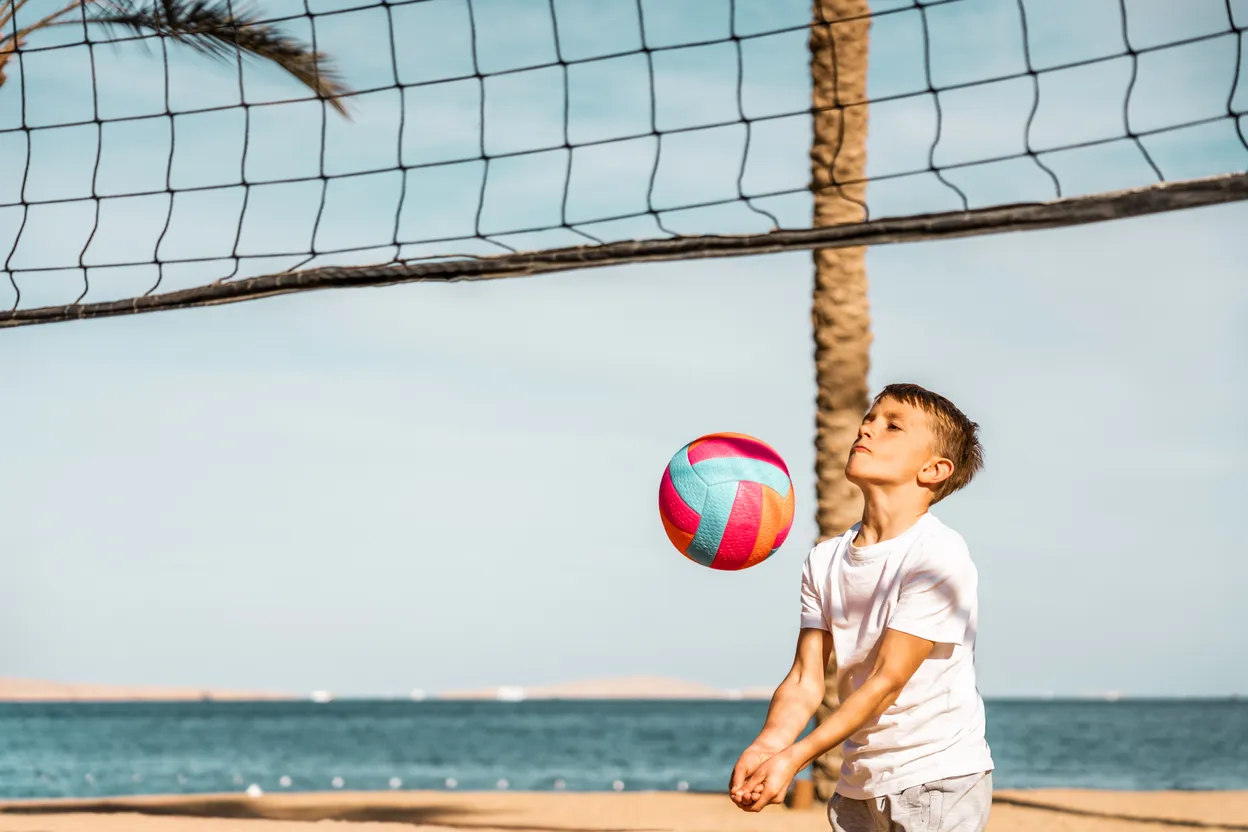
Build Your Child's Coordination with Keiki
Coordination built on the court carries over well beyond it, and Keiki World's interactive games give your kid more low-pressure ways to practice tracking, planning, and fine motor control between active sessions — think mazes, sorting activities, and drawing and coloring exercises that use the same focus and hand-eye coordination as bumping a ball. Keiki offers 1,500+ interactive games and lessons that adapt to a child's own pace, including kids who process things a little differently, which makes it a natural complement to a physical game like volleyball rather than a replacement for it.
Help your child thrive with playful learning
Turn screen time into real growth with Keiki's educational games.
Try Keiki