60 Halloween Facts for Kids: Fun, Spooky, and Interesting Facts for Every Age

“Can I have candy before dinner?” “Is this costume itchy?” If that’s the soundtrack of your October, you already know how many quiet, in-between moments a Halloween season actually has. Car rides. Dinner tables. The ten minutes before a classroom party starts.
Some of these are classic halloween fun facts for kids you can toss out at a trick-or-treat line. Others are better saved for carving a pumpkin or reading out loud at bedtime. Either way, think of it less like studying and more like having a pocketful of good interesting information about Halloween ready whenever a kid asks “why do we do that?”
Everything below is grouped by age and spookiness, so a preschool teacher and the parent of a thrill-seeking ten-year-old can both land on exactly what they need.
Why Kids Love Learning Facts About Halloween
Halloween facts aren’t just filler for the car ride. They actually do something for a kid’s brain.
- They turn a familiar holiday into a mystery to solve. Kids already know Halloween means candy and costumes, so a fact that makes them go “wait, really?” makes the whole thing feel bigger than what’s sitting in their candy bucket.
- They sneak in history and geography. Learning that Halloween started in Ireland with turnips, not pumpkins, is a quick lesson in how traditions travel and change shape along the way, no lecture required.
- They’re instant conversation starters. A kid who knows a random fact about bats or black cats has something to say in a trick-or-treat line or a classroom discussion.
- They make waiting bearable. Pumpkin patch lines, trick-or-treat lines, the drive to a Halloween party: these are exactly the in-between minutes a good fact is built for.
- They’re confidence boosters. Knowing something a grown-up didn’t, like how much Americans spend on Halloween candy or how heavy the world’s largest pumpkin got, makes a kid feel like the expert in the room for once.
Help your child
grow with Keiki
We’ll help you turn everyday screen time
into real learning progress.
Interesting Information About Halloween: History and Origin Facts
Halloween’s history goes back further than most kids (or grown-ups) expect. None of it had anything to do with candy at first.
- Halloween is about 2,000 years old. It grew out of Samhain, an ancient Celtic festival in Ireland and Scotland marking the end of harvest season and the start of winter.
- The name “Halloween” is actually a shortened version of “All Hallows’ Eve.” The Catholic Church set November 1st as All Saints’ Day back in the 8th century, and the night before eventually got squished into the name we use now.
- People once believed spirits could cross over on this one night. The Celts thought the line between the living world and the spirit world got thin on Samhain, which is a big part of why the whole holiday got so spooky to begin with.
- Dressing up for Halloween didn’t start as a fashion statement. It started as a way to hide from ghosts. Early costumes were meant to disguise people so wandering spirits wouldn’t recognize them.
- Trick-or-treating has roots in something called “souling.” Poor villagers in medieval Britain and Ireland went door to door offering prayers for the dead in exchange for small cakes called soul cakes.
- Here’s a weird one: jack-o’-lanterns started as carved turnips, not pumpkins. An old Irish legend about a trickster named Stingy Jack describes him wandering the afterlife with nothing but a hollowed-out turnip and a burning coal to light his way.
- Pumpkins only took over once the tradition crossed the Atlantic. Irish and Scottish immigrants brought jack-o’-lanterns to the United States in the 1800s, and pumpkins, bigger, softer, way easier to carve, won out fast.
- Trick-or-treating feels timeless, but it’s actually less than 100 years old. Door-to-door candy collecting didn’t become a widespread American tradition until the 1930s, and it really took off in the 1950s.
- Halloween used to be more about pranks than candy. Early 20th-century Halloween in America meant a lot more mischief, think overturned outhouses and soaped windows, before trick-or-treating gave kids a candy-based alternative.
Fun Facts About Halloween for Kids: Candy, Costumes, and Pumpkins
No spookiness required for this batch. Just the quick-hit, genuinely fun facts about Halloween that work for almost any age.
- Americans are expected to spend $13.5 billion on Halloween in 2026, averaging about $115 per person, according to the National Retail Federation.
- Candy wins every year. Around 96% of people plan to buy some this Halloween, adding up to roughly $4.1 billion spent on sweets alone.
- Spider-Man is one of the most popular kids’ costumes out there. Superhero costumes and princess costumes round out the top picks most years.
- Here’s a fun one for dinner: pumpkins aren’t vegetables. They’re a fruit, since they grow from a flower and carry seeds inside, specifically a type of winter squash.
- The world’s heaviest pumpkin on record weighs nearly 2,820 pounds, which is roughly the weight of a small car, grown by twin brothers in the United Kingdom.
- Chocolate beats every other Halloween candy, by a mile. Surveys consistently show more trick-or-treaters reach for it over gummy or hard candy, given the choice.
- “Jack-o’-lantern” isn’t a random name. It literally means “Jack of the lantern,” a direct nod to the Stingy Jack legend behind the whole tradition.
- Pets get in on the spending now, too. Americans spend hundreds of millions of dollars dressing up dogs and cats every year, with pumpkin and hot dog costumes topping the list.
- Candy corn has been around since the 1880s, making it one of the oldest Halloween candies still sold today, invented decades before Halloween even looked the way it does now.
- The biggest pumpkin pie ever made weighed over 3,000 pounds. Seriously, it took a giant custom pan and a forklift just to bake and move it.
- Orange and black became Halloween’s signature colors because of the harvest season. Orange stands in for autumn leaves and the harvest itself, while black represents darkness and the end of daylight.
Spooky Halloween Facts (That Won’t Give Anyone Nightmares)
These spooky Halloween facts lean eerie without going too far. Good territory for most elementary-age kids.
- Black cats haven’t always been seen as unlucky. In some cultures, like parts of Britain, one crossing your path is actually a sign of good luck.
- Bats come out more around Halloween for a pretty boring reason: migration and hibernation timing, not because they have anything to do with the holiday’s spooky reputation.
- The fear of Halloween even has its own name. It’s called samhainophobia, and yes, it’s a real, recognized word.
- Owls were once considered messengers of death in old folklore, which is a big part of why they still show up on so many Halloween decorations.
- Spiderwebs became a decoration because spiders got linked to witches in old folklore. People once believed finding a spider on Halloween meant a loved one’s spirit was watching over them.
- Not every old Halloween tradition involved candy. Some leaned into fortune-telling instead, using games with apple peels or nuts tossed into a fire to predict a person’s future love life.
- Mischief Night happens the night before Halloween in a lot of places. October 30th has a long history of harmless pranks, like toilet-papering trees, kept separate from trick-or-treating itself.
- Werewolves and vampires feel like Halloween regulars, but they’re actually much older than the holiday itself. These legendary creatures lived in European stories for centuries before Halloween ever adopted them as costume staples.
- A real full moon on October 31st is rarer than people assume. It only happens once every few years, even though movies make it seem like it’s every single time.
- Witches’ pointed hats may trace back to old stereotypes about brewers. Historians think the tall hat image got linked to medieval women who brewed and sold ale, and the two images eventually mixed together.
Scary Halloween Facts for Older Kids
Older elementary kids and tweens can usually handle a true story with a little more edge to it.
- Halloween used to go by another name entirely. It was sometimes called “Black Halloween”, back when it was taken far more seriously as a genuine night to fear spirits.
- The Salem witch trials happened over 300 years ago, in 1692. Not on Halloween itself, but the event is still a huge part of why witches became such a lasting Halloween symbol in America.
- Magician Harry Houdini died on Halloween, in 1926. It added a real, eerie footnote to the holiday’s history that fans still bring up decades later.
- Some towns ban Halloween costumes for registered sex offenders and restrict trick-or-treating hours. It’s a genuine modern safety measure, and it says a lot about how seriously some communities treat the night.
- The “Bloody Mary” mirror legend isn’t new. It’s circulated for over a century, passed from kid to kid at sleepovers long before the internet existed.
- Here’s a strange true one: Silly String is illegal to use or sell in parts of Hollywood, California on Halloween night, thanks to old crowd-control problems.
- Early Halloween costumes sometimes involved real animal skins and skulls, worn by ancient Celts trying to blend in with the spirits they believed were walking among them.
- The Headless Horseman shows up on a lot of Halloween decorations, but he’s not actually a Halloween legend at all. He comes from Washington Irving’s story “The Legend of Sleepy Hollow,” set in autumn but never tied to October 31st specifically.
- Some historians believe ancient Samhain festivals included animal sacrifices, offered up as protection for communities heading into a hard winter.
- Haunted house attractions became a serious business in the 20th century, evolving from simple homemade scares into elaborate, multi-room productions some cities now run as major annual events.
Halloween Facts for Preschoolers (Simple and Sweet)
Nothing scary in this batch. These are built for things a 3- to 5-year-old can picture right away: pumpkins, candy, and costumes.
- Halloween happens every year on October 31st. Same date every time, no matter what day of the week it lands on.
- A pumpkin starts out green. Then it slowly turns orange as it ripens, kind of like how a banana changes color the longer it sits out.
- Trick-or-treating means knocking on doors and saying “trick or treat” to get candy. It’s one of the only nights all year when knocking on a stranger’s door is expected, and welcomed.
- For one whole night, costumes let kids pretend to be anyone they want: a superhero, a princess, a dinosaur, or anything in between.
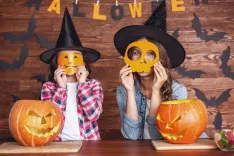
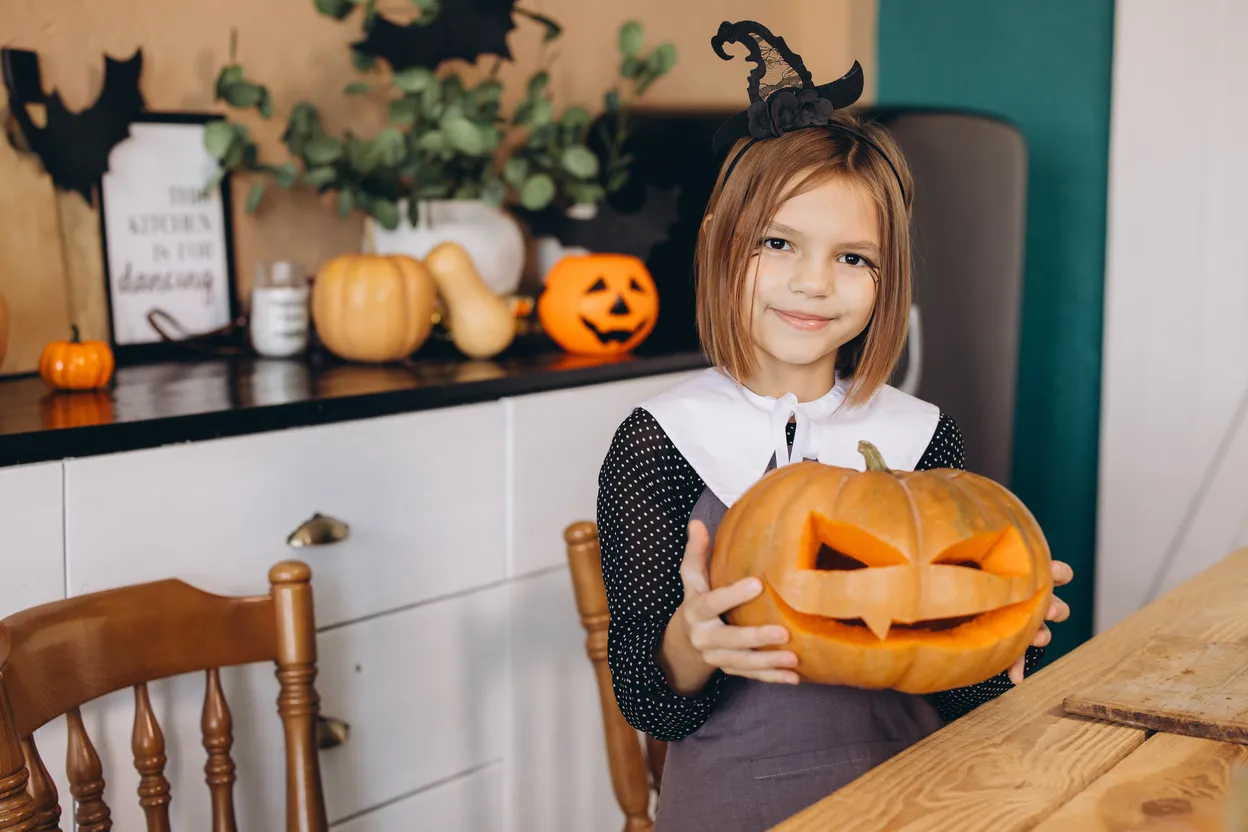
- Carving a pumpkin turns it into a jack-o’-lantern. Pop a candle or light inside, and the face glows after dark.
- Bats, owls, and black cats show up on a lot of Halloween decorations for one simple reason: they’re animals people see or hear more at night.
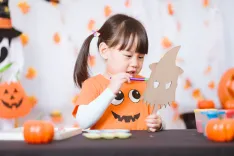
- A Halloween bucket or bag is for collecting candy while trick-or-treating, and plenty of kids love decorating their own with stickers or paint before the big night.
- Halloween parades let kids show off their costumes during the day, often at school or around a neighborhood, before the real trick-or-treating even starts.
Halloween Around the World
The United States isn’t the only place that celebrates Halloween. Plenty of countries have their own version, which makes for some fun fish-out-of-water facts.
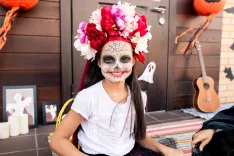
- Mexico celebrates Día de los Muertos, or Day of the Dead, right around the same time as Halloween. Families build colorful altars and share stories to remember loved ones who have passed away.
- Ireland is where it all began, and it still shows. Bonfires and fortune-telling games are still part of October 31st there every year.
- In parts of Germany, people hide their kitchen knives on Halloween night. The old belief: it keeps wandering spirits from getting hurt, or from hurting anyone else.
- China’s Teng Chieh festival honors ancestors with lanterns, a tradition with a similar spirit-honoring theme to Halloween, even though it lands on a different date entirely.
- In the Czech Republic, some families set a chair by the fire for every family member, living or dead, on Halloween night, a quiet way of including everyone.
- England’s Guy Fawkes Night falls just five days after Halloween, on November 5th. Same love of bonfires and costumes, but it marks a completely different historical event.
- Japan doesn’t have deep Halloween roots, but costume parties have gotten hugely popular there in recent decades, especially in big cities like Tokyo.
- Scotland still practices something called “guising.” Kids dress up and perform a trick, joke, or song before earning their treat, instead of just asking for candy outright.
Build real skills through fun, educational games for your child
Try KeikiA Few More Fun Facts to Round It Out
- The record for most lit jack-o’-lanterns displayed at once is 30,581, set by the city of Keene, New Hampshire, which has broken this same Guinness World Record eight separate times.
- “Trick-or-treat” feels like it’s always existed, but it wasn’t a common phrase in print until the 1930s, even though related door-to-door traditions go back much further.
- Some scientists actually study how fake spiderwebs and decorations affect real spiders in gardens, since Halloween decorating season overlaps with when many spiders are most active outdoors.
- Halloween is the second-highest-spending holiday in the United States, right behind Christmas, and ahead of occasions like Valentine’s Day and Easter.
Color In What You Just Learned with Keiki
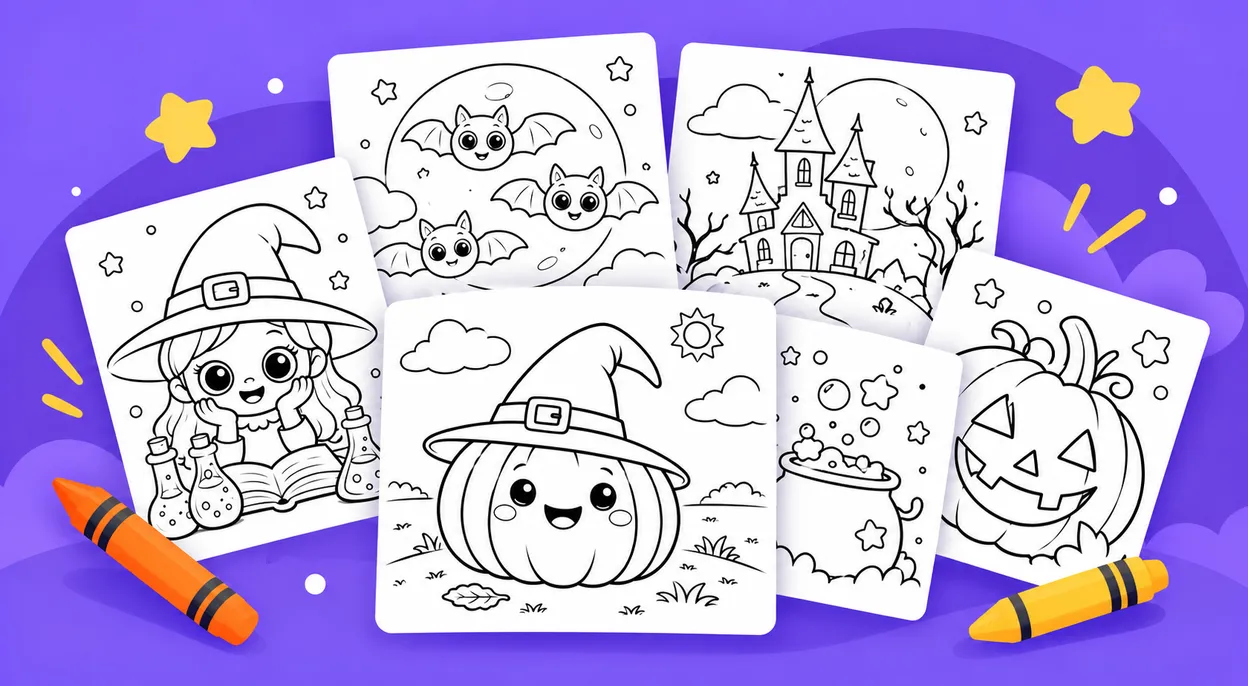
Once a kid knows why pumpkins get carved or where ghosts and witches actually come from, coloring one in is the natural next step. Keiki’s Halloween coloring pages have 60+ free, printable designs: pumpkins, jack-o’-lanterns, ghosts, and witches, all drawn cute and friendly on purpose so the fun stays intact without giving a 2- to 6-year-old second thoughts about the holiday. It’s a calm, screen-free way to turn today’s facts into tomorrow’s artwork, with a little fine motor practice sneaking in along the way.
Tips for Using These Halloween Facts
A fact only works if it actually lands. A few tricks help with that.
- Turn it into a guessing game first. Ask “How much do you think the world’s biggest pumpkin weighs?” before giving the answer. Guessing makes a fact stick far better than just hearing it cold.
- Match the spookiness to the kid in front of you. Save the Salem witch trials and Houdini’s death for older kids, and stick to pumpkins and candy with preschoolers.
- Waiting around is the perfect moment for this stuff. Pumpkin patch lines, car rides, trick-or-treat lines all work.
- Ask kids to repeat the fact back. “Can you tell Dad what you just learned?” turns a passive fact into something they’ll actually remember later.
- Pair a fact with whatever’s already happening. Share the pumpkin-is-a-fruit fact while actually carving one. Facts tied to a real moment just stick longer than ones read off a list.
- Sixty facts is a lot. Don’t try to deliver them all in one sitting. Spreading them out over the week before Halloween keeps the whole thing feeling fun instead of like a pop quiz nobody asked for.