Clapping games for children – how to develop coordination and memory in a fun way?

Clapping games combine rhythm, movement, and listening into quick, social play. Use these ideas to support coordination, timing, and memory while keeping kids engaged—perfect for groups or one-on-one time.
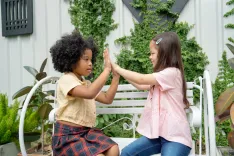
Clapping games for kids to build rhythm and coordination
Clapping games are a classic that never gets old! We all remember how, in childhood, we happily learned cheerful songs, rhythmically clapping our hands with friends. Clapping games for kids are a simple and fun way to develop coordination, memory and social skills. It is a universal language that requires no toys and unites children around the world. These games are passed down from generation to generation, keeping their relevance even today.
In the modern world, where gadgets and virtual entertainment dominate, clapping games bring children back to live communication and physical interaction. They teach working in pairs, feeling rhythm and synchronizing with another person. The purpose of this article is to show you how these simple activities can become a powerful development tool available to every parent and child. Get ready to clap your hands and have fun together!
Benefits of clapping games for kids: proven ways to develop
Clapping games are not just entertainment, but comprehensive training for the brain and body. They activate various areas of the brain responsible for memory, logic and motor skills.
- Developing fine and gross motor skills. Clapping requires precise and coordinated hand movements. Repeating sequences, combining claps and other movements – all this helps strengthen the muscles of the hands and fingers. Kids clapping games are especially important for toddlers because they prepare them for writing.
- Training bilateral coordination. These games teach a child to use both sides of the body simultaneously and synchronously. Bilateral coordination is necessary for many everyday tasks, such as tying shoelaces, riding a bicycle or playing musical instruments.
- Improving memory and concentration. Memorizing a complex sequence of claps and words is excellent training for memory and attention. A child must follow their partner to avoid making mistakes, which develops their ability to concentrate on a task.
- Forming social skills. Hand clapping games are always pair or group activities. They teach interacting with a partner, working together, taking turns and communicating nonverbally. It is an excellent way to develop empathy and teamwork skills.
- Developing a sense of rhythm and musicality. Clapping to music or rhymes helps develop a sense of rhythm and tempo. A child learns to feel music with their body, forming the foundation for future dance or musical activities.
Clapping games – ideas that develop the child
There are many coordination games for kids suitable for children of any age. They can be very simple and rhythmic or more complex, requiring excellent memory and coordination. We collected the best ideas so you can choose what your child will enjoy.
Help your child
grow with Keiki
We’ll help you turn everyday screen time
into real learning progress.
Simple games for beginners
Even if the child is very young, there are easy clapping games for toddlers and for those just learning coordination-related tasks.
Pat-a-cake
This is a classic game ideal for toddlers. Sing a cheerful song, clapping hands with the child and then clapping your own. It develops coordination and helps the child establish eye contact.
Clap-stomp
Combine simple movements. Clap your hands and then stomp your feet. You can add new movements, such as jumps and turns. It develops gross motor skills and a sense of rhythm.
Hello, hello
Stand facing each other. To a simple song, clap each other's hands and then your own. Rhymes and clapping games for kids of this type teach interacting with a partner and following simple instructions.
Repeat after me
The leader invents a simple clapping sequence, and the child must repeat it. Start with two claps and gradually make it more complex. It trains memory, attention and auditory perception.
Rain
Imitate the sound of rain using claps. Start with soft finger tapping, then move to light claps and finally to loud ones. It develops a sense of rhythm and allows the child to feel the difference between loud and quiet sounds. It is also a good path to practicing fine motor skills activities with hands.

Games for developing memory and speed
Clapping also works well for speed-related tasks. Memorizing movements, reacting quickly and handling complex tasks benefit the brain. So we collected memory games for children compatible with clapping.
Miss Mary Mack
This is a popular game with a more complex sequence of movements and a rhythmic song. Try finding it online and learning the movements. It is ideal for memory training because you must remember both words and movements.
Little Monkey
A game where you must repeat movements, adding a new one each round. Each player adds one new movement. It develops sequential memory and coordination.
Learning letters
Invent a clapping sequence for each letter of the alphabet. For example, for the letter “A” – one clap, for “B” – two claps. It is an excellent option of clapping games for preschoolers because it makes learning the alphabet fun and interactive.
Rhymed claps
You need to clap your hands to the rhythm of a poem, inventing new rhymes. For example: “Look, a truck is driving, it very quickly carried ...” (passengers or a bagel). It develops a sense of rhythm, imagination and vocabulary.
Movement chain
The first player shows a simple movement (clap, turn), the second repeats it and adds their own, the third repeats both and adds theirs, and so on. It develops memory, observation and a sense of rhythm.
Team games and games with a ball
When a child masters simple clapping games for two people, you can move on to more complex ones. These tasks are ideal for large groups and help develop teamwork skills. Using a ball adds a new dimension, training hand-eye coordination and reaction.
Passing the rhythm
Sit in a circle and pass the rhythm using claps, passing it in turn. It teaches feeling rhythm, working as a team and synchronizing with others.
Clap your neighbor’s hands
A circle game where you must clap hands with neighbors on the right and left simultaneously. It develops bilateral coordination and attention to the partner.
Claps with a ball
A game with a ball where you must clap your hands before catching the ball. You can make the game more complex by adding more claps. It trains hand-eye coordination and reaction.
Mirror claps
One player shows a sequence of movements, and the other repeats them like a mirror. Such social skills games for kids also develop observation and attention to detail.
Name-clap
Each player says their name and invents their unique clap that everyone must repeat. It makes group introduction more interesting and helps each child feel part of the team.
Build real skills through fun, educational games for your child
Try KeikiHow to teach a child clapping games?
You already know many ideas for clapping games for 3 year olds and older, but how to start? If you worry the child may struggle or feel shy, don’t worry. We prepared 6 simple tips to help you turn learning into a joyful and pleasant process:
- Start simple. Do not try to learn a complicated game right away. Start with “Pat-a-cake” and gradually move to more complex sequences.
- Be patient. If the child struggles, do not scold or pressure them. Remember that this is a game, not an exam.
- Use your voice. Speak rhythmically to help the child follow you. Say the movements and words to make memorization easier.
- Make it fun. Do not turn it into a routine. If the child does not want to play, do not insist. Try again later.
- Praise effort. Praise attempts, not perfect results. Say: “I like how hard you try,” so the child feels supported.
- Lead by example. Children learn by imitating adults. If you play with joy, they will join more willingly.
Related Games in Keiki App



How to use apps for child development?
In addition to active games, the Keiki app can become an excellent supplement to developing the same skills. It can be used during a break so the child rests from physical activities but continues developing logic, memory and coordination in a calmer format. Such calming activities for kids help:
- Cards. In this game, a child works with cards showing various objects. The task is to match pairs, which trains visual memory and attention. The game develops vocabulary and helps quickly learn reading.
- Hungry Frogs. This game focuses on developing reaction speed and thinking. Letters appear on the screen, and you must catch them in time, forming words. A child learns to make quick decisions and work with information.
- Farm adventures. In this game-task, you must catch eggs of a certain color. This matching game develops color perception and coordination because a child must quickly choose the correct eggs and tap them.
The Keiki app has no ads, and it is created together with child psychologists, so you can be confident in the quality and safety of the content.