26 Space Activities for Kids – to the Moon and Back

Is there anything more fantastic, magical, and incredible than any made-up fairy tales and cartoons? There is. And that something is space. The most amazing thing about it is that it is not something abstract – it is completely real and closer than it seems. Both adults and children are literally fascinated by it. All you have to do is look up at the night sky to see thousands of stars and the Moon.
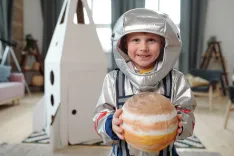
Space is the greatest mystery that captivates children. It is a world of giant fireballs, black holes, weightlessness, and endless expanses. And the good news is that you do not need a telescope or a NASA subscription to explore it with your child. All you need is curiosity, a little flour, some foil, and the ideas we have gathered in this article.
Why Space Activities Are Great for Kids
Why do we love integrating the space theme into children's games so much? At first glance, space seems like something distant and abstract. But in practice, it turns out to be one of the most powerful tools for comprehensive child development. Space games offer many benefits:
- Big-picture thinking. Space teaches children that the world is not limited to their home and playground. Such games broaden their perspective and develop a sense of scale.
- Invisible physics. How do you explain gravity? Through a space activity for kids! Why do objects fall to Earth while astronauts float in the station? This is a question that leads to real scientific thinking.
- Rich vocabulary. A child absorbs new words like a sponge. And we are not talking only about terms such as constellation or orbit – space also teaches children concepts like distance, speed, and light.
- Development of imagination. Since we cannot touch planets with our hands, we have to imagine them, which becomes a stimulus for creative thinking and storytelling.
- Natural sciences. Despite all the fantastic aspects, the theme of space often sparks a child's first interest in mathematics, physics, and chemistry.
Help your child
grow with Keiki
We’ll help you turn everyday screen time
into real learning progress.
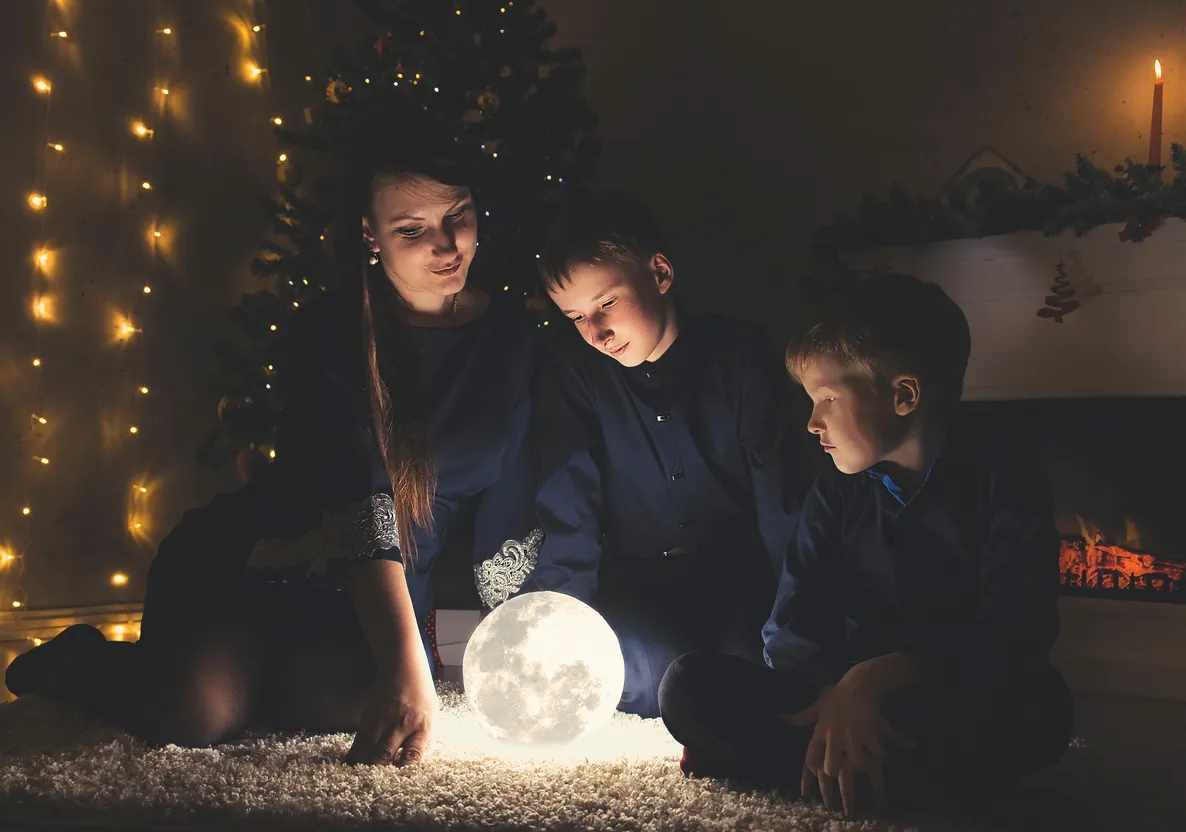
Space Activities About the Moon
The Moon is the most accessible object in space. We see it almost every day, it changes shape, and it raises a million questions. That is why Moon-themed activities are ideal for the very first space exploration with children.
1. Oreo Moon Phases
What you need: A package of Oreo cookies, a plastic knife.
How to play: Carefully separate the cookie into two halves. The white filling represents the illuminated part of the moon. Using the plastic knife, scrape away portions of the filling to model the different phases: new moon, crescent, quarter, gibbous, and full moon. Arrange the cookies in order.
Benefits: Tasty astronomy and fine motor skill practice.
2. Flour Moon Craters
What you need: A deep baking tray, flour, cocoa powder, stones of different sizes.
How to play: Pour a thick layer of flour into the tray to represent the surface of the Moon, then lightly dust it with cocoa powder. Drop stones of different sizes from different heights and observe the craters that form. Discuss why larger or faster meteorites create bigger craters.
Benefits: A visual physics experiment that explains the Moon's terrain.
3. Moon Sand Sensory Bin
What you need: 8 cups of flour, 1 cup of baby oil.
How to play: Mix the ingredients with your hands. You will get moon sand that molds like wet beach sand while remaining completely dry to the touch. Fill a bin and add small toy rockets, astronaut figures, and spoons.
Benefits: Space activities for toddlers like this provide a rich and complete sensory experience.
4. Foil Moon Craft
What you need: Thick cardboard, aluminum foil, black and white paint.
How to play: Cut a large circle out of cardboard. Crumple a sheet of foil, then smooth it out and wrap it around the cardboard circle. The crumpled texture resembles the Moon's surface. Paint the background black and add white speckles as stars.
Benefits: Creative experimentation, sensory experience, and creativity.
5. Flashlight Moon Eclipses
What you need: A flashlight, a medium-sized ball to represent Earth, and a small ball to represent the Moon.
How to play: Close the curtains. Turn on the flashlight. It will be our solar star – the Sun. Show how Earth can block the light from reaching the Moon (lunar eclipse) and how the Moon can block the light from reaching Earth (solar eclipse).
Benefits: Suitable as a space activity for kindergarten children, helping explain complex optical phenomena.
6. Puffy Paint Moon
What you need: Shaving cream, PVA glue, cardboard.
How to play: Mix shaving cream and PVA glue in a 1:1 ratio. Add a little black paint to create a gray shade. The mixture will be fluffy and three-dimensional. Apply it to cardboard cut into a circle and let it dry. The result is a textured, puffy Moon.
Benefits: Creative crafts, creative thinking, and fine motor skill development.
Sun and Solar System Activities
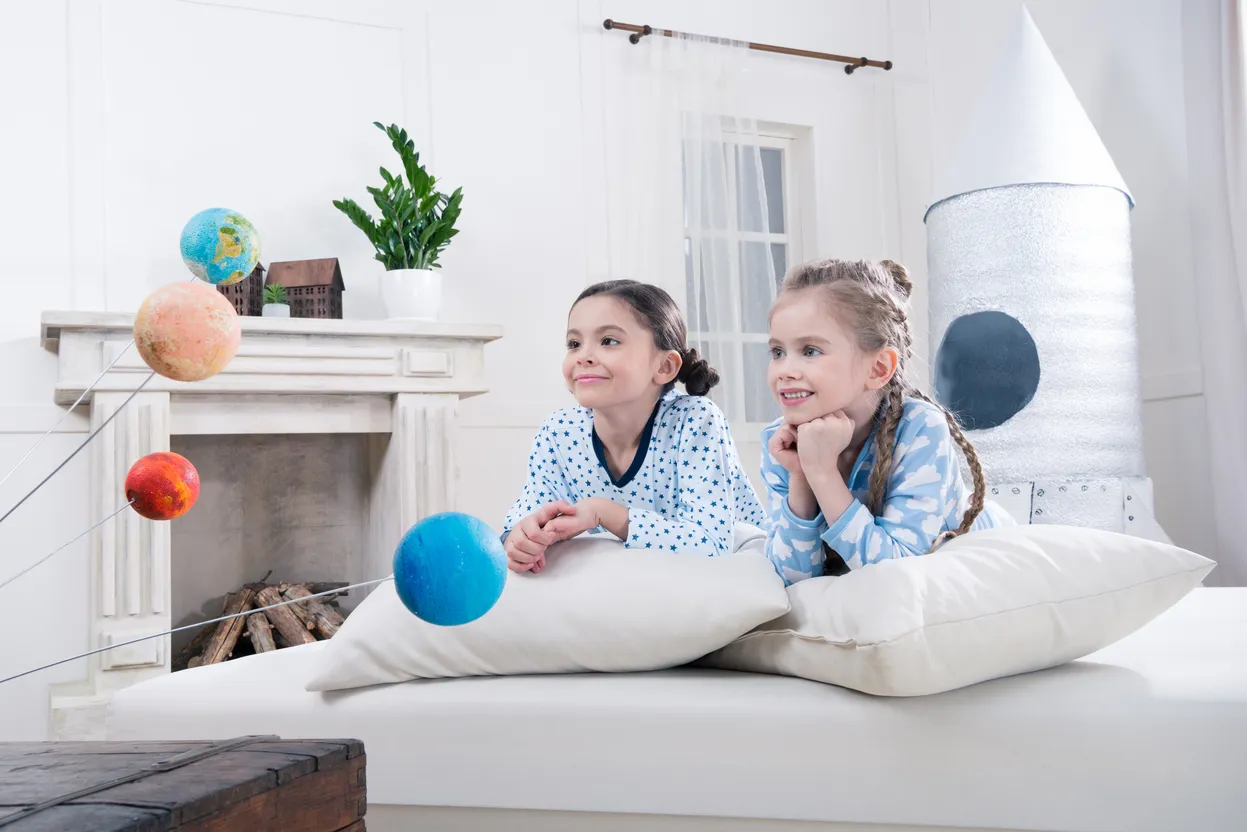
After the Moon, you can continue the journey through space with deeper and more complex topics. The Solar System amazes children with its scale and diversity. These activities help them understand it in a tangible, hands-on way.
7. Playdough Solar System
What you need: Lots of playdough in different colors.
How to play: Make all 8 planets together. The key here is proportion. Show that Jupiter should be huge, while Mercury should be very small. Arrange the planets in order from the Sun and name them together.
Benefits: General knowledge, understanding proportions and the concepts of "big" and "small," and sorting skills.
8. Sun Melted Crayons
What you need: Old crayons (yellow, orange, and red), a hair dryer, a canvas or thick cardboard.
How to play: Glue pieces of crayons to the center of the cardboard. Turn the hair dryer to the highest heat setting and direct it at the crayons. They will melt and drip downward in rays – just like the Sun's corona.
Benefits: Sensory experience, creativity, and understanding temperature.
9. Fruit Solar System
What you need: Fruits of different sizes (watermelon, grapefruit, apple, grape, peppercorn).
How to play: Replace planets with fruits. A watermelon is the Sun, a grapefruit is Jupiter, an apple is Earth, a grape is Mars, and a peppercorn is Mercury. Arrange them in order and discuss the differences in size.
Benefits: Sorting by size and introducing basic geometry concepts.
10. Constellation Marshmallow Toothpicks
What you need: Mini marshmallows and wooden toothpicks.
How to play: Show your child printouts of simple constellations (Ursa Major, Cassiopeia). Ask them to recreate the constellations by connecting marshmallows with toothpicks to match the star patterns.
Benefits: Spatial thinking and fine motor skill development.
11. Glow-in-the-Dark Ceiling Constellations
What you need: Glow-in-the-dark star stickers.
How to play: A wonderful bedtime project. Stick the stars on the ceiling above your child's bed, not randomly, but in the shapes of real constellations. In the dark, your child can find Orion or the Big Dipper and drift off to sleep under their own night sky.
Benefits: Reduced bedtime stress, relaxation, and an opportunity to let imagination run free.
12. Planet Sorting Sensory Bin
What you need: Black beans to represent space, plastic balls of different colors or glass marbles.
How to play: Hide the planet balls in a deep container filled with black beans. Give your child tongs and an ice cube tray. They must find each planet and sort them by color into the tray.
Benefits: Color sorting and learning color names.
13. Orbit Spinners
What you need: A paper plate, markers, and a coin.
How to play: Draw a yellow Sun in the center of the plate. Place a coin (Earth) near the edge of the plate. The child must spin the plate slowly while keeping the coin in its orbit without letting it fall off. Discuss how gravity keeps planets in orbit.
Benefits: Developing dexterity and balance.
Rocket Activities for Kids
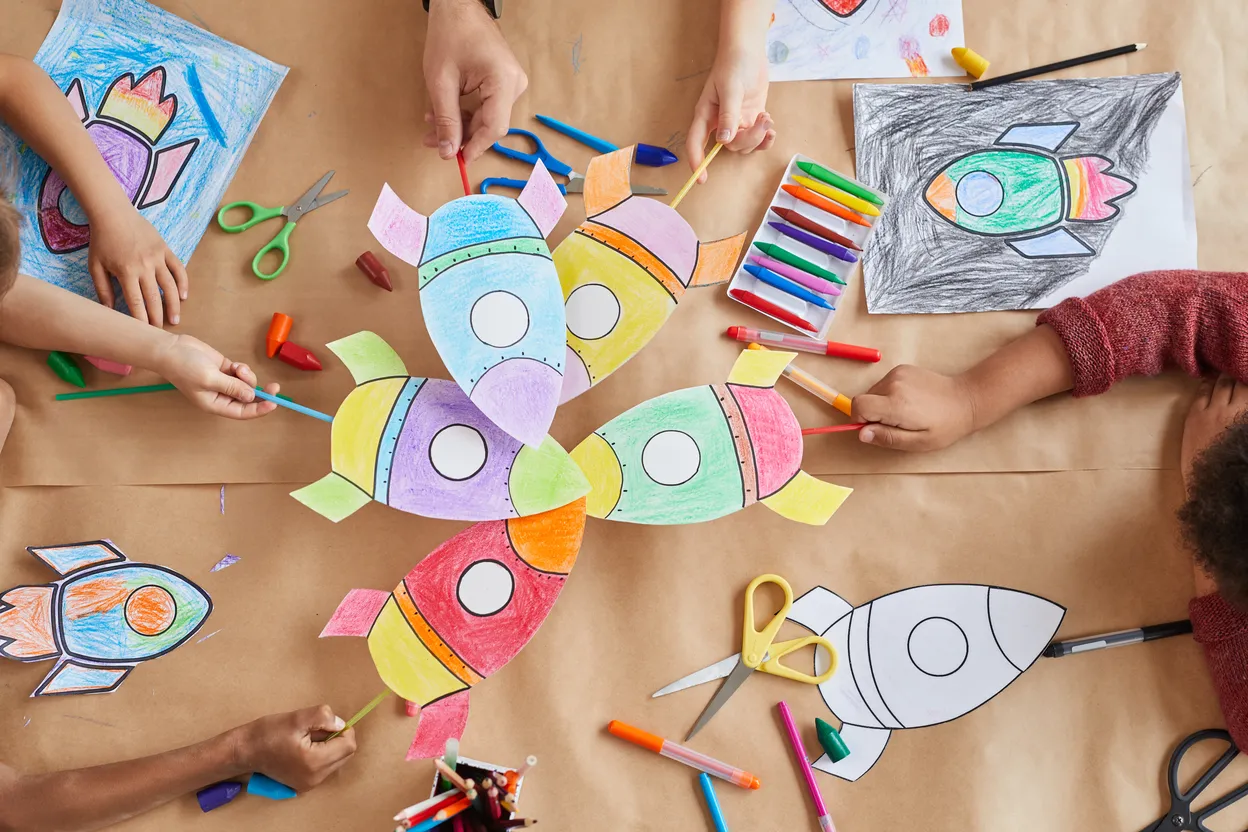
If you are looking for truly fun space activities for kids, simply add speed! Rockets are a favorite topic among children of all ages. These activities combine physics, engineering, and pure excitement.
14. Straw Rockets
What you need: Drinking straws (wide and narrow), paper, tape.
How to play: Draw and cut out a small paper rocket. Tape it to a piece of wide straw, sealing one end completely. Place the narrow straw inside the wide one and blow sharply. The rocket shoots into the air.
Benefits: Breathing exercise and understanding basic physics.
15. Baking Soda and Vinegar Rocket
What you need: An empty plastic bottle with a cap, vinegar, baking soda, and a napkin.
How to play: This is a classic outdoor experiment. Pour a small amount of vinegar into the bottle. Put baking soda into a piece of napkin and twist it into a bundle. Drop the bundle into the bottle and quickly close the cap. Step back and watch!
Benefits: A visual physics experiment.
16. Balloon Rocket on a String
What you need: A long piece of string, a drinking straw, a balloon, and tape.
How to play: Thread the string through the straw and stretch it across the room, for example by tying it between two chairs. Inflate a balloon without tying it and tape it to the straw. Release the balloon. It shoots along the string, demonstrating Newton's third law of motion.
Benefits: Visual physics and trajectory planning.
17. Cardboard Box Spaceship
What you need: A large cardboard box from an appliance, markers, and foil.
How to play: The ultimate craft adventure. Cut out portholes. Let your child cover the control panel with foil and draw buttons and levers. Add a seat inside and a foil antenna on top. The ship is ready for launch.
Benefits: Fine motor skills, imagination, creativity, and artistic expression.
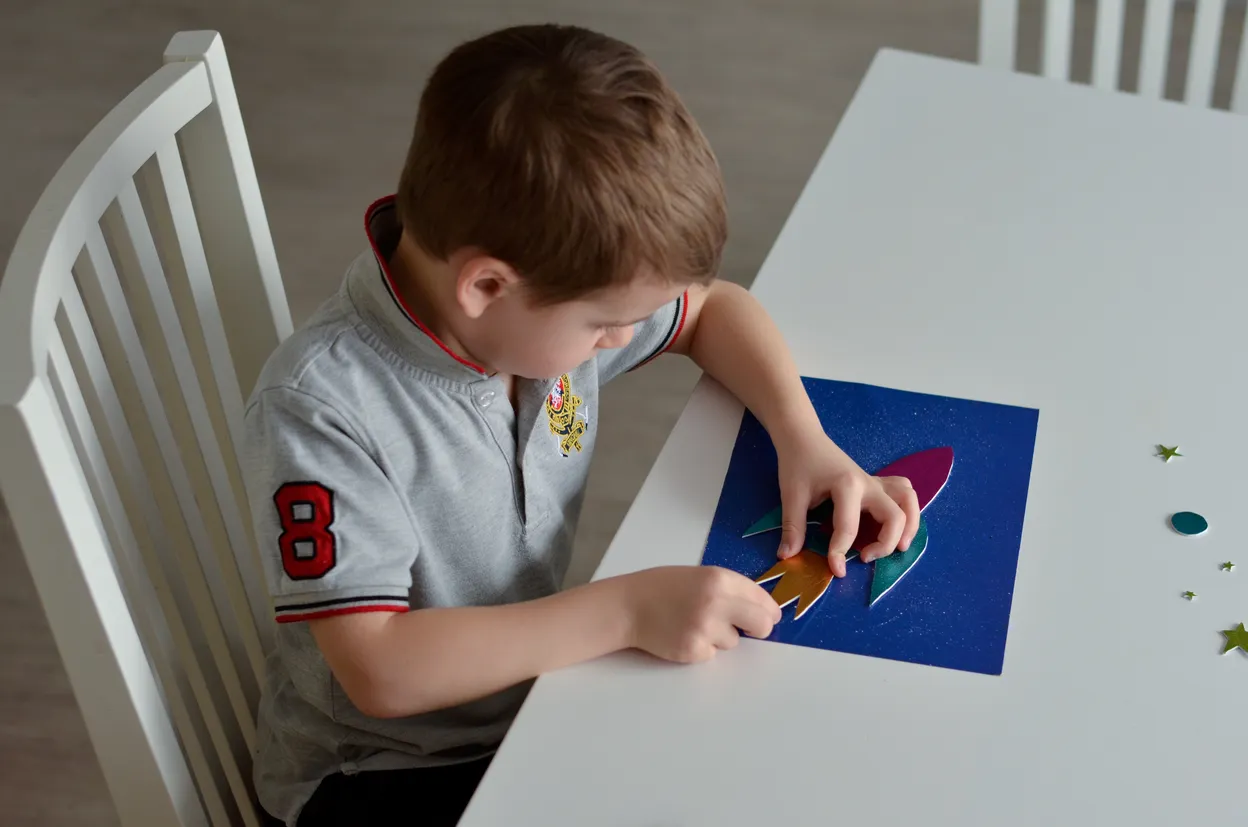
18. Rocket Name Puzzle
What you need: Colored paper, scissors.
How to play: Cut out several squares – these will be the sections of the rocket. Write one letter of your child's name on each section. Mix them up and ask your child to assemble the rocket in order by arranging the letters correctly.
Benefits: Learning the alphabet, letter recognition, and creativity.
19. Astronaut Training Obstacle Course
What you need: Pillows, chairs, hoops.
How to play: Before flying into space, every astronaut needs training. Build an obstacle course. The child must crawl through a tunnel of chairs, jump over pillows, balance along a taped line, and finish by jumping through a hoop. Time each attempt and challenge them to beat their record.
Benefits: Development of fine and gross motor skills, agility, and endurance.
Space Crafts and Art for Kids
Once all that energy has been released, it is time to move on to a calm and creative process. Space is incredibly beautiful, and children can recreate that beauty with simple materials.
20. Galaxy Jar
What you need: A clear glass or plastic jar, cotton wool, glitter, water, and food coloring.
How to play: Prepare colored water in separate cups. Place a layer of cotton wool at the bottom of the jar, sprinkle with glitter, and pour in one color of water. Repeat the layers with different colors. The result is a glowing, layered galaxy inside a jar.
Benefits: A visual color-mixing experiment and creative expression.
21. Coffee Filter Earth
What you need: A paper coffee filter, blue and green water-based markers, and a spray bottle filled with water.
How to play: Let your child randomly color the filter with green and blue markers. Place it on a tray and spray it with water. Watch the colors bleed and blend to create a swirling planet Earth.
Benefits: An opportunity to design their own Earth, develop spatial thinking, and view the world from a new perspective.
22. Marbled Planets
What you need: Shaving cream, liquid watercolor paint, and thick paper.
How to play: Spread shaving cream in a shallow tray. Add several drops of different paint colors. Give your child a toothpick to swirl the colors into galaxy patterns. Press a sheet of paper onto the surface, lift it, and scrape off the cream to reveal the marbled planet print.
Benefits: Creative development and sensory exploration.
23. Squeegee Painting Galaxy
What you need: A window squeegee, black cardboard, acrylic paint.
How to play: Place several drops of neon or white paint onto the black cardboard to represent stars. Let your child drag the squeegee across the surface, smearing the paint into streaks of light. The result looks like a galaxy with star trails.
Benefits: Painting skills and developing neatness.
24. Aluminum Foil Astronauts
What you need: Regular aluminum foil.
How to play: Tear off a large sheet of foil. Make two cuts at the bottom for legs and two cuts on the sides near the top for arms. Mold the foil with your hands into a human figure – the astronaut. Give them a helmet, a backpack, and a flag.
Benefits: Observation skills, understanding basic anatomy, and patience.
25. Splatter Paint Starry Night
What you need: Black paper, an old toothbrush, diluted white gouache paint.
How to play: Cover the work area with newspapers because this activity gets messy. The child dips the toothbrush into white paint and runs their thumb across the bristles, creating a spray of white dots on the black paper – a realistic starry sky.
Benefits: Learning about the Milky Way, overcoming fear of mess and disorder, and encouraging creativity.
26. UFO Paper Plate Craft
What you need: Two paper plates, a plastic cup, glue, and an alien figure (drawn or a toy).
How to play: Glue the paper plates together around the edges to form a flying saucer. Paint them silver. Place the alien figure on top under an upturned plastic cup as the dome. Add glitter and colored lights with markers.
Benefits: Fine motor skills and spatial thinking.
Explore Space Learning With Keiki
After the rockets have launched and the galaxy jars are sparkling on the windowsill, it is time to relax. But a child's curiosity does not stop just because their body is tired. You can use Keiki: without feeling guilty about screen time, without complicated preparation of materials, and without worrying about mess.
- Memory games. Remembering lots of new information about planets and stars is not easy, which is why Keiki offers many different memory-focused activities to help children retain what they have learned.
- Number activities. To study space, children need a basic understanding of mathematics, but space can also become a foundation for developing that understanding through fun, themed number games.
- Coloring pages. Keiki also offers a large collection of space-themed coloring pages. They can become a starting point for conversation about planets, stars, and astronauts.
Using the app is the perfect way to help a child transition into a state of calm concentration while reinforcing the knowledge gained through hands-on activities.
Help your child thrive with playful learning
Turn screen time into real growth with Keiki's educational games.
Try KeikiConclusion
Space is endless, and your children's imagination has no limits either. You do not need to be an astrophysics professor or have a garage full of equipment. A bag of flour, some foil, and a flashlight are enough to open the door to the universe for your child.
Do not be afraid of messes, flour on the floor, or paint on little hands. It is through moments like these that a love of learning is born – a love that will last a lifetime.