

Yoga games for kids: how to improve balance, concentration, and calmness

Yoga games blend movement and imagination to help kids practice balance, strength, and calm breathing. Try these playful activities to support focus and body awareness at home, school, or after busy days.
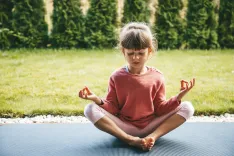
Key Takeaways
- Kids' yoga isn't a scaled-down adult class — it's animal poses, adventure stories, and movement games that build flexibility, balance, and emotional calm all at once.
- The benefits go way beyond physical — regular yoga practice genuinely improves focus, reduces anxiety, and helps kids build confidence through small, achievable wins.
- No equipment needed — a soft surface and 10–20 minutes is all it takes, and toddlers learn best simply by copying you.
- Partner yoga is one of the best ways to bond with your child — poses like Double Dog or Royal Boat build trust and teamwork alongside the physical skills.
- Never push a pose that feels uncomfortable — the rule is simple: emotions and effort are welcome, pain is not.
Yoga games for kids to support calm, balance, and focus
We all know that yoga is literally a universal source of energy. It offers a huge list of benefits while being suitable for absolutely any level of physical fitness. Yoga not only develops flexibility, endurance, and agility, but also improves mental well-being, helps manage emotions, and find inner harmony. So why do we assume that all these advantages should by default be available only to adults? Yoga games for kids are a true discovery. They are not just exercises but engaging games that teach children to control their bodies and emotions. Yoga provides an amazing balance between activity and calmness, and in a playful format it becomes a favorite activity for the whole family.
In this article we will show how to turn yoga into a fun adventure. We will explain why these activities are so beneficial, offer many ideas for games at home and in groups, and discuss how to balance active play with useful educational activities in the Keiki app.
Why are yoga games so good for children's development?
Children’s yoga is not just a trendy activity but a powerful tool for harmonious development. Here are five key benefits you get when you include yoga in your child’s daily life:
- Physical benefits. Yoga develops flexibility, strength, and coordination. Each pose is aimed at strengthening muscles and improving posture. For example, Tree Pose requires maintaining balance, which directly influences coordination development. Regular practice helps children feel their bodies better and control them, which is especially important during periods of active growth.
- Psycho-emotional health. Yoga for children helps them become calmer and more attentive. Through breathing practices, turned into games, children learn to relax and understand their emotions. Activities such as “dragon breath” or “buzzing bee” help reduce stress and anxiety, which is especially relevant in today’s information-heavy world.
- Improved concentration. Yoga trains the ability to focus. Performing poses and maintaining balance requires attention to each movement. For example, while holding Warrior Pose, a child must concentrate on their body, which teaches them to direct attention to one task and avoid distractions.
- Self-confidence development. Successfully performing even the simplest poses increases self-esteem. When a child tries a new pose, it does not always work right away. But by making an effort and seeing progress, they feel proud. Each small victory in the game gives the child a sense of confidence in their abilities.
- Sensory integration. Balance and coordination for kids are very important. Yoga helps the brain and body interact better. Poses stimulate the vestibular system (responsible for balance) and proprioception (the feeling of body position in space). This is essential for overall development and helps children coordinate movements more effectively.
Screen-Free Yoga Games for Kids
The advantage of yoga is that it requires almost no preparation or equipment. You can even do without a mat if necessary. And you can start at any age, which we show by offering ideas for different age groups.
Help your child
grow with Keiki
We’ll help you turn everyday screen time
into real learning progress.
Yoga for toddlers (1–3 years)
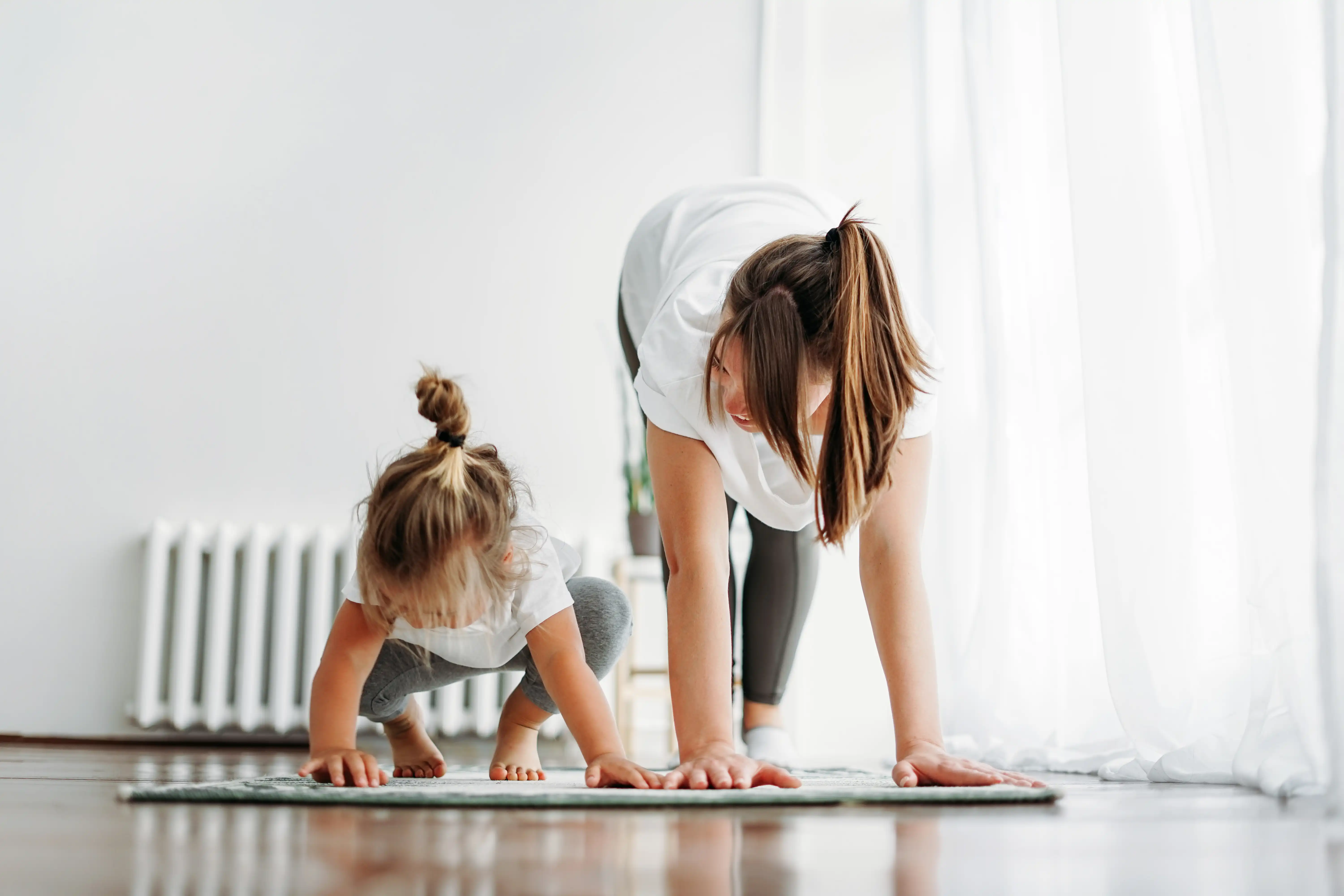
At this age, games must be as simple as possible and based on imitation. Yes, exactly imitation, so you do not need to carve out time for yourself when the child is not around – place a mat next to them, and you will see how they try to copy you. You can set an example by showing simple ideas and engaging them in useful activities.
Animal games
Invite your child to transform into different animals. For example, in Downward-Facing Dog they can “bark”, in Cat Pose they can “meow”, and in Butterfly Pose they can “flutter their wings”.
Forest creatures
Create a story where the child transforms into objects of nature. First they are a tree (Tree Pose), then a flower (Flower Pose), and then a little snake (Cobra Pose) crawling through the grass.
Flying airplane
Use Airplane Pose and ask the child to “fly” around the room with arms spread like wings. This trains balance well.
Growing like a flower
Start as a “seed” (sitting on heels), then slowly “grow”, straightening and raising hands toward the sun. One of the simple yoga poses for kids that effortlessly develops awareness and the ability to feel the body.
Sleeping bear
Do Child’s Pose, then “wake up” and stretch, transitioning to Downward-Facing Dog. This is a great warm-up.
Yoga for preschoolers (4–6 years)
At this age children are naturally gifted with agility and balance; they just need help developing these talents. Early development specialists often say that by strengthening physical skills we also enhance cognitive abilities.
Jungle adventure
Create a story where each pose is part of an adventure. For example, first you are a brave lion (Lion Pose), then you swim across a river like a crocodile (Crocodile Pose), and then you jump like a frog (Frog Pose) to escape a predator.
Yoga story
There is a whole new direction – storytelling yoga for kids. Tell a simple story featuring animals or objects while the child performs the corresponding poses.
Yoga mirror
One player shows a pose and the other mirrors it. This develops attentiveness and coordination. It is important to copy the “reflection” as accurately as possible, not only the general pose but also facial expressions, finger placement, etc.
Yoga dances
A major source of joy during practice is music. That’s where music yoga for kids helps. Turn on music. While it plays, children dance. When the music stops, they quickly take a predetermined pose, such as Tree Pose.
Follow me
One person performs a sequence of several poses (for example, 3–4), and the others repeat. This trains memory and concentration.
Partner Yoga Games: fun for the whole family
Yoga can be a great way to spend time together. These games strengthen the bond between parents and children.
Double dog
The child gets into Downward-Facing Dog, and the adult gets into the same pose above them, resting hands and feet on the child’s back. This is a simple way to interact and build trust.
Royal boat
The adult and child sit facing each other, hold hands, and lift their legs while trying to keep balance. This strengthens abdominal muscles and develops teamwork.
Partner tree
The adult and child stand side by side, leaning against each other with their shoulders, and both try to hold Tree Pose. Suitable also as yoga games for groups focused on support – everyone must find a partner.
Partner bridge
The adult and child lie on their backs facing each other and lift their pelvis, pressing their feet together. This strengthens back and leg muscles.
Double butterfly
Sit facing each other and connect your feet. This helps with stretching and balance and creates a sense of unity.
Build real skills through fun, educational games for your child
Try KeikiHow to use apps to diversify yoga routines?
It is no secret that there are enough mindfulness apps for kids today, and even apps dedicated to yoga for toddlers. But we are talking about something different. After active physical games it is very important to give the child time to rest and relax. This is where modern technology helps. Apps can be a great addition to yoga practice, helping maintain the perfect balance between physical and mental development.
Keiki is the ideal tool for this. Educational apps for toddlers and older children become part of the “before and after” yoga ritual. For example, after active play you can turn on calming stories or meditations. In Keiki you will find entertainment options focused on development:
- Flashcards – extremely beneficial and a universal tool for any age, helping train speaking, memory, attention, associative thinking, and imagination.
- Tracing numbers – when talking about yoga, we focus on gross motor skills. But fine motor skills can also be developed by preparing the hand for writing. Games that teach numbers also help children understand more complex concepts and apply them in yoga, such as counting repetitions.
- Hungry frogs – yoga develops agility, which is inseparable from reaction speed. This game combines reaction speed with knowledge of letters and word combinations, because frogs catch them with their tongues.
Keiki helps reinforce acquired skills, develop cognitive abilities, and expand vocabulary, for example when learning English. It is a great way to occupy a child on the road or during breaks between games, and the absence of ads makes learning safe and comfortable.
Related Games in Keiki App







How to make yoga practice safe?
Safety is the top priority in any physical activity. Despite all the benefits of yoga, some poses can be slightly risky due to lack of experience or knowledge. To ensure that fun yoga for kids brings only joy, follow these simple rules:
- Always start with a warm-up. Light jumps or stretching prepare muscles and joints for practice. This is not optional – without proper preparation injuries and discomfort are possible.
- Choose a soft surface. It is better to practice yoga on a special mat, gym mat, or soft carpet to cushion any possible falls.
- Choose footwear. Yoga poses for kids vary greatly, but footwear protects the feet and provides good traction and stability for beginners.
- Stay nearby. Never leave a child unattended, especially when they are performing a challenging pose.
- Do not force. If the child feels uncomfortable or in pain, offer a different pose. Do not compare their success with others.
- Watch the breathing. Remind the child to breathe deeply and evenly – it helps them relax and control their body better.
As you can see, fun yoga for kids is not just exercise. It is an investment in your child’s health, emotional stability, and development. Start with simple games, gradually add new ones, and you will see yoga become a favorite family activity.


