

Social skills games for kids: ideas, tips and benefits

Social skills games give kids a friendly way to practice sharing, turn-taking, empathy, and conversation. These activities support cooperation and confidence in everyday situations, from playdates to classrooms.
Table of contents
- Social skills games for kids
- Why are games so important?
- Games for developing social skills
- Social skills games for toddlers
- Social skills games for preschoolers
- Creative and role-playing games
- Games for special situations
- Games for nonverbal communication
- How can apps support social skills?
- From play to life
- Tips for parents
- Conclusion

Social skills games for kids to practice empathy and cooperation
When people talk about child development, they usually imagine lessons in math, logic or writing. But somehow they forget about things that are no less important, such as how to make friends. How to share. How to understand others. How to listen to someone whose opinion differs from yours. All of these questions are familiar to every parent. The answer lies not in strict rules but in the world of play. Social skills are not just politeness but the foundation for a successful life. And games are the most natural and enjoyable way to master these “superpowers”.
In this article we present practical ideas for social skills games for kids that help a child communicate, make friends and manage emotions. Our goal is to show how play becomes a tool for developing empathy and emotional intelligence.
Why are games so important for developing social skills?
Games are not only entertainment but also a safe “training ground” where children learn to interact with others. Benefits of social skills games for kids are enormous, helping children on several levels at once and preparing them for school, where communication and the ability to get along are key to success. Here are just a few reasons why such games are essential:
- Development of empathy and understanding emotions. Through games children learn to recognize the feelings of others. In role-play they “try on” different roles, which helps them step into someone else’s shoes and understand their experiences.
- Communication and listening skills. Kids social skills games teach children to express their thoughts, make agreements and, no less importantly, listen to others. Cooperative tasks and discussing rules develop effective communication skills.
- Learning cooperation and teamwork. Working together to solve tasks and assigning roles to achieve a shared goal teaches children to function as a team. This builds a sense of belonging and mutual support.
- Managing emotions and self-regulation. Games teach children to cope with frustration, wait their turn and control their feelings. This helps develop patience and self-control.
- Conflict resolution. Disagreements about rules or taking turns become opportunities for constructive dialogue. Games teach children to seek compromise and negotiate, essential skills for resolving conflicts in the future.
Games for developing social skills in children
Teaching a child kindness, empathy and the ability to connect with others is easier than it seems. Many social emotional learning activities can help, but they must match the child’s age to be effective. We divided them for your convenience.
Help your child
grow with Keiki
We’ll help you turn everyday screen time
into real learning progress.
Social skills games for toddlers (1–3 years)
Even before children begin to speak, they show interest in interacting with others. Children need to be socialized from an early age, taught behavioral rules and empathy, overcome shyness and other difficulties. Simple but effective and engaging social skills activities for kids help with this.
Share the toy
Pass toys to each other with a smile and the words “Here you go” and “Thank you”. This teaches basic interaction and sharing.
Emotion mirror
The younger the child, the harder it is to manage and identify emotions. What adults call tantrums may actually be a reaction to overwhelming emotions and lack of self-regulation. The solution is teaching the child from infancy to recognize and name feelings. Show simple emotions (joy, sadness, surprise) and ask the child to repeat them. You can mirror the child’s emotions or take turns.
Friendship train
Stand one behind another, holding hands, and “ride” around the room. This teaches working together and following others.
Repeat after me
Repeat movements, words or sounds after each other to train attention and imitation. This is a perfect option for social skills games for quiet kids, allowing for stress-free self-expression.
Polite words
Use simple words like “please” and “thank you” during play so the child becomes accustomed to them.
Social skills games for preschoolers (4–6 years)
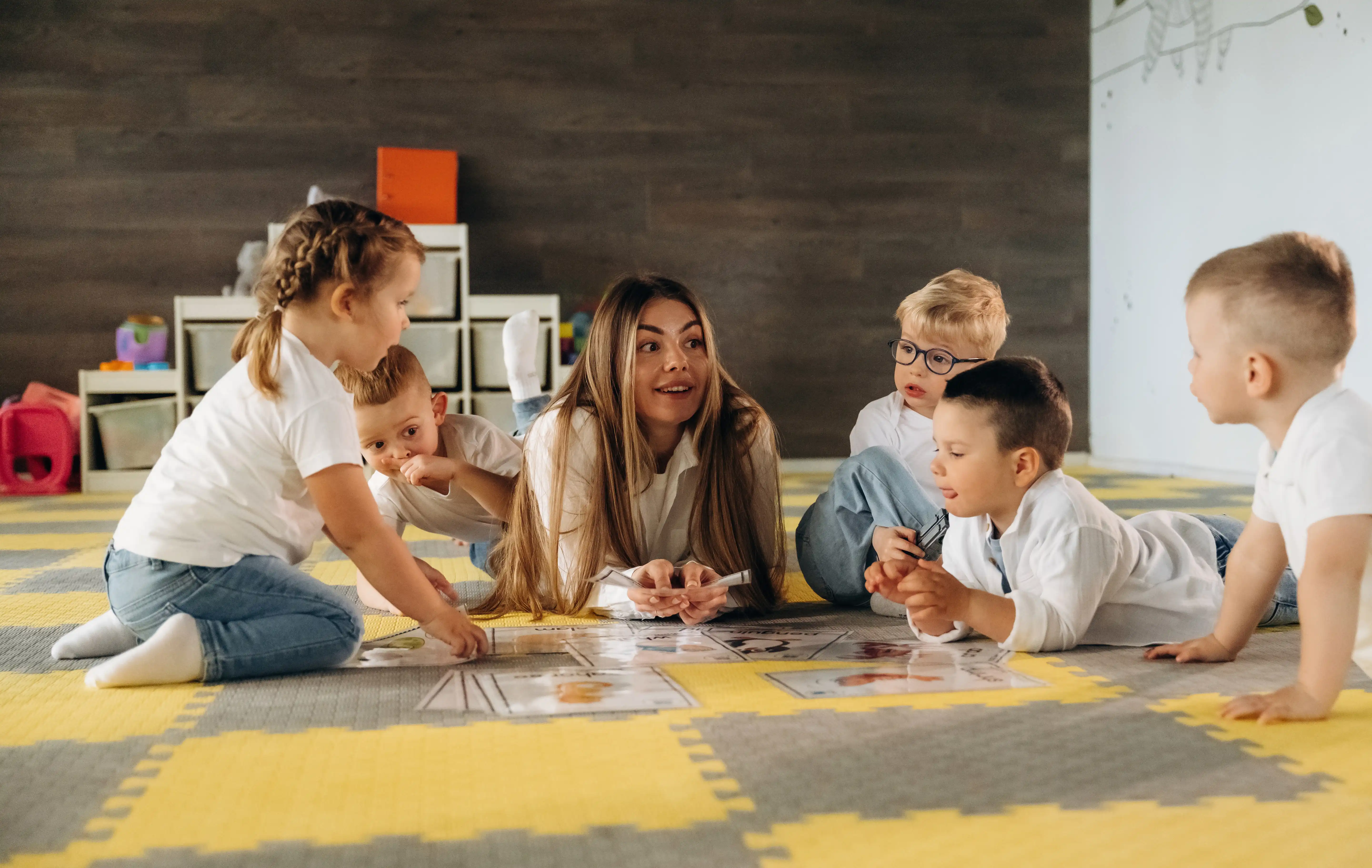
By age four it is the perfect time to develop emotional intelligence, empathy and teamwork skills. At this age children balance between being brave leaders, overcoming shyness and learning to listen to others. The following games make this learning easier.
Freeze if you can
A game for impulse control and rule-following where children must freeze at a certain moment.
Describe the character
One player thinks of a character, and the other asks guiding questions (“Is he kind”, “Can he fly”) to guess. This develops the ability to form questions and thoughts. This activity also belongs to social skills games for shy kids, helping timid children reveal their potential through familiar formats.
What does the character feel
Show pictures or short videos and discuss what emotions a character is experiencing and why.
Say it like I do
Children must say the same phrase with different intonations (happy, sad, angry) to understand how tone changes meaning.
Builders
A team game in which children must build something from blocks following verbal instructions, improving communication and cooperative skills.
Creative and role-playing games: the key to emotional intelligence
You can play fun social skills games at home, in groups, outdoors, in kindergarten or on the playground – they are effective anywhere, helping children open up.
Emotion theatre
Act out short scenes expressing different emotions. This allows children to safely experience and understand feelings.
Store
A role-play where children learn to communicate as “shopkeeper” and “customer”, hold conversations and negotiate. Among games to teach social skills, this one is one of the most popular and longstanding. It imitates everyday life and teaches useful skills.
Create a story
Each participant adds one sentence to a shared story, teaching listening and building on someone else’s thought.
Build your city
Each child builds a house, then they decide how to live together in one city, where the park will be and where the school will be.
Help your child thrive with playful learning
Turn screen time into real growth with Keiki's educational games.
Try KeikiGames for special situations: support in adaptation
Games can help a child cope with specific life challenges, such as transitioning to a new kindergarten or school. They are also suitable as games for kids with anxiety, for children who struggle with new environments, feel shy or panic in unfamiliar situations.
Story about me
Ask the child to tell a story about themselves using toys or pictures. This helps structure thoughts and prepare for meeting new people.
Friendship theatre
Act out scenes in which characters meet for the first time. These communication games for kids help rehearse unfamiliar situations and reduce anxiety.
Games for developing nonverbal communication
Nonverbal communication includes gestures, facial expressions and body language. These games help the child understand them better because communication is not limited to words.
Guess the emotion
Show emotions without words (joy, sadness, anger) and let the child guess what you are feeling.
Mirror
One player performs movements and the other must repeat them like a mirror. This helps focus on others’ gestures and posture.
How can apps and gadgets support social skills?
Contrary to the belief that online games focus only on logic or creativity, today there are many kids calming app options that gently teach friendship, new social skills and emotional intelligence. Educational apps like Keiki are designed thoughtfully: even if a child is simply drawing or creating interactive crafts, they are in a safe environment without overload or stress. Keiki was created together with child psychologists and early development experts, meaning no unnecessary elements, excessive brightness or ads. Instead, it offers useful tasks related to social skills and listening skills games for kids:
- Healthy habits. Social skills include caring for oneself and understanding the importance of hygiene. Keiki has an activity where children care for a cute character and learn essential self-care habits.
- Green habits. Another “social life” aspect is thinking about others on many levels – not only friends and parents but also the world around us. This teaches conscious ecological behavior.
- Creative corner. More than just drawing games, it includes many activities on self-expression, crafts and combining options.
Related Games in Keiki App

From play to life: how to transfer skills into reality
It is important not just to play but to help the child apply new skills in real life. Games to teach emotional regulation are a way to help the child calm down, reduce anxiety and gain confidence. If the child feels shy or worried, suggest playing such a game.
Also, when a child successfully negotiates in a game, praise them. For example: “Look how well you agreed with Sasha. You both wanted the same toy, but you found a solution that made you both happy.” You help the child understand that the successful experience in play can be used in the real world.
In addition, teamwork games for kids can help reduce tension between two children. If communication is difficult or turning negative, such games help break the ice and let children see the situation differently.
Tips for parents: how to support development
There are many easy games to teach sharing and understanding others. But activities involving emotions can be challenging. Keep a few rules in mind:
- Watch the child's state. It is impossible to teach empathy if you are not empathic yourself. Observe emotions, help contain them and explain what the child feels, even during a tantrum.
- Be a role model. Show through your behavior how to communicate and express emotions. Children read adults’ emotional cues better than you think.
- Help name emotions. If the child is angry, help them say “I am angry”. This reduces emotional tension and teaches self-regulation.
- Avoid criticism. Instead of criticizing, explain why an action was incorrect and how it could have been done differently.
- Create a safe environment. Show that making mistakes is normal. Do not scold the child for strong emotions.
- Ask open-ended questions. Instead of “Are you angry” ask “What are you feeling right now”.
Social skills games for kids are a source of emotional intelligence, empathy and communication abilities. They help children feel more confident, adapt more easily to new conditions and build healthy relationships. These skills are as important as reading and counting, as they build the bridge to a future where communication challenges will arise many times.
Conclusion
Social skills games for kids are not just games but a powerful tool for developing emotional intelligence, empathy and communication. They help children feel more confident, adapt more easily to new situations and build harmonious relationships. Use these games to turn learning into an enjoyable adventure, and Keiki will support you with stories that inspire.


