Sensory Games for Kids: Simple Activities That Build Big Skills

Sensory games help children explore the world through touch, sound, sight, and movement. In this guide, you’ll find simple, engaging sensory activities that support early development, boost focus, and make learning fun for kids at home or in class.
Key Takeaways
- Sensory play isn't just fun — it literally builds the brain by creating new neural connections through touch, sound, sight, smell, and taste.
- You don't need any special equipment — rice in a container, a bowl of water, or a blindfold and a pinecone are all you need to get started.
- Sensory games cover all five senses, and each one develops something different — tactile play strengthens fine motor skills, auditory games train focus, and smell-and-taste activities expand vocabulary and even food acceptance.
- Repetitive sensory actions like pouring sand or playing with water are genuinely calming — they're a great tool for anxious or hyperactive kids.
- Never force a child to touch something that scares them — even 10–15 minutes of willing sensory play a day is enough to make a real difference.
Benefits of sensory games for kids’ development
How can you help a child explore the world with all five senses? The answer is simple: through play! Sensory play is not just entertainment but the foundation for cognitive, emotional, and physical development. Such activities mean engagement that involves different sense organs. That is, these are games where smell, touch, hearing, taste, and sight are used. They give children the opportunity to touch, hear, see, and feel the world around them, which literally “builds” the child’s brain, creating new neural connections and allowing them to perceive everything around them more fully.
In this article, we will show how, using simple household items, you can create fascinating sensory games for kids that develop the brain, calm, and stimulate curiosity.
The importance of sensory games
Sensory game is one of the most effective ways to learn and explore the world at an early age. When faced with something new, a child does not simply think about information about this object – he touches it, looks at it, gathers all sensory points possible, thus getting the most complete idea. Step by step, analyzing information, the child creates a holistic picture of the world. This not only broadens their horizons but also gives such benefits of sensory play for kids:
- Brain and nervous system development. Sensory play creates new neural connections. The child’s brain actively reacts to new sensations: warm–cold, soft–hard, loud–quiet. These reactions help form complex neural pathways, which are important for future learning.
- Improvement of fine motor skills and coordination. Manipulating different materials strengthens fingers. Pouring rice, kneading play dough, or sorting beans trains the small muscles of the hands, which in the future will help in learning to write and draw.
- Emotional regulation and stress relief. Certain sensory games have a calming effect. Repetitive actions such as pouring sand or playing with water help children cope with anxiety and hyperactivity, allowing them to focus and relax.
- Stimulation of curiosity and creativity. Children learn through exploration. When you offer them different textures and materials, they begin to ask questions, experiment, and invent new ways to use objects.
- Development of speech and cognitive skills. Kids sensory games provide reasons for communication. By describing their sensations (“rough”, “smooth”, “loud”, “sweet”), children expand their vocabulary and learn to express thoughts more precisely.
Help your child
grow with Keiki
We’ll help you turn everyday screen time
into real learning progress.
Sensory games for kids: from touch to sounds
These games are easy to organize at home using simple materials. Sensory play activities are also suitable for kindergartens, schools, and outdoor play.
Tactile games for kids – experiencing the world through touch
Touching, experiencing through hands – this is the first thing available to a small human being in this world. Vision is still poorly developed, hearing even more so, and long before people learn to see at least silhouettes, they already have tactile sensitivity. And this does not mean you should stop, because such games promote the development of fine motor skills, sensory perception, speech, attention, and concentration.
Sensory box
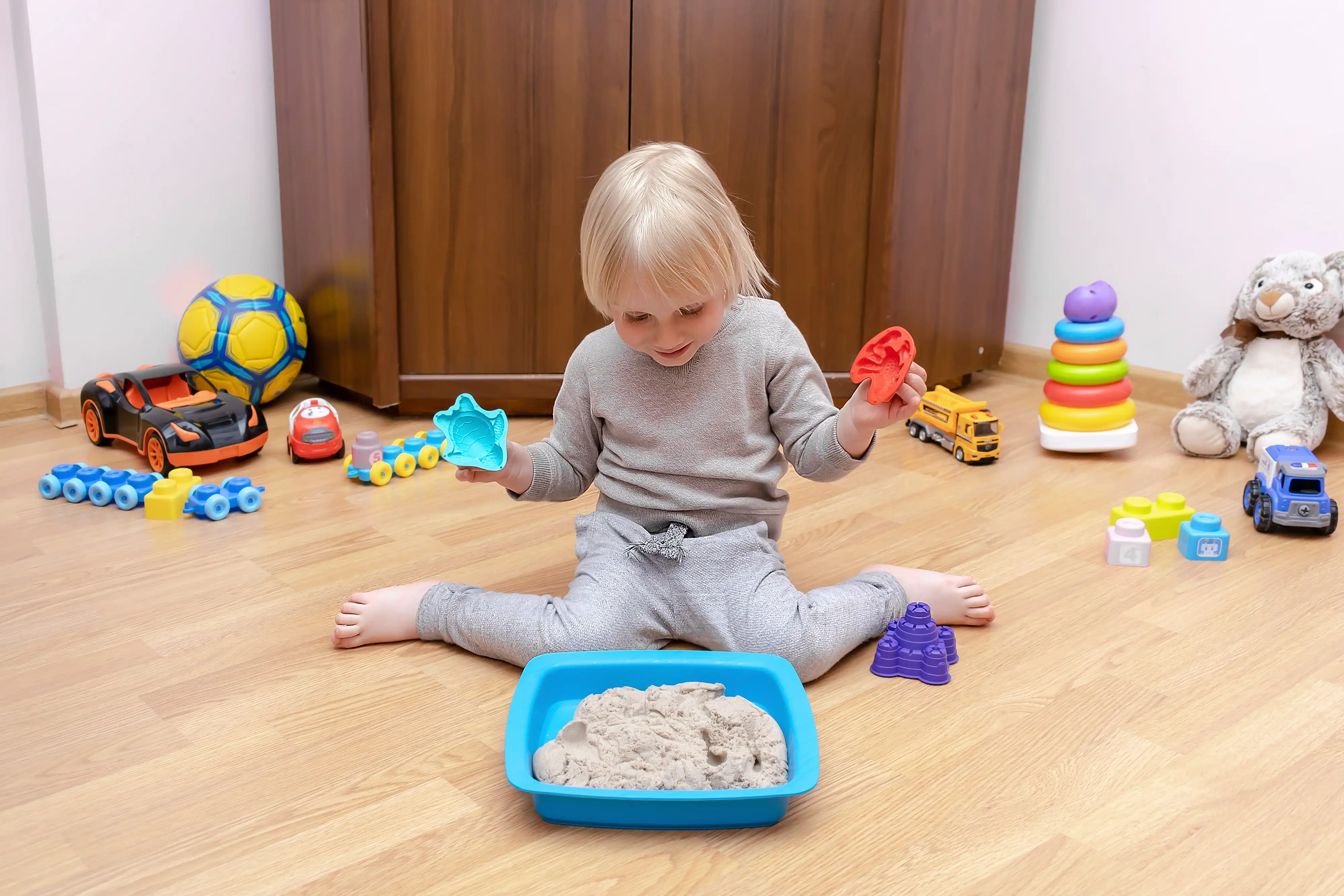
Fill a container with rice, sand, beans, and pasta. Add scoops, funnels, and small toys. Different textures and sensations bring variety to familiar patterns of perception. You can also hide plastic letters or animal figurines inside and ask your child to find them purely by touch. It turns a simple motor exercise into an exciting treasure hunt that holds their focus for a long time.
Play dough
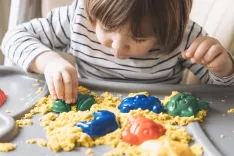
Use store-bought or homemade dough to squish, roll, and sculpt figures. Add food coloring for color or glitter. Pressing dry pasta, buttons, or stamps into the dough adds an extra layer of tactile feedback. It strengthens tiny hand and finger muscles, building the foundation needed for holding a pencil and writing later on.
Water play
In a large bowl of water, you can pour water, create foam, use colored ice, or play with small toys. This is a good option for sensory activities for toddlers. Experiment with temperature by adding warm water or cold ice cubes to highlight contrasting sensations. Using sponges and droppers will also turn splashy fun into great fine-motor coordination practice.
Guess by touch
Blindfold the child and offer to guess an object (a pinecone, smooth stone, cotton, spoon) by touching it. Ask them to describe what they feel first—is it rough, cold, soft, or spiky? This not only sharpens their sensory awareness but also expands their descriptive vocabulary and analytical thinking.
Sand traces
Pour semolina onto a tray and draw with fingers or palms. This develops creativity and expands sensory experiences. Kids love smoothing the surface out with their hands like a magic reset button before starting over. You can also practice drawing simple shapes, lines, or even first numbers in this mess-free alternative to paper.
Auditory sensory activities – developing through hearing
Developing auditory perception is important for deeper interaction with the world around, improving communication, concentration, and musical hearing. So we have gathered several easy sensory games for kids at home in this direction.
Noise boxes
Fill small jars or plastic eggs with different items (rice, coins, beads) and guess what is inside based on the sound. Make matching pairs so your child can shake and find the two jars that make the exact same noise. This simple pairing challenge trains auditory discrimination and teaches them to notice subtle acoustic differences.
Guess the melody
Play short fragments of familiar songs and ask the child to guess them. This trains auditory memory. You can whistle, hum, or tap the rhythm on a table instead of playing a recording. Once they recognize the tune, encourage them to sing along or act out the lyrics to connect hearing with physical expression.
Music from nothing
Use household items (pots, spoons, glasses) as musical instruments, creating your own orchestra. Show how wooden and metal spoons create completely different pitches when tapped against the same surface. It is a lively, hands-on way to introduce the concepts of volume, tempo, and rhythm without needing fancy gear.
Sounds around us
Turn on recordings of natural sounds (rain, birdsong) or city sounds (sirens, cars) and guess what they are. You can also just sit in silence for one minute and list every real sound you hear in the room. This sharpens mindful listening and helps children filter meaningful noises from everyday background distractions.
Quiet whisper
Whisper words and ask the child to repeat them. This develops attentiveness and auditory perception. Gradually step further away to challenge their hearing range and concentration. Turning it into a classic "broken telephone" game with the whole family adds plenty of laughter while practicing attentive listening.
Games for developing vision – seeing everything around
Visual sensory games train the brain’s ability to process visual information, improve attention, hand–eye coordination, and help prevent eye strain.
Color sorting
Sort items of different colors (blocks, balls, toys) into separate containers. This simultaneously teaches a child to remember color names, sort them, and even think logically! Add tweezers or tongs to double the developmental benefit by training pincer grip while sorting. You can also introduce shades, like sorting light blue from dark blue, to challenge older kids.
Color bottles
Fill transparent bottles with water, food coloring, and glitter. Shake and watch the magical process. You can mix water with baby oil so the liquids separate into mesmerizing, floating layers. Watching the glitter slowly swirl and settle acts as an instant calming tool for overstimulated or anxious children.
Light table
Use a box with backlighting and translucent shapes to create patterns. This activity also falls under sensory games for anxiety. Stacking colored plastic cups or transparent tiles on the illuminated surface reveals how overlapping colors blend to form new ones. The glowing contrast captures their attention immediately, making quiet focus effortless.
Drawing with a flashlight
Draw on a dark wall with a flashlight beam. You can even create a shadow theater using finger shapes or cut-out paper figures. Try stretching colored plastic wrap or tissue paper over the lens to change the light beam’s color across the room. Moving the light closer and further away also naturally teaches how light and shadow scales change in size.
Book of different fabrics
Create a book with samples of fabrics with different textures, colors, and patterns. It is good if it contains crinkly elements, strings, and small bells. Combine smooth silk, rough burlap, soft fleece, and shiny sequins on opposite pages for instant contrast. It invites children to match what they see with what they feel, bridging visual and tactile perception seamlessly.
Help your child thrive with playful learning
Turn screen time into real growth with Keiki's educational games.
Try KeikiActivities developing smell and taste
Olfactory sensory play is essential for the harmonious development of a child, improving sensory integration, forming cognitive skills and language function, and also contributes to better emotional well-being. Taste sensory games help children explore the world of flavors in a safe and fun way. This helps expand their diet, teaches them to distinguish different tastes (sweet, sour, bitter, salty), and creates a positive attitude toward food.
Secret smells
Ask the child to guess a spice (cinnamon, vanilla), a fruit, or a flower with their eyes closed. You can place cotton balls soaked in natural extracts (like mint or orange oil) inside small jars with poked holes. Encourage your child to describe whether the scent is sweet, sharp, warm, or fruity before naming the item. This builds sensory vocabulary and links memory with olfactory clues.
Flavors of the world
Offer a piece of lemon (sour), honey (sweet), and banana (neutral), discuss their taste. Gustatory sensory games gently and without stress introduce new sensations. Have a small cup of water handy to cleanse the palate between tastings so the flavors remain distinct. Asking questions like "Where on your tongue do you feel this?" helps children tune in to bodily sensations and reduces picky eating habits.
Scents of nature
During a walk, smell and discuss the scents of flowers, soil, or fresh grass. Rub tree leaves or pine needles gently between your fingers to release their natural oils and aroma. Compare how the air smells before and after rain to help your child notice subtle environmental changes. It turns every regular outdoor stroll into an immersive mindfulness exercise.
Food smells
Blindfold the child and offer to guess food by smell. This can even help them try a product they did not like earlier but might enjoy thanks to its aroma. Try using aromatic everyday ingredients like toasted bread, fresh cucumber, or ripe strawberries. Connecting positive scent memories with unfamiliar foods makes trying new textures at dinner much less intimidating.
Guess the drink
Offer different juices or herbal tea and guess what it is. Use opaque cups with straws so they cannot rely on visual clues like liquid color. Experiment with warm versus chilled temperatures to see if the taste profile changes for them. It is a fantastic, playful way to introduce soothing chamomile or fruit infusions while keeping hydration fun.
How to use educational apps with sensory games?
After active sensory play, when the child needs to calm down, the Keiki app comes to the rescue. You can continue the theme by offering the child to listen to stories, developing auditory perception. And after noisy games – turn on a calming story or meditation. This helps solidify the gained knowledge and prepare the child for sleep or another activity.
Interacting with educational apps for toddlers, children still develop sensory skills. And such games help them with this:
- Short stories. Calming stories for kids have long proven their effectiveness in helping not only calm children, help them focus on the story, and develop imagination, but also learn to process information by ear. But that is not all! Interactive stories in Keiki are designed to also engage vision, as they include a running line and pictures. This is the best example of a game for teaching reading.
- Tracing numbers. If you want to develop fine motor skills and prepare the hand for writing even in an online environment, then tracing numbers is for your child. Moreover, in a fun and playful format, this number-learning game allows children to master them without tears or difficulty.
- Handmade crafts. Even if you do not have paper, glitter, glue, or other craft materials that greatly develop sensory skills, do not worry – everything is already collected inside Keiki. A child can create their own crafts, for example, decorate their own unique Christmas ornament. Such sensory games for focus and attention also strengthen creativity and self-expression.
Related Games in Keiki App










Important safety rules
Sensory games are fun, but they still require rules. We have collected several key ones to help you enjoy the process without worries or dangers:
- Strict supervision. Never leave a child alone during sensory games. Age does not matter here – always supervise children.
- Proper material selection. Avoid small objects that can be swallowed, especially for toddlers. Do everything in moderation; for example, in “hot–cold” games, objects should not be too hot or too cold.
- When giving a child something to taste, always consider their age and allergy factors. Do not offer anything too spicy, hot, sweet, or salty.
- Cleanliness. Monitor the hygiene of materials and hands. Whether you are using gross motor sensory activities or any items, wipe them with tissues and wash toys from time to time.
- Do not force. If a child does not want to touch a certain texture, do not insist.
- Inedible materials. Clearly explain which materials must not be put in the mouth.
Active or calming sensory activities for kids are not just games but a powerful tool for brain development, strengthening neural connections, and exploring the world. They help children learn new skills through play and teach them to focus and concentrate. Such activities are a window into a world of new opportunities, a way to feel and understand the world more deeply.