Drawing development in children – from scribbles to masterpieces

Hardly any parent hasn’t heard that cherished and desirable word – “development”. Everyone wants to develop their child, everyone knows it is useful and important, but when it comes to practice, confusion begins. How exactly should you develop a child? What do specialists actually mean by this concept? And how do you choose activities that match a toddler’s age?
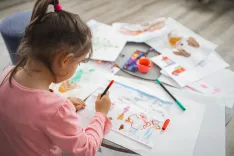
To begin with, many different skills can be developed, and one of the most important concepts is creative development. Through it, a child not only learns to draw but also becomes more flexible psychologically and emotionally, learns to think outside the box, gives free rein to imagination, and develops the ability to search for solutions to different problems and cope with various tasks. And of course, one of the easiest ways to unlock a child’s potential is drawing. Below we will look at stages of drawing development in children, give advice based on preschool age, and suggest activities that can help.
Stages of Drawing Development: Why They Matter
No one becomes a great artist from birth. Even if a child has natural abilities and an interest in drawing or other creative activities, they are unlikely to jump ahead of their age and show amazing results simply because they do not yet have the skills or practice. And expecting results at all is not the best strategy. In early childhood, the main goal is to instill love for the process, support experimentation, and provide an appropriate level of challenge.
Stages of drawing development in children are not a competition but a biologically programmed process. For a toddler, drawing is not about creating a picture for an exhibition but a way of thinking, exploring space, and training the brain. Understanding how child drawing milestones change will help you support your child without pressure or unrealistic expectations, turning learning into pure enjoyment.
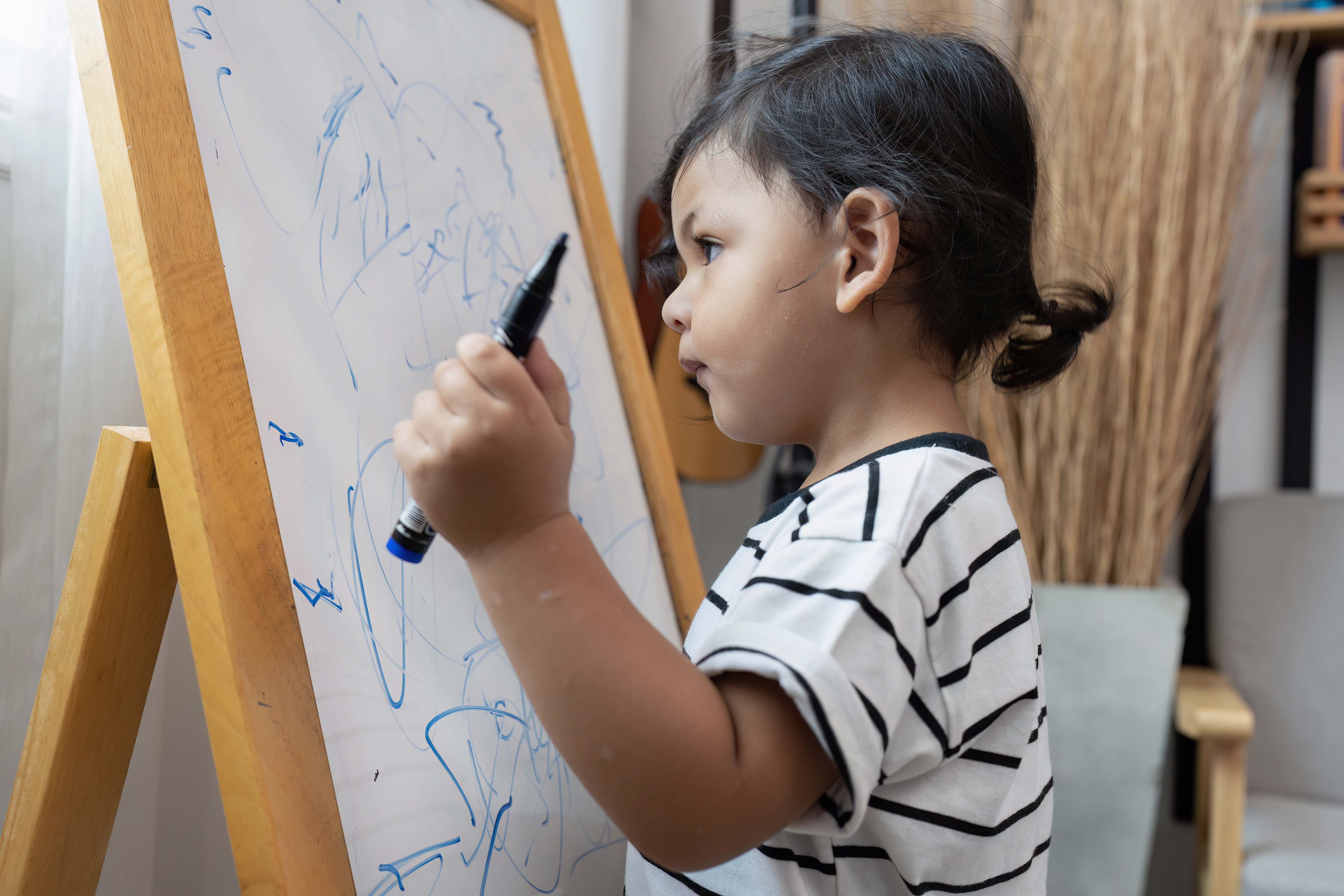
Stage 1: the era of scribbles (1–2.5 years)
If you have a toddler who has just learned to walk, who is saying their first words and looking at the world with curiosity, as if seeing it for the first time, drawing becomes one of the ways to explore it. Motor control and precision are not yet developed enough for clear lines or structured tasks. At this age, drawing is primarily an engaging physical process. During the scribbling stage in children there are three important sub-stages.
- Chaotic scribbles. The toddler moves the entire arm. For them it is the joy of movement in the shoulder and elbow. At this moment the foundations of visual-motor coordination in toddlers are formed. At this stage simply give children plenty of blank sheets and do not interfere.
- Controlled scribbles. Movements become more intentional. The child begins to notice the connection between hand movement and the line on paper. This is an important milestone when chaos gradually begins to fade.
- Circular strokes. The toddler masters circular movements. The appearance of the first loops signals that toddler drawing skills are becoming more precise.
Do not limit the child with strict rules. At this age you can easily give them paper and pencils, or introduce drawing apps.
Stage 2: the first attempts to draw (2.5–3.5 years)
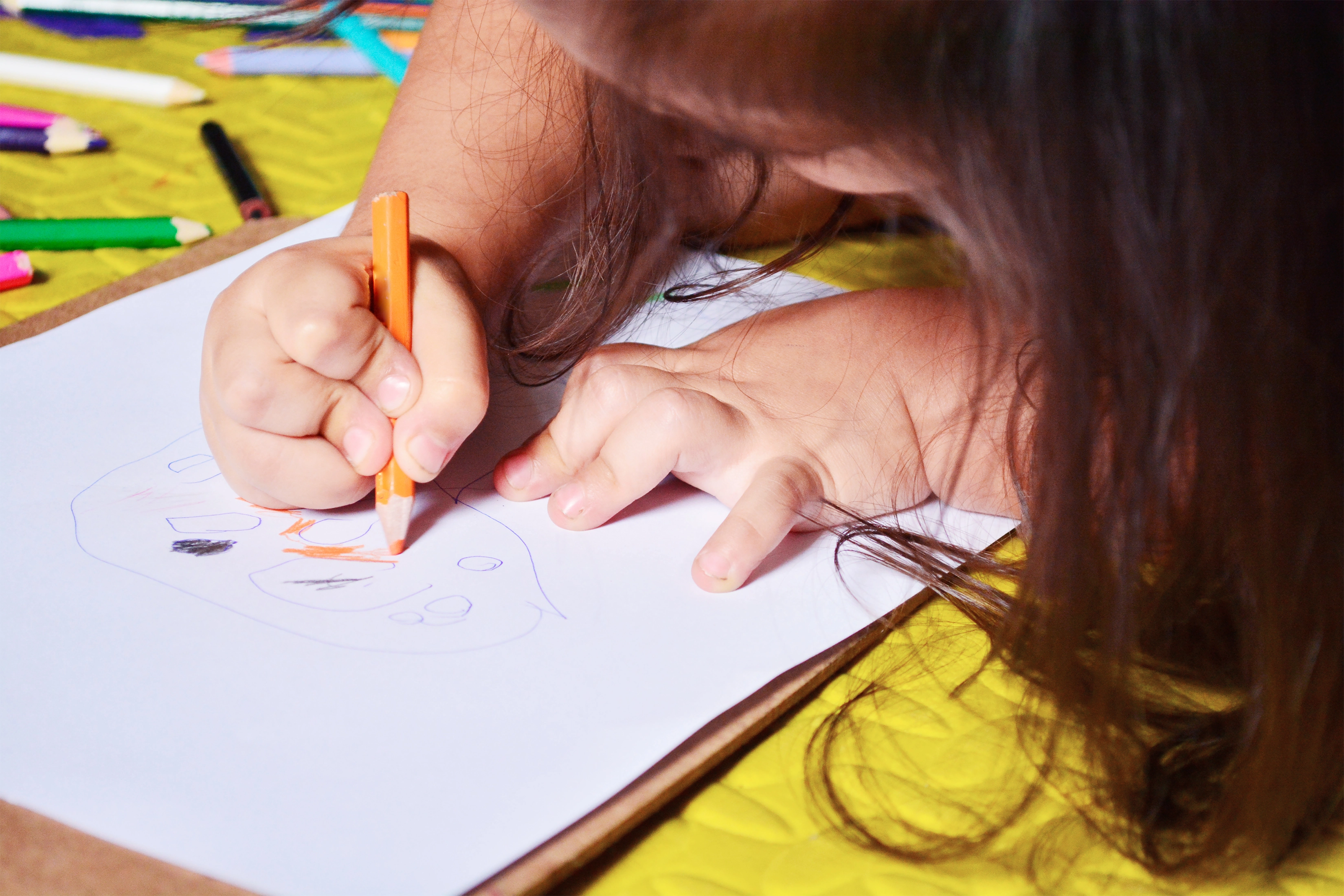
Around the age of three, a major mental discovery happens: the child realizes that a line can represent something. This is a key transition in stages of drawing development in children. The main feature of this period is naming after completion. The child first draws a tangle of lines and then says, “This is a kitty.” Yes, we know it still looks far from a cat. But we also know the child is already recognizing patterns and images, meaning imagination is working at full capacity.
- The appearance of the circle. A closed line is a true victory over space. The circle becomes a universal symbol for a head, the sun, or an apple. At age three it is perfectly normal if most drawings consist of circles.
- Meaningful storytelling. Now drawing at age 2 and a little older becomes a way to tell stories. A child may move a pencil over the same place for a long time while explaining different scenarios.
At this stage the importance of drawing in child development increases because drawing begins to stimulate speech development.
Stage 3: the “head-feet” era (3.5–5 years)
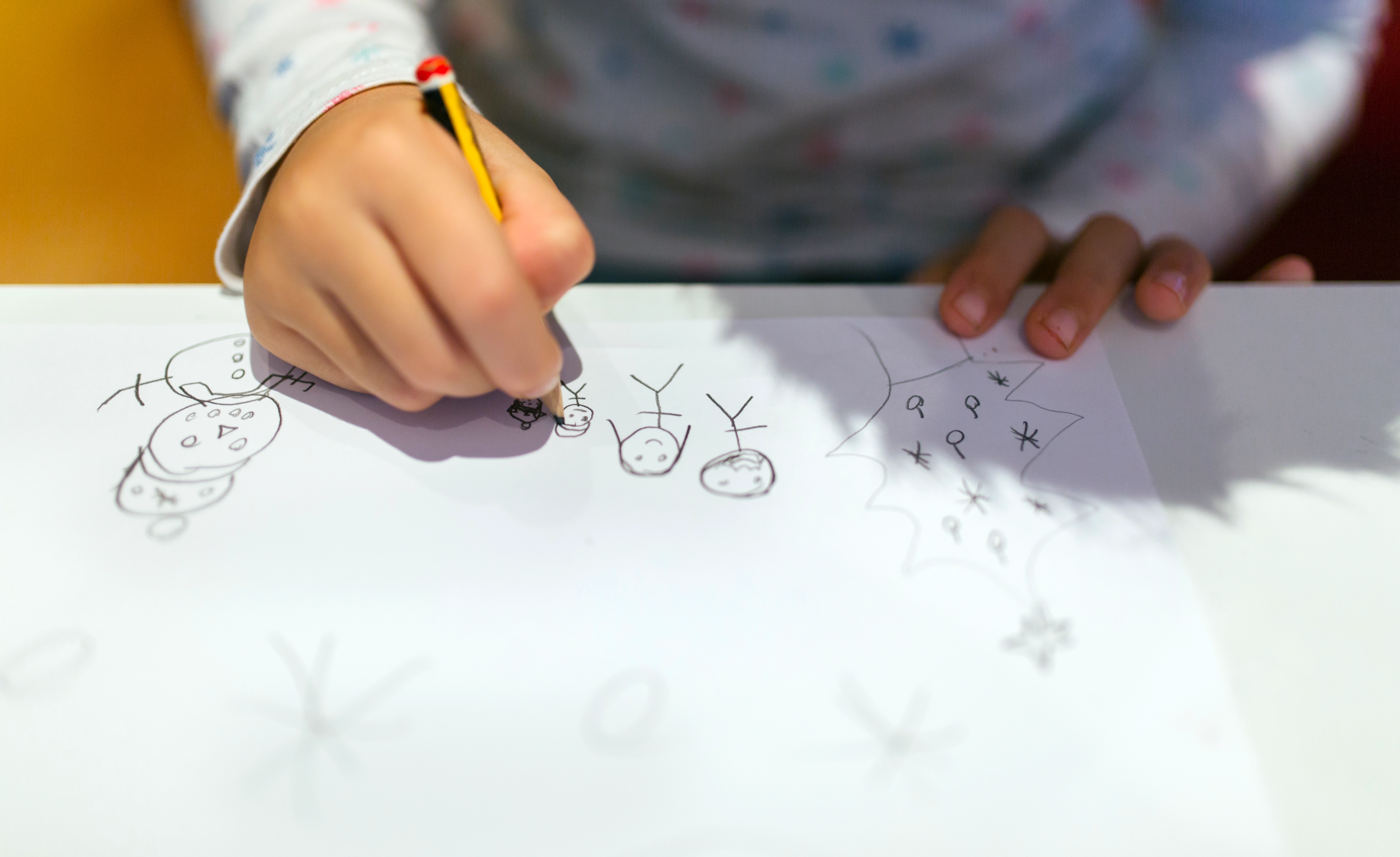
After the circle comes a natural complication of this figure. If you see a circle with stick arms and legs on a page, congratulations – you have reached an important milestone in preschooler drawing development.
- Schematization. The child’s focus is on the human figure. A “head-feet” character is a figure where arms and legs grow directly from the head. There is no mistake here – the brain simply captures what is most important: the face and movement.
- Detailing. In drawing at age 4 images become more complex. Characters may gain fingers, a belly button, or huge eyes. Objects begin to “stand” on an imaginary ground line.
It is important not to rush and not to chase realism. Sooner or later a child will naturally begin making their drawn characters more complex.
The psychology of drawing – what drawings can reveal
For children under six, drawing is a way to understand the world and process big, complex feelings. In psychology this is called “externalization” – when internal experiences that are still difficult to express in words are projected outward. The importance of drawing in child development is that parents can often read a child’s emotional state through drawings.
At the stage of first drawing milestones, children begin to express fears and joys. For example, a “scary monster” on paper is a way to make fear tangible and therefore less frightening. Should you try to stop children from drawing such scary plots? No, because for them it is a way to make fear understandable and controllable.
Drawing is also a powerful tool for emotional release. If a child is upset or overstimulated, spontaneous coloring of a page can reduce cortisol levels. Creative expression for preschoolers also develops empathy. A cute gift with a bow, a sick teddy bear, or a rescued kitten – each of these stories activates compassion in a developing brain.
Help your child
grow with Keiki
We’ll help you turn everyday screen time
into real learning progress.
Checklist of materials for a creativity corner
Even the most dedicated parents sometimes lack the energy for cleaning walls and scrubbing paint from the floor. But developing toddler drawing skills does not have to mean chaos. On the contrary, having a dedicated creativity corner gives a child a safe space for self-expression. Predictability supports calm and harmonious development. And remember – the younger the child, the larger the tools should be.
For toddlers under 3 years
During the scribbling stage in children the main priorities are safety and an easy grip. Prepare the following items on a small table:
- pebble-shaped wax crayons – easy to hold with the whole palm, durable, and require little effort for a bright mark;
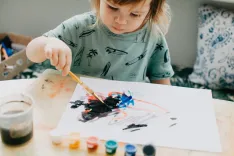
- finger paints – look for water-based options with a bitter taste so children are not tempted to eat them;
- thick paper or a roll of wallpaper – young children need space, and large formats engage large arm muscles;
- washable markers – so first drawing milestones do not turn into repainting the walls when you look away for a moment.
Children should have access to creative materials. Keep them on a table or an open shelf, always ready for new drawings and games.
For preschoolers (4–6 years)
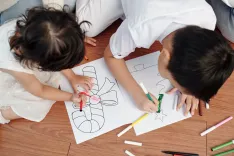
By the age of four, preschooler drawing development requires more precise tools for drawing stories and details. By this time your child may already have their own desk, which is a big advantage. Suitable materials include:
- soft colored pencils – choose triangular ones that help position fingers correctly for writing;
- watercolor and gouache – they teach transparency, layering, and color mixing;
- different brushes – thin ones for outlines and wide sponges for backgrounds;
- decoration sets – stickers, glitter glue, and colored tape for making collages.
Do not underestimate glitter, stickers, and additional materials. Children love them, and they diversify textures and the final look of drawings.
Advantages of Keiki World for creative development
Creative development, like creativity itself, has many facets and forms of expression. It is a flexible process in which tablets and smartphones with suitable apps can become useful tools. For example, Keiki World allows children to:
- use not only a digital canvas but also various drawing tasks, including many ready-made coloring pages (online or for printing);
- use an unlimited palette in online drawing for kids with many tools and shades without worrying about ruining paper;
- delete unsuccessful attempts with one tap;
- avoid mess and stubborn paint stains around the house;
- explore kids drawing online safely because there are no ads or external links.
This approach with online drawing for toddlers is also helpful when you cannot comfortably do creative activities at home. The format works well during travel, visits, or waiting in line.
Help your child thrive with playful learning
Turn screen time into real growth with Keiki's educational games.
Try Keiki7 practical exercises for gentle talent development
To support first drawing milestones and make a child’s path into the world of art enjoyable, try the following exercises. Many parents know about the benefits of development but simply do not know where to begin, even if they use educational drawing games online. The tasks below follow a simple principle – minimum drilling, maximum enjoyment.
- Dancing lines. Turn on classical music or a cheerful children’s rhythm. Invite the child to “dance” with a pencil on paper following the beat. This trains a sense of rhythm and relaxes muscles, making preschooler drawing development more harmonious.
- Finish the story. Draw a simple shape on paper (for example, a circle or square) and ask: “What does this want to become?” Help the child add ears or a tail. Do not limit their imagination or suggest answers – let them express themselves. This exercise is a great way to explore how to encourage child drawing and imagination.
- Mirror artists. Sit opposite each other. Draw a simple line on your sheet, and the child repeats it on theirs. This game trains fine motor skills and attention.
- Texture hunt. Place a sheet of paper over a textured surface (a coin, tree bark, a sneaker sole) and shade with the side of a crayon. The magical appearance of the pattern is a perfect example of fun painting activities for kids.
- Air drawing. Before taking a pencil, “draw” a huge circle or house in the air with your whole arm. The brain remembers shapes through large muscles, making later drawing at age 4 or older easier.
- Colored emotions. A classic exercise often used by kindergarten teachers and educators. Ask the child to choose a color for joy, sadness, and anger, and simply fill a page with that color.
- Digital sketch. Use an app as a safe laboratory. Let the child first color a character in the app, choose color combinations, and then try to recreate the same character on paper using paints. This creates a perfect bridge between technology and traditional creativity.