What You Need to Know About Cooperative Play in Child Development

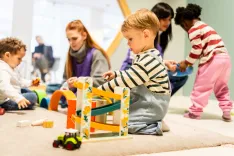
Watch the children in the older group at preschool during free play. You’ll see an amazing scene: several kids have gathered around a sand pile or a building set. One gives orders: “You build the garage, and I’ll build the road!” The second child obediently grabs the necessary pieces, while the third brings the toy cars. They argue, negotiate, laugh, and work together as a single, well-coordinated unit. This is no longer just chaotic childish commotion — unfolding before you is a highly complex social dance that child development experts call “cooperative play.”

For us adults, the ability to work as a team seems natural. But for a young child, the ability to put their own desires aside for the sake of a common goal is a significant cognitive breakthrough. It’s the pinnacle of a preschooler’s social development. In this article, we’ll explore what cooperative play is, when exactly children reach this stage, why it’s important for success in school, and how parents can gently help their child master this challenging art of friendship and cooperation.
Key Takeaways
- Cooperative play occurs when kids stop playing next to each other and start playing together toward a shared goal — a major developmental leap.
- Most kids aren't ready for true teamwork until ages 4–5, so don't worry if your 2-year-old refuses to share blocks; that's just parallel play, and it's completely normal.
- The benefits go far beyond the sandbox: cooperative play builds empathy, conflict resolution, self-control, and the foundational teamwork skills schools expect from day one.
- If your child isn't there yet, start small: stick to one playmate, offer fewer toys, and model turn-taking out loud.
- Arguments during play aren't a problem to shut down — they're actually where kids learn the hardest and most important social skill of all: how to compromise.
What Is Cooperative Play?
If we turn to psychology, the classic definition of cooperative play is as follows: it is the highest stage of social play, in which children interact with one another to achieve shared goals. At this stage, play ceases to be individual and becomes entirely interdependent.
When examining the question of what cooperative play is in child development, it is important to highlight the key characteristics of this stage. Cooperative play always involves:
- a shared goal — such as building the tallest sandcastle, preparing an imaginary dinner for dolls, or saving the world from a dragon;
- role assignment — the children decide among themselves who will be the doctor and who will be the patient; who will be the shopkeeper and who will be the customer;
- rules and agreements — the participants establish the framework of the game and ensure that everyone follows them;
- teamwork — the success of the game depends on the efforts of every child. If the “shopkeeper” refuses to sell items, the store game will simply come to a halt.
Unlike younger children, who see their peers merely as an interesting backdrop or as competitors for toys, children who have mastered cooperative play see others as full-fledged partners. This is the very moment when true empathy and friendship begin to take root.
Help your child
grow with Keiki
We’ll help you turn everyday screen time
into real learning progress.
Cooperative Play vs. Parallel Play
To understand the value of cooperative play, we need to recall Mildred Parten’s theory, which described six sequential stages of play. Parents often confuse these stages, expecting two-year-olds to engage in teamwork for which they are not yet physiologically ready.
Let’s compare the three main social stages:
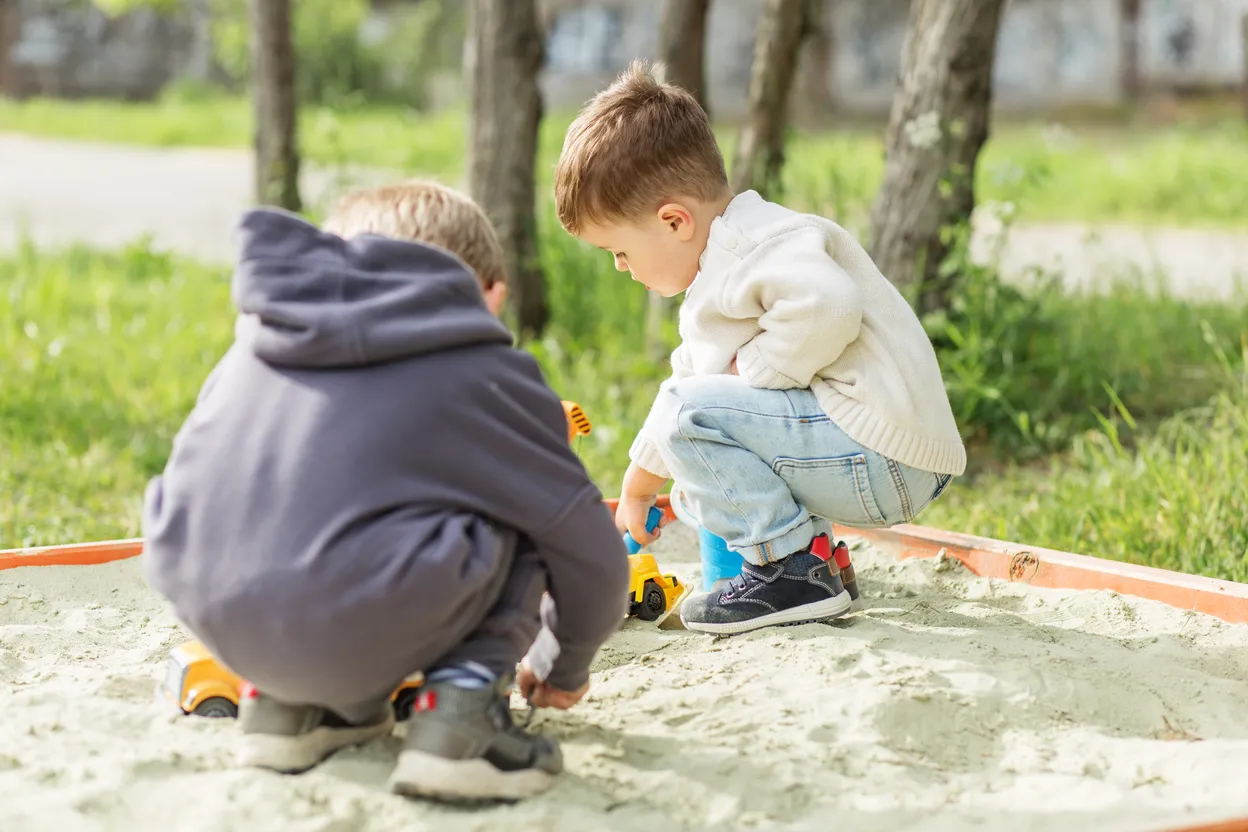
- Parallel play. This is typical behavior for children aged 2–3. Toddlers play side by side, using the same blocks, but each builds their own tower. They may glance at their neighbor, but their worlds don’t intersect. There are no shared goals here, and no need to negotiate.
- Associative play. This is a transitional stage around ages 3–4. Children still play on their own, but they begin to interact actively. They might swap Lego pieces or discuss the colors of their creations, but each child still maintains their own individual project.
- Cooperative play. Children pool their resources. They gather all the bricks in the center and say, “Let’s build one huge castle for the princess!”
The transition from parallel play to cooperative play is a shift from thinking “Me and my game” to thinking “Us and our shared game.” This is a huge step toward reducing children’s egocentrism.
When Does Cooperative Play Start?
One of the questions that most excites parents is: when does cooperative play start? Development isn’t a switch that flips overnight. It’s a gradual process. As a rule, the first, still tentative elements of cooperative play begin to appear between the ages of 4 and 5. It is by this age that a child’s brain has matured enough to:
- understand the concepts of time and turn-taking, and the ability to wait;
- keep complex storylines and rules in mind;
- have a sufficient vocabulary to express their thoughts and negotiate, rather than simply grabbing what they want by shouting;
- develop theory of mind — the understanding that other people have their own thoughts, desires, and feelings, which may differ from their own.
Cooperative play in children peaks between the ages of 5 and 6. By the time a child starts school, they are expected to already have basic cooperative play skills. But even if your child is already 4 years old and still prefers to play alone, don’t panic. Social skills take practice, and some children — especially those who don’t attend preschool — may take a little longer to master them.
Examples of Cooperative Play
Understanding the theory is great, but what does it look like in practice? Here are a few classic examples of cooperative play that you can observe on the playground or organize at home:
Pretend Play / Sociodramatic Play
This is the leader among cooperative games. Children can play “Family” (with one child as mom, another as dad, someone is the puppy-child), “Hospital,” “School,” or “Restaurant.” In this game, they practice role assignment. The most interesting part here is the negotiation process: “No, you were the doctor last time; now it’s my turn to treat you, and you lie down on the bed!”
Collaborative Building
Building a giant tower out of magnetic blocks, constructing a fort out of blankets and chairs, or digging a deep channel in the sandbox to let water flow through. The children divide up the tasks: one carries water in a bucket, another digs, and a third builds a dam out of rocks.
Board Games
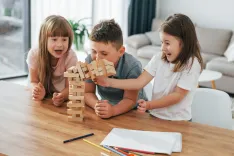
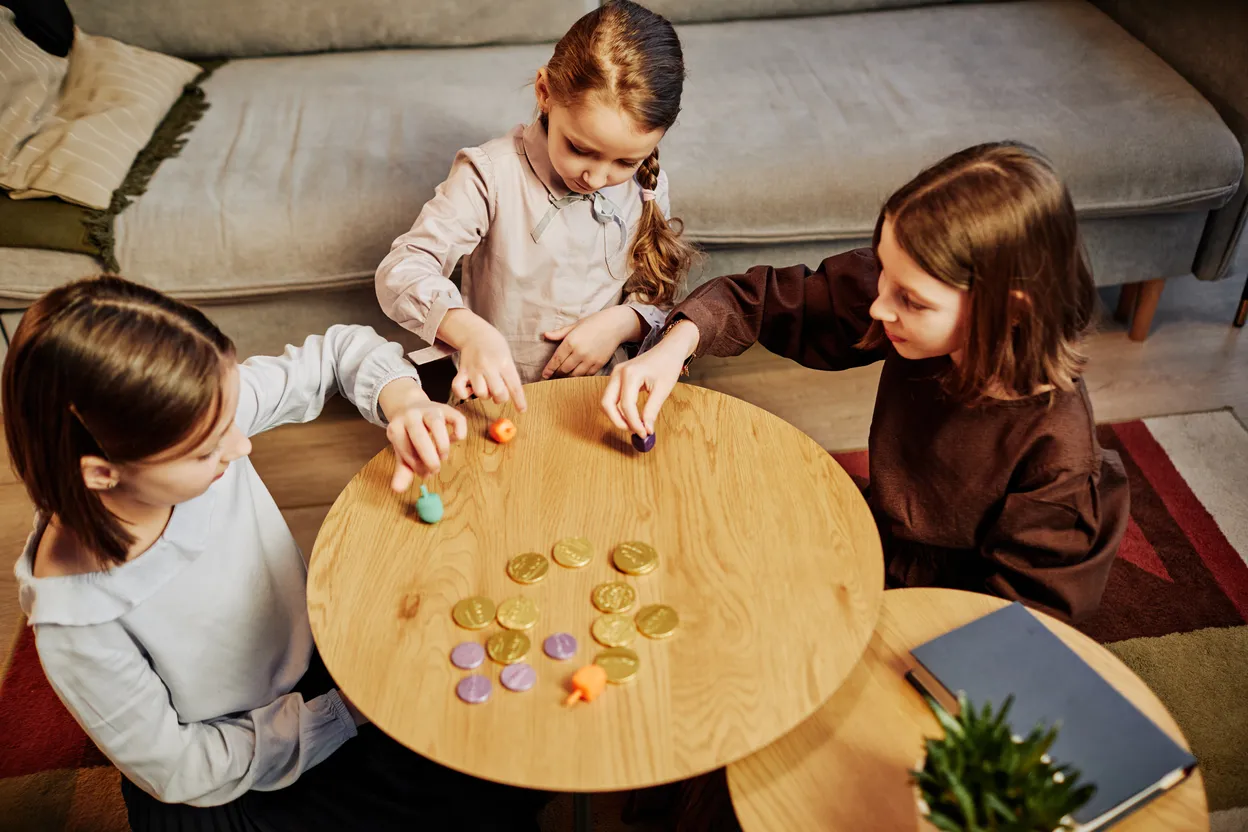
Simple board games (dice-based games, matching card games) are excellent examples of structured cooperative play. Here, children learn a fundamental skill: turn-taking. They understand that the game only works when everyone follows the shared rules.
Parachute Games or Tug-of-War
Physical games where the outcome depends on the entire group working in sync. If one child lets go of the edge of the parachute, it won’t rise into the air. This is a clear demonstration of teamwork.
Cooperative board games
Unlike competitive games, in cooperative board games all players join forces against the game itself. They must discuss strategy together to, for example, save the animals before sunset. These are examples of cooperative play for children who take losing very hard.
Benefits of Cooperative Play
The impact of cooperative play on the developing brain cannot be overstated. It’s not just entertainment; it’s a full-fledged school of life. Let’s take a look at the main benefits of cooperative play in child development:
- Development of social skills. Children learn to ask politely, offer help, accept others’ ideas, and find compromises.
- Conflict resolution. Arguments are inevitable when playing together. And it is precisely here, in a safe play environment, that children learn to negotiate, flip a coin, give in, or set a timer.
- Developing empathy. To play together, you need to be able to read your partner’s emotions. If you play too roughly, your partner will start crying and walk away, and the game will end.
- Development of self-regulation. In cooperative play, a child has to control their impulses. They need to wait their turn, follow others’ rules, and sometimes do what someone else suggests, even if they initially wanted to do something different.
- School readiness. Modern schools are built on teamwork, group projects, and the ability to listen to the teacher (leader). Children who have mastered cooperative play adapt much more easily to school rules, have fewer conflicts with classmates, and learn better in a group setting.
What If My Child Isn't Playing Cooperatively Yet?
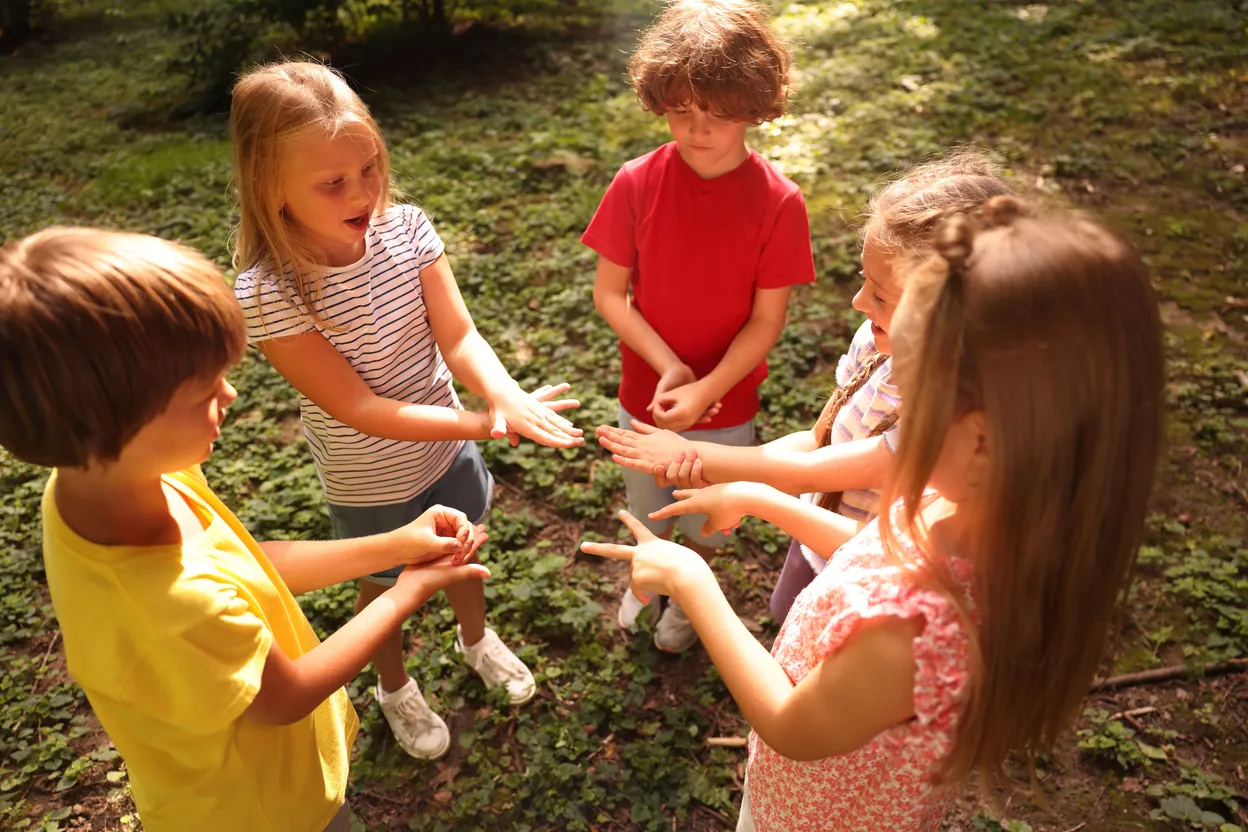
If your child is 4.5 or 5 years old but still runs off to a corner with their toy cars and yells “Mine!” when other children approach, that’s normal. Emotional intelligence takes practice. You can gently help them develop these skills:
- Start small. Don’t throw your child into a large, noisy group. Invite one familiar peer over to play. It’s always easier to come to an agreement one-on-one than in a crowd.
- Model the behavior. Play with your child yourself. Say out loud: “Now it’s my turn to roll the die, and then it’s yours,” “How about I build the first floor, and you build the roof? We’re a great team!”
- Limit the number of toys. Paradoxically, the fewer toys there are, the greater the incentive for cooperation. If there’s only one train set for two children, they’ll have to agree on how to play together instead of scattering to different corners with separate sets.
- Help resolve conflicts. Don’t intervene right away; give the children a chance to work it out on their own. But if an argument is brewing, step in as a mediator: “I see you both want this doll. How can we solve this problem so everyone can have fun?”
Build Teamwork Skills Through Play With Keiki
For a child to succeed in collaborative social play on the playground, they need a solid foundation: well-developed logic, a good memory, the ability to concentrate, and a rich vocabulary. It is precisely this cognitive foundation that we help build on the Keiki platform.
Our app is designed to support your child’s all-around development. Here, your little one will find hundreds of educational interactive games. For example, you can introduce your child to puzzles that develop logical thinking, or matching games that focus on logic and memory.
Help your child thrive with playful learning
Turn screen time into real growth with Keiki's educational games.
Try KeikiConclusion
The transition to cooperative play is one of the most touching and important moments in your child’s development. It’s the moment when a small, self-centered toddler transforms into an empathetic, thoughtful person capable of making friends, showing compassion, and creating something new as part of a team.
Now that you understand what cooperative play is and how important it is for school readiness, you can observe your children’s play with greater awareness. Encourage their attempts to negotiate, celebrate their first collaborative creations, play board games with them by the rules, and don’t be afraid of children’s conflicts — after all, it is precisely through these conflicts that the true ability to compromise is born. Cooperative play isn’t just child’s play; it’s a dress rehearsal for a successful adult life!